A few years ago, “backup power” meant one thing: a generator sitting in the garage, wrapped in a tarp, waiting for the one week a year it actually got used. You’d drag it out during a storm, top it off with gasoline you hoped hadn’t gone stale, and pray the pull cord didn’t give out on the third try. That picture is fading fast, and it’s fading for a good reason. The power grid itself is getting shakier.
In 2024, U.S. electricity customers experienced an average of 11 hours of interruptions — nearly double the annual average from the decade before, according to the U.S. Energy Information Administration. Hurricanes Beryl, Helene, and Milton did a lot of that damage, but the broader trend holds even in years without major storms: aging infrastructure, more extreme heat and cold snaps, and a grid that’s carrying more load than it was built for. People have noticed. And a lot of them have decided they’d rather not gamble on how long the lights stay off next time.
That’s where portable power stations come in, and why they’ve gone from a niche camping accessory to something closer to a household appliance.
The Generator Problem, Restated
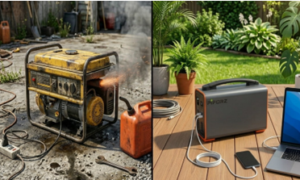
Gas generators aren’t going away, and for whole-home backup during extended outages, a properly installed standby unit still has real advantages in raw output. But the drawbacks are the same ones they’ve always had. They’re loud enough to annoy the whole street. They need fuel stored on-site, which is its own hazard. They can’t run indoors, so during an ice storm or hurricane you’re stuck running an extension cord through a cracked window while the unit sits out in the weather. And gas doesn’t keep forever — stabilizer or not, fuel that’s been sitting in a shed for a year is a coin flip.
None of that is a knock on generators as a category. It’s just a description of why so many households have started looking for something to complement or replace them, especially for the kind of shorter, more common outages that don’t require running a whole house for a week.
What Changed the Math
Lithium iron phosphate batteries, usually shortened to LiFePO₄, are the real reason portable power stations became viable for actual backup duty rather than just charging phones at a campsite. Compared to the lithium-ion chemistry in older power banks, LiFePO₄ cells are more stable, tolerate heat better, and last dramatically longer — often rated for 3,000 to 4,000-plus charge cycles before capacity drops off meaningfully. In practical terms, that’s a battery you could cycle daily for close to a decade and still expect solid performance.
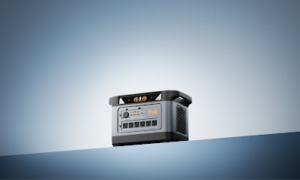
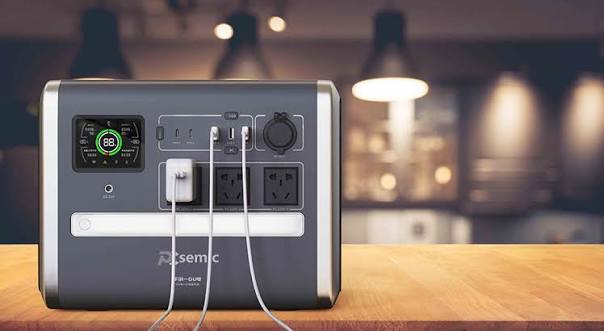
Combine that with inverter technology that’s gotten smaller and more efficient, and you end up with units that can output 1,000 to 5,000 watts continuously — enough to run a refrigerator, a sump pump, a CPAP machine, a router, and a handful of lights simultaneously — while fitting in a form factor you can carry with one hand or roll on wheels. A decade ago, that kind of output from a battery box would have weighed as much as a washing machine.
The other shift is how these units charge. Wall outlet charging is standard now, but most also accept solar input directly, and a growing number support car charging on the drive to somewhere safer. During an extended outage, that solar option matters more than it sounds like it should — it’s the difference between a battery that’s a one-time buffer and one that keeps refilling itself for as long as the sun cooperates.
Who’s Actually Buying These
It’s not just preppers and van-lifers anymore, though both groups helped build the early market. The buyers now skew heavily toward ordinary homeowners in regions with unreliable grids — parts of Texas, California, the Gulf Coast, anywhere hurricanes or ice storms show up on a predictable schedule. Small business owners are a growing segment too: a coffee shop that can’t afford to lose a day of refrigerated inventory, a contractor who needs power tools running at a job site with no outlet in sight, a food truck operator who used to haul a noisy gas generator and now runs a silent battery unit instead.
Medical necessity is its own category. Households with someone dependent on a CPAP machine, an oxygen concentrator, or refrigerated medication have a much lower tolerance for “we’ll wait it out.” For them, a power station isn’t a convenience purchase — it’s closer to insurance.
Manufacturers have responded by building for both ends of that spectrum: compact units for RVs and weekend trips, and larger, stackable systems designed to run alongside home solar setups as genuine whole-home backup. Companies like Souop Energy, which builds LiFePO₄ power stations and solar generators alongside UPS systems, have leaned into that dual-use approach — products that work fine for a camping trip but are engineered with the specs and safety certifications to actually back up a house.
The Trade-Offs Worth Knowing
None of this makes portable power stations a perfect replacement for every backup scenario. Extended multi-week outages still favor a fueled generator or a properly sized home battery system tied into the electrical panel. Portable units are also a bigger upfront purchase than a basic generator, even if the total cost of ownership evens out once you stop buying gasoline and doing annual maintenance. And “portable” is relative — the units big enough to run a fridge and a few circuits aren’t exactly light.
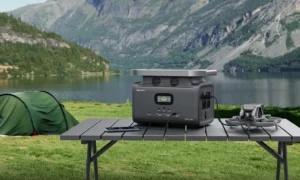
What they’re genuinely good at is the gap that generators handle badly: short-to-medium outages, indoor use, silent operation, zero fumes, and near-instant startup with no pull cord involved. For a lot of households, that gap is most of what backup power actually needs to cover.
Where This Is Headed
The trajectory is pretty clear at this point. Battery costs keep dropping, energy density keeps climbing, and solar panels keep getting cheaper and more efficient per square foot. Power stations that could barely run a laptop five years ago now handle a refrigerator and a router without breaking a sweat, and the next few years will likely push that further — faster charging, smarter app-based monitoring, and tighter integration with home solar.
Backup power used to be an all-or-nothing decision: buy a generator or don’t. Now it’s a spectrum, and portable power stations have carved out the middle of it — quiet, cleaner, and increasingly capable of doing the job a lot of people actually need done.