Introduction
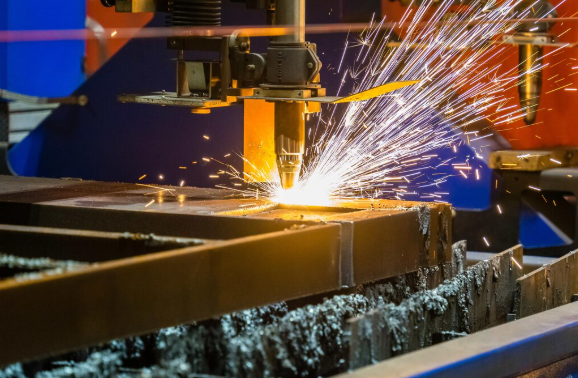
In the landscape of contemporary industrial fabrication, few innovations have redefined production capabilities as profoundly as the Laser Cutting Machine. This technology harnesses the power of coherent light to slice through metals, plastics, ceramics, and composites with a level of accuracy that traditional mechanical shearing or plasma torches simply cannot match. By focusing an intensely concentrated beam of photons onto a minute point, the system generates enough heat to melt, vaporize, or sublimate the base material, leaving behind a clean, narrow kerf and a heat-affected zone that is remarkably minimal. The adoption of this photonic approach has transitioned from a specialized novelty to a cornerstone of modern assembly lines, enabling designers to translate complex digital geometries into physical reality without the need for expensive hard tooling or post-process finishing.
The Evolution of Cutting Technologies
Before the commercial viability of high-power optics, manufacturing relied heavily on mechanical force. Shearing presses, punch presses, and abrasive saws were the primary workhorses, each accompanied by significant drawbacks such as tool wear, material deformation, and restrictive geometric limitations. The mid-twentieth century introduced oxy-fuel and plasma cutting, which improved speed for thick sections but sacrificed edge quality and introduced substantial thermal distortion. It was the integration of computer numerical control (CNC) with solid-state and gas laser resonators during the 1980s and 1990s that marked a true paradigm shift. Since then, the evolution has been relentless: from continuous-wave CO₂ systems to high-brightness fiber lasers and direct-diode architectures, each generation has delivered higher wall-plug efficiency, lower maintenance overhead, and the capacity to process reflective materials like copper and aluminum with unprecedented reliability.
Core Principles of Operation
The fundamental physics behind this equipment revolves around stimulated emission of radiation, but the practical engineering is equally fascinating. A typical industrial setup comprises three primary subsystems: the resonator, the beam delivery path, and the motion platform. The resonator generates the initial photon stream, which is then guided through mirrors, fiber-optic cables, or articulated arms toward the cutting head. Within the cutting head, a focusing lens or parabolic mirror concentrates the beam to a spot size often smaller than 0.1 millimeters. Concurrently, an assist gas—typically oxygen, nitrogen, or compressed air—is expelled coaxially with the beam to blow molten debris away from the cut front and, in the case of oxygen, to induce an exothermic reaction that boosts cutting speed. The motion platform, driven by linear motors or ball screws with encoder feedback, maneuvers the workpiece or the optics along the prescribed toolpath, ensuring that the focal point remains precisely at the material surface throughout the entire contour.
Types of Laser Systems
Different production environments demand different optical sources, and the market offers several distinct varieties tailored to specific thickness ranges and material behaviors. CO₂ lasers, which operate in the far-infrared spectrum at 10.6 micrometers, excel at processing non-metals such as acrylic, wood, leather, and textiles, while also delivering robust performance on mild steel and stainless steel up to 20 millimeters thick. Conversely, fiber lasers, which utilize rare-earth-doped glass fibers as the gain medium, produce a wavelength of approximately 1.07 micrometers. This shorter wavelength is absorbed more readily by metallic surfaces, making fiber sources the undisputed champion for high-speed cutting of thin to medium-gauge sheet metal. More recent entrants include direct-diode lasers, which offer exceptional electrical efficiency and are increasingly deployed for copper and brass applications, as well as pulsed nanosecond and femtosecond systems that achieve “cold” ablation for delicate medical stents and electronic components where thermal damage is strictly forbidden.
Applications Across Industries
The versatility of optical cutting has permeated virtually every sector of the global economy. In the automotive industry, body-in-white panels, chassis reinforcements, and exhaust components are profiled with tolerances that enable immediate robotic welding without shimming. Aerospace manufacturers rely on this process to carve lightweight aluminum and titanium alloys for airframe skins and bulkheads, where every gram of weight reduction translates directly to fuel savings. The electronics sector utilizes ultraviolet and green-wavelength variants to singulate printed circuit boards and cut flexible polyimide films without delaminating adjacent traces. Meanwhile, the architectural and artistic communities have embraced the technology for creating intricate facade screens, ornamental railings, and customized furniture, benefiting from the ability to execute rapid design iterations directly from CAD files. Even the medical field depends on these systems to manufacture surgical instruments, bone plates, and hypotubes, where edge integrity and cleanliness are non-negotiable.
Advantages Over Conventional Methods
When compared to mechanical punching, wire EDM, or waterjet cutting, the photonic approach offers a compelling suite of benefits that justify its premium price point. First and foremost is the absence of mechanical contact, which eliminates tool wear and the associated cost of die maintenance, while also preventing work-hardening or distortion of thin-gauge materials. The narrow kerf width—often as slim as 0.15 millimeters—maximizes material utilization, a critical factor when processing expensive superalloys or clad sheets. The automation level is exceptionally high; with automatic nozzle changers, focal-length adjustment, and real-time pierce detection, the system can run unattended for extended shifts, reducing labor overhead. Furthermore, the superior edge finish frequently eliminates secondary deburring operations, and the narrow heat-affected zone preserves the metallurgical properties of the parent material, maintaining fatigue resistance and corrosion performance that mechanical processes often degrade.
Considerations and Limitations
Despite its formidable capabilities, this technology is not a universal panacea, and prudent engineers must weigh certain constraints before specification. The initial capital expenditure remains substantial, particularly for high-power fiber configurations with flying optics and large-format tables. Thick-section cutting—typically above 25 millimeters for steel—becomes economically challenging due to the exponential increase in required power and the associated consumption of assist gases. Reflective materials, although more manageable with modern fiber sources, still pose risks of back-reflection that can damage optical components if not equipped with appropriate isolation safeguards. Additionally, the generation of hazardous fumes, aerosols, and metallic dust necessitates robust extraction and filtration systems to comply with occupational safety regulations. Finally, the skill set required for programming, focal alignment, and parameter optimization is distinct from traditional machining, requiring dedicated training or the recruitment of specialized personnel.
Future Trends and Innovations
Looking toward the horizon, the trajectory of photonic processing is unmistakably toward greater intelligence, connectivity, and adaptability. The integration of artificial intelligence for real-time process monitoring is already emerging, with coaxial cameras and photodiodes feeding neural networks that predict nozzle wear, adjust focal position, and detect incipient piercing failures before they produce scrap. Additive-subtractive hybrid machines, which combine powder-blown deposition with high-power cutting, are enabling near-net-shape fabrication of complex components within a single setup. Furthermore, the development of ultra-high-power systems exceeding 50 kilowatts is expanding the thickness envelope into heavy plate applications traditionally dominated by arc cutting and oxy-fuel. The confluence of Industry 4.0 protocols, digital twins, and cloud-based parameter libraries promises to transform the workshop floor into a self-optimizing ecosystem, where the system autonomously selects the optimal frequency, duty cycle, and gas pressure based on barcode-scanned material certificates.
Conclusion
In summary, the journey from rudimentary torch cutting to photon-driven precision exemplifies the relentless pursuit of efficiency and quality in industrial practice. The capacity to translate digital blueprints into flawless physical components with micron-level accuracy has empowered designers to explore geometries previously considered unmanufacturable, while simultaneously reducing cycle times and material waste. As power levels climb, costs moderate, and intelligent controls become ubiquitous, the role of this apparatus will only expand further, penetrating new markets such as battery foil separation, hydrogen fuel-cell plate fabrication, and large-scale demolition with controlled thermal severing. Ultimately, the Laser Cutting Machine stands not merely as a piece of capital equipment, but as a foundational enabler of the fourth industrial revolution—a silent testament to how human ingenuity can harness light itself to reshape the material world with grace, speed, and unwavering consistency.