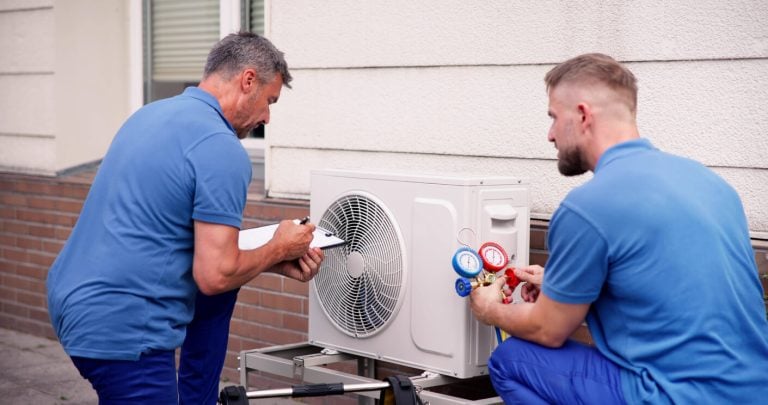
An HVAC system is one of the hardest-working parts of a home, operating through hot summers, cold winters, and changing seasons. Its lifespan depends on the type of equipment, how often it runs, installation quality, maintenance habits, climate, and the condition of connected components. Some systems may need replacement after a decade, while others can continue operating for twenty years or longer with proper care. Understanding the expected lifespan of different HVAC systems can help homeowners plan repairs, prepare for replacement costs, and recognize when aging equipment is becoming less reliable, less efficient, or more expensive to keep running today.
How Different HVAC Systems Age
Central Air Conditioners Usually Last 12 to 17 Years
Central air conditioning systems commonly remain in service for around 12 to 17 years, although some units continue longer when they receive consistent maintenance and operate under moderate conditions. The outdoor condenser is exposed to heat, dust, rain, debris, and changing temperatures, so its condition can strongly influence system life. The indoor evaporator coil, refrigerant lines, electrical components, blower motor, and ductwork also affect overall performance. Homes in very hot climates may place heavier demands on cooling equipment because the system runs for extended periods each day. Homeowners researching air conditioning installation in las vegas may notice that climate is an important consideration because long cooling seasons can increase operating hours and wear. Regular filter changes, clean coils, proper refrigerant levels, and unrestricted airflow can reduce unnecessary strain. A unit that short cycles, struggles to reach the thermostat setting, or requires repeated repairs may be approaching the point where replacement is more practical than continued repair.
Furnaces Can Often Operate for 15 to 20 Years
Gas furnaces often have a longer service life than many cooling systems, with an average lifespan of roughly 15 to 20 years. Some well-maintained furnaces may remain functional beyond twenty years, but age alone does not determine whether continued operation makes sense. The heat exchanger is one of the most important components because repeated heating and cooling cycles can eventually cause metal fatigue, corrosion, or cracking. Burners, ignition systems, blower motors, control boards, and safety switches also experience wear over time. Regular maintenance can help a furnace retain dependable heating performance, while neglect may cause problems to appear earlier. Frequent cycling, unusual noises, rising energy use, inconsistent room temperatures, and repeated service calls can indicate declining condition. Older furnaces may also have lower efficiency ratings than newer equipment, meaning a unit can still operate while costing more to run. Homeowners should consider mechanical condition, repair frequency, and operating costs when deciding whether to keep an aging furnace or plan for replacement.
Heat Pumps Commonly Last Around 10 to 15 Years
Heat pumps typically last about 10 to 15 years because they often work during most of the year. Unlike a central air conditioner that may remain idle during colder months, a heat pump can provide cooling in summer and heating in winter. That year-round workload means the compressor, reversing valve, outdoor coil, fan motor, electrical parts, and refrigerant system can accumulate operating hours more quickly. Climate also matters because long summers or mild winters may keep the equipment running across several seasons. Routine maintenance can help limit wear by keeping airflow strong, coils clean, electrical connections secure, and refrigerant levels appropriate. The outdoor unit should also remain clear of leaves, dirt, snow, and other material that can restrict airflow. When an older heat pump begins producing weaker heating or cooling, operating for unusually long periods, or requiring costly component repairs, replacement may offer better long-term value than continuing to invest in equipment already approaching the end of its expected service life.
Boilers May Last 15 to 30 Years or Longer
Boilers are often among the longest-lasting residential heating systems, with many operating for 15 to 30 years and some continuing even longer under favorable conditions. Their durability partly comes from having fewer moving parts than many forced-air systems, although boilers still require regular attention to maintain reliable operation. Lifespan varies depending on whether the unit is gas-fired, oil-fired, electric, or part of an older hydronic setup. Water quality can make a major difference because mineral buildup, corrosion, sludge, and leaks may damage internal components or reduce heat transfer. Pumps, valves, expansion tanks, controls, radiators, and baseboard units can also develop problems even when the boiler itself remains functional. Periodic inspection and prompt repair of leaks can help prevent minor issues from causing larger damage. Age should be considered alongside efficiency, repair frequency, fuel use, and the condition of the entire heating loop. A very old boiler may still run, but recurring failures can make replacement more sensible.
Ductless Mini-Split Systems Often Last 12 to 20 Years
Ductless mini-split systems generally have an expected lifespan of about 12 to 20 years, depending on usage, maintenance, climate, and equipment quality. These systems combine one outdoor condenser with one or more indoor air-handling units, allowing individual rooms or zones to receive heating and cooling without traditional ductwork. Many mini-splits use inverter-driven compressors that adjust output instead of repeatedly switching fully on and off, which changes how the equipment operates compared with conventional systems. Even so, continuous use during long heating or cooling seasons can place substantial demand on the compressor and fan motors. Indoor units also need regular cleaning because dust can collect on filters, coils, and blower wheels, reducing airflow and making the system work harder. Drain lines must remain clear to prevent moisture problems. A well-maintained mini-split can provide comfort for many years, but declining output, unusual sounds, refrigerant leaks, or expensive compressor repairs can signal that the system is nearing the end of its useful operating life.
Conclusion
HVAC lifespan varies by system type, operating conditions, climate, installation quality, and maintenance. Central air conditioners commonly last 12 to 17 years, furnaces around 15 to 20 years, heat pumps roughly 10 to 15 years, boilers 15 to 30 years, and ductless mini-splits about 12 to 20 years. These ranges are planning guides rather than fixed replacement dates. A younger system can fail early if neglected, while older equipment may continue running reliably with care. Tracking repair frequency, energy use, comfort changes, unusual noises, and performance can help homeowners decide when maintenance still makes sense and when replacement deserves consideration.