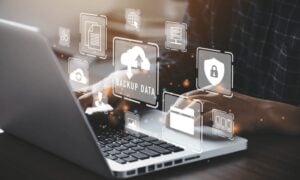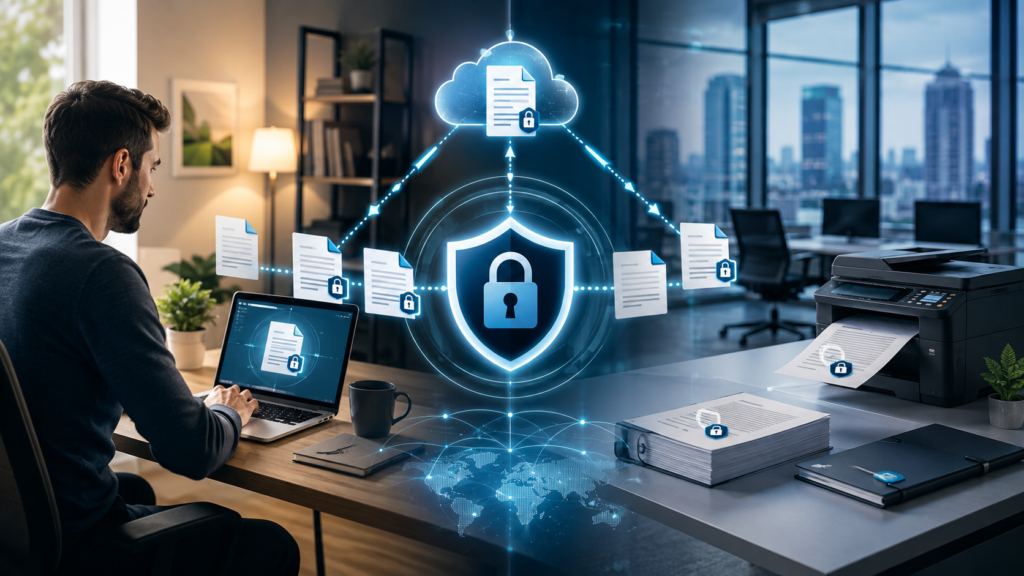
Every business handles sensitive paperwork, whether it’s contracts, medical records, invoices, or client agreements. Yet many companies still treat document security as an afterthought, focusing on password strength or email filters while overlooking how documents move between offices, departments, and outside partners. As hybrid work becomes permanent rather than temporary, the gap between how businesses think they protect information and how they handle it continues to widen.
The Remote Work Blind Spot
When teams worked from a single office, sensitive paperwork rarely left the building. Filing cabinets had locked; printers sat in supervised rooms, and documents changed hands under some form of oversight. Remote and hybrid arrangements changed that entirely.
Employees now send and receive confidential files from home networks, shared coworking spaces, and personal devices, often without realizing how many points of exposure exist along the way. A document that once traveled a few feet across an office now crosses multiple networks, cloud storage systems, and personal inboxes before reaching its destination.
This shift matters because most data exposure doesn’t happen through dramatic hacking attempts. It happens through ordinary carelessness: a file left open on a shared screen, a document sent to the wrong recipient, or paperwork printed at a public library and forgotten in the tray. These small lapses accumulate into real business risk, particularly for industries handling health records, legal filings, or financial data.
Why Paper Trails Still Cause Problems
Physical paperwork carries its own set of vulnerabilities that many businesses underestimate. Printed documents can sit in output trays for hours, get misfiled, or end up in recycling bins without being properly destroyed. Anyone walking past a printer can glance at a page containing account numbers or medical details. Unlike digital files, paper offers no audit trail showing who viewed it or when.
This is part of why many organizations have shifted toward digital-first communication for sensitive materials, including secure online faxing, which reduces the number of hands and machines a document passes through before reaching its intended recipient. The appeal isn’t just convenience. It’s the ability to track delivery, limit access, and remove the physical exposure that comes with printed pages sitting unattended.
Building Better Habits
Improving document security doesn’t require an overhaul of existing systems. It starts with simple, consistent habits: confirming recipient details before sending sensitive files, avoiding public networks for confidential transmissions, and training staff to recognize when a document should be handled with extra caution. Businesses that build these habits into daily routines tend to catch mistakes before they become costly, rather than reacting after a breach has already occurred.
Leadership plays a role here, too. When management treats document handling as a core operational responsibility rather than a technical afterthought, employees are more likely to follow suit. Security awareness spreads through culture as much as through policy.
A Practical Shift, Not a Trend
None of this reflects a passing fad in workplace behavior. As businesses continue operating across multiple locations and devices, the way sensitive documents travel deserves the same scrutiny once reserved for passwords and firewalls. Small, deliberate changes in daily habits often do more to protect information than any single piece of software ever could.