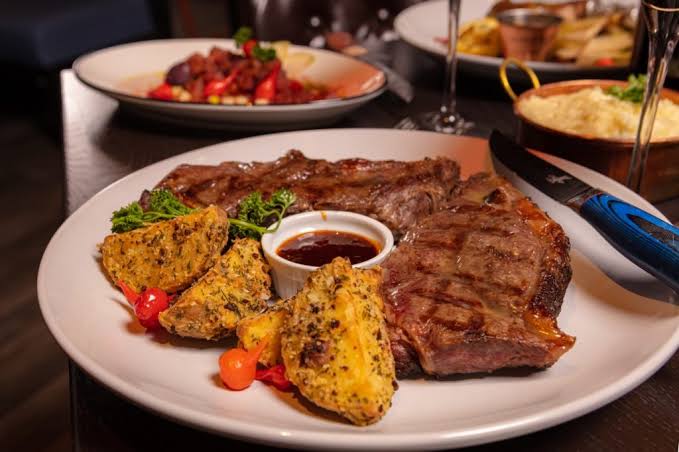
Almost every steakhouse menu reads the same on paper: a run of cuts, a few sauces, sides listed underneath. What actually separates a memorable meal from a forgettable one rarely shows up in the menu description at all. It comes down to sourcing, technique, and a handful of details most diners never think to check.
Where Does the Meat Actually Come From?
Good venues are specific about sourcing, naming the producer, region, or grading system rather than just writing “premium beef” on the menu. Grass-fed and grain-fed cattle produce noticeably different results, grass-fed generally leaner with a more mineral flavour, grain-fed carrying more marbling and a softer texture. Neither is inherently superior, but a kitchen that can tell you which one you’re eating, and why they chose it, is usually a kitchen paying attention to quality further back in the supply chain.
Does the Kitchen Know How to Rest a Steak?
Resting is one of the most overlooked steps in steak cookery. Cutting into a steak straight off the grill lets most of its juices run straight onto the plate instead of redistributing back through the meat. A rested steak holds together better, cuts cleaner, and tastes noticeably juicier. It’s a small step that costs a kitchen a couple of minutes, but skipping it is one of the fastest ways to turn a well-cooked cut into a dry one.
Sourcing and resting technique alone explain a lot of the gap between an average steak restaurants melbourne visit and a genuinely good one, long before sides or how a kitchen handles a full room even come into it.
Are the Sides Treated as an Afterthought?
Sides are an easy place for a kitchen to cut corners, and an easy place to tell whether they have. Chips that are limp rather than freshly fried, a salad that’s clearly been sitting, or onions that are merely softened rather than properly caramelised are all small signs that the kitchen’s attention stops at the protein. In a genuinely good steakhouse, the sides get roughly the same care as the meat, because a great steak on a mediocre plate still reads as a mediocre meal.
How Well Does the Venue Handle a Full Room?
Cooking one steak to order is straightforward. Cooking twenty at once, each to a different doneness, arriving at each table at the same time, is a genuine test of a kitchen’s organisation. Staggered ticket timing, so steaks aren’t sitting under a heat lamp waiting for the rest of a table to catch up, is one of the clearest signs of a well-run pass. It’s also usually the difference between a venue that’s good on a quiet Tuesday and one that’s still good on a fully booked Saturday.
None of these details show up in a menu photo, which is exactly why they’re worth checking before you book. Reviews that mention resting, sourcing, and how a kitchen handles a full room tend to be far more useful than star ratings alone, and they usually save you from a disappointing night out.