For more than a decade, Web2 social platforms promised connection at scale.
What they delivered instead was just speed.
Profiles became commodities, conversations became disposable, and intimacy was reduced to a sequence of taps and swipes. The systems worked as designed, but the experience left many users emotionally disengaged.
This growing dissatisfaction is not a rejection of tech. It is a rejection of how Web2 platforms structure interaction. Optimised for engagement metrics and growth loops, they prioritised volume over presence and efficiency over depth.
Web3 enters this moment not as a technical upgrade, but as a design reset. MaAvatar, an AI-powered social metaverse launching in 2025, uses blockchain infrastructure to rethink how people meet and form connections online. It does not replicate Web2 mechanics on-chain. It replaces them entirely.
From Algorithmic Matching to Experience-Led Connection
Web2 dating platforms relied on algorithmic predictions. Users answered questionnaires, uploaded photos, and waited for algorithms to determine compatibility. The model scaled efficiently but often failed to produce meaningful connections.
According to MaAvatar’s litepaper, the platform takes a different approach through its social metaverse design. Users create customisable 3D avatars that function as persistent digital identities across shared virtual environments. Instead of matching first and interacting later, users enter social spaces immediately.
Source|Like gaming communities, compatibility is revealed through participation.
Beaches, lounges, performance venues, cooperative game zones, and themed environments serve as contexts for interaction inside the MaAvatar social metaverse.
Connection develops through shared activity rather than curated self-description. It’s like how relationships already form in gaming communities and virtual worlds.
Maavi Bot: AI-Powered Onboarding and Discovery
Maavi Bot is AI-powered companion designed to lower barriers to entry within emerging Web3 social platforms. It operates across Telegram, Discord, and the MaAvatar interface itself.
Maavi Bot assists users with onboarding, avatar creation, and navigation, making Web3 infrastructure accessible without requiring technical fluency. For users unfamiliar with wallets or token-based systems, this reduces a major barrier.
This AI matchmaking approach creates conditions for organic connection instead of just manufacturing compatibility like other apps do today. By operating within familiar messaging platforms before users enter the full metaverse, MaAvatar avoids forcing adoption of unfamiliar interfaces. Read more about the Maavi Bot here.
Gamified Social Architecture in Web3 Social Platforms
The platform has a ton of cooperative challenges such as escape rooms, scavenger hunts, multiplayer games, and themed events designed to encourage communication and collaboration.
These mechanics reveal personality, problem-solving style, and social compatibility in ways static profiles just cannot. Progression systems reward participation rather than passive presence, reinforcing AI-powered engagement loops rather than swipe-based behaviour. Users earn collectibles, unlock environments, and gain access to new experiences by engaging consistently.
Items earned through gameplay can be gifted to other users, creating meaningful social exchanges and rituals.
Oh and there are also structured events like virtual masquerades and themed socials that provide natural conversation starters and reduce the pressure of first interactions within MaAvatar.
NFTs and User-Owned Digital Identity
Web3 infrastructure enables MaAvatar to offer something Web2 platforms fail at: user-owned digital identity and environments across Web3 social platforms. Avatars, wearables, and environmental assets are minted as NFTs on EVM-compatible blockchain infrastructure.
These assets are functional, not just cosmetic. Some NFTs unlock access to specific spaces, others enhance interaction features or provide entry to exclusive experiences inside the MaAvatar social metaverse. The platform has outlined plans for limited official collections, including MAAVI and Metahumans NFTs, which provide special perks, access, and return on investment.
Assets are secured through audited smart contracts and security measures like two-factor authentication. In contrast to Web2 platforms where identity and content remain platform-bound, MaAvatar treats digital presence as something users genuinely own and control.
The Maavi Token: Utility-Driven Participation
The Maavi token underpins activity within the MaAvatar ecosystem and encourages participation across its social platform. According to its litepaper, the token works as a utility asset for:
- accessing premium features,
- upgrading digital assets,
- participating in platform governance, and
- engaging with the internal economy.
Users earn the Maavi token through active engagement, completing quests, and contributing to the community. Token allocation reserves 16 percent for community rewards, 22 percent for liquidity, and 18 percent for long-term development.
This design is no different from a broader shift in Web3 toward usage-based economies. Everyone is now focused on rewarding participation rather than passive holding, reinforcing AI-powered engagement rather than typical speculative behaviour. Token holders will eventually participate in governance decisions regarding new features, community rules, and roadmap priorities through decentralised mechanisms.
Community-Driven Growth and Governance
MaAvatar’s Ambassador Program has a community-first approach and is now in its sixth season. According to recent blog announcements, it rewards participants for genuine contributions rather than passive consumption.
Ambassadors onboard new users, create content, organize events, and provide feedback, receiving token allocations, exclusive NFTs, and governance voting power in return. This model is different from with Web2 influencer marketing – it allows contributors to gain an ownership stake in the MaAvatar social metaverse.
Similarly, the Love Cult, launched in September 2025, extends this AI-powered and token-backed governance approach through themed challenges and group activities, enabling collective decision-making via blockchain-verified participation.
Safety Architecture for Immersive Web3 Social Platforms
As platforms become more immersive, safety concerns obviously itensify. MaAvatar solves this with a ton of things – verified identity through linked social accounts, granular blocking and reporting tools, and private spaces with user-controlled access permissions.
The platform has safety measures directly into its infrastructure. Profile verification, advanced fraud detection mechanisms, and secure wallet integrations protect users while maintaining a pseudonymous digital identity. Blockchain-based verification ensures accountability without compromising privacy.
Bridging Web2 Familiarity with Web3 Innovation
One of Web3’s most common challenges has been onboarding complexity. MaAvatar blends Web2 familiarity with Web3 capability. Web3 elements like wallet creation and token mechanics are introduced contextually rather than as prerequisites. Users begin interacting through familiar interfaces, while AI-powered guidance and AI matchmaking systems gradually introduce deeper participation as comfort grows.
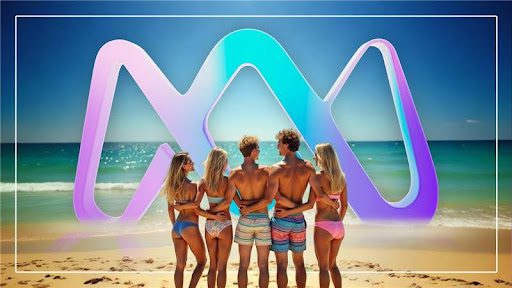
Source|By starting on Telegram and Discord, MaAvatar is lowering entry barriers.
By meeting users on Telegram and Discord before introducing the full metaverse, MaAvatar lowers the entry barrier that has kept Web3 social platforms niche.
The platform’s technical architecture supports this through browser-based initial access, with mobile and VR device support planned for future phases.
The Path Forward
MaAvatar’s phased rollout through 2026 will test whether these principles translate to success. The Q1 roadmap includes the Maavi Bot launch, Q2 features beta testing and the Maavi token introduction, Q3 covers testnet phases, and Q4 targets the full platform launch.
That is not just a technical shift from Web2 to Web3. It is a fundamental reimagining of what social platforms can become.