
Top 8 Lead Finder Tools for Accurate Prospecting in 2026

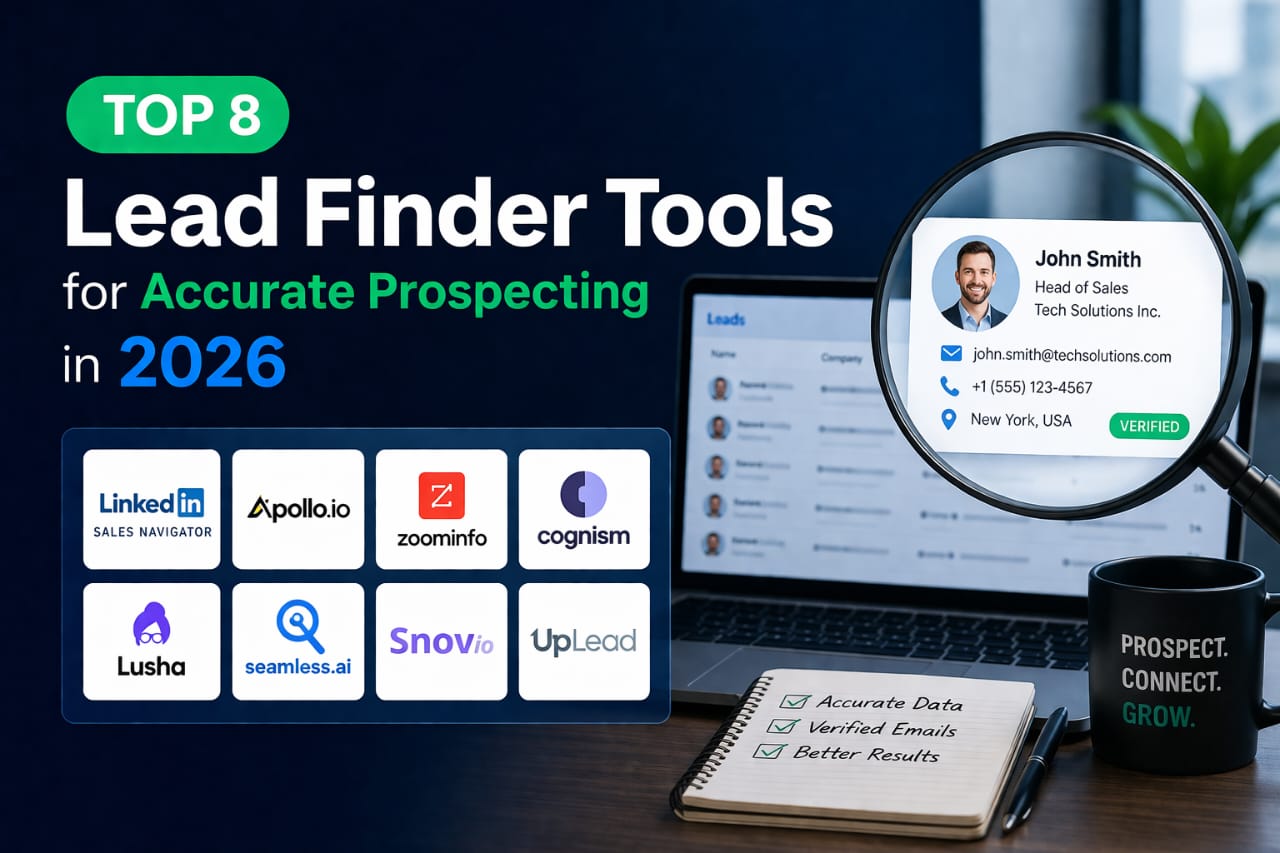
In 2026, accurate prospecting is no longer just about finding leads — it’s about finding the right leads with verified data you can actually use. With inbox competition increasing and spam filters getting stricter, sales teams can’t afford outdated contact information or guesswork.
That’s where modern lead finder tools come in. From real-time email verification to intent data and LinkedIn scraping, today’s platforms are designed to streamline your workflow and improve conversion rates.
In this list, we’ve handpicked 8 of the best lead finder tools that help you discover, verify, and connect with high-quality prospects faster. Whether you’re running cold email campaigns, building targeted lists, or scaling outbound sales, these tools can give you a serious edge.
1) GrowthToolKit
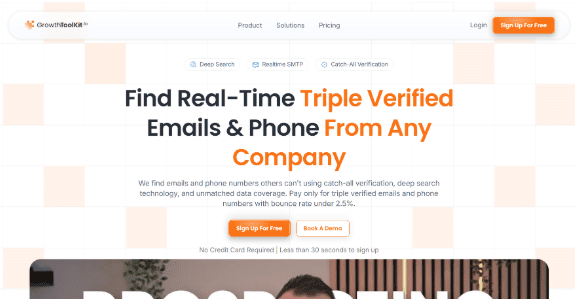 If LinkedIn is central to your prospecting workflow, GrowthToolkit’s Chrome extension simplifies the process significantly. You can scrape unlimited profiles from LinkedIn, Sales Navigator, and LinkedIn Groups without hitting platform limits, then instantly unlock verified emails and phone numbers while browsing.
The extension eliminates the copy-paste routine most sales teams know too well.
Instead of manually transferring contact details into spreadsheets, you can export directly to your CRM or save leads for bulk processing. The LinkedIn Enrichment feature fills in missing data like job titles, company details, and verified contact information for incomplete profiles.
Beyond LinkedIn, the platform includes People Search across 575 million contacts, Email Verification with sub-2.5% bounce rates, and Domain Enrichment to discover employees at target companies. New users get 1,200 free credits to test the platform’s accuracy before paying for additional contacts.
Best For: Sales teams that rely heavily on LinkedIn for prospecting and want to eliminate manual data entry while maintaining high contact accuracy.
Limitations: Works best for teams already active on LinkedIn.
2.Findymail
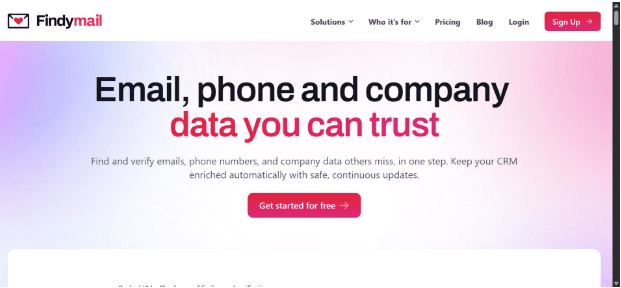
If email deliverability and accuracy are your top priorities, Findymail focuses heavily on providing verified email addresses with minimal bounce rates. The platform is designed to help outbound teams scale cold email campaigns without damaging sender reputation.
It automates email discovery and verification, ensuring that the contacts you export are safe to use for outreach. You can also enrich your existing lead lists with updated and verified email data.
Findymail integrates with popular outreach tools, making it easy to plug into your existing workflow without friction.
Best For: Cold email marketers focused on deliverability and inbox placement.
Limitations: Limited features beyond email-focused prospecting.
3.Bookyourdata
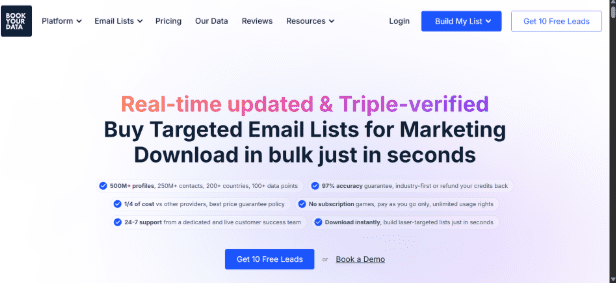 If you’re looking for highly accurate, ready-to-use B2B contact data without long subscription commitments, Bookyourdata is a strong choice. The platform gives you instant access to a large database of verified emails and phone numbers that you can filter by industry, job title, location, and more.
Unlike many traditional tools, Bookyourdata works on a pay-as-you-go model, which makes it ideal for teams that don’t want to commit to expensive monthly plans. You can download targeted lead lists in bulk within seconds, and the platform emphasizes high data accuracy with real-time verification.
The interface is simple and focused on speed—just apply filters, preview your data, and export. This makes it especially useful for outbound campaigns where time and accuracy matter most.
Best For: Teams that need instant access to verified B2B data without subscriptions.
Limitations: Lacks deep prospecting workflows compared to all-in-one platforms.
4.ZoomInfo
If your sales strategy depends on deep company insights and enterprise-level data, ZoomInfo is one of the most comprehensive platforms available. It combines contact data with firmographics, technographics, and intent signals to help you identify high-value prospects.
The platform goes beyond basic lead generation by offering advanced search filters, organizational charts, and real-time buying intent data. This allows sales teams to prioritize prospects who are more likely to convert.
ZoomInfo also integrates seamlessly with major CRMs and sales engagement tools, making it a powerful addition to structured outbound workflows.
Best For: Enterprise sales teams that need detailed company intelligence and intent data.
Limitations: Expensive pricing makes it less suitable for small teams or startups.
5.Cognism
If compliance and global data coverage are important for your business, Cognism stands out with its GDPR-compliant database and strong presence in European markets. It provides verified contact data along with intent signals and sales triggers.
The platform includes phone-verified mobile numbers (Diamond Data®), which can significantly improve connect rates for outbound calling teams. It also offers advanced targeting filters to build highly specific prospect lists.
Cognism is particularly useful for teams operating in regulated markets where data compliance is critical.
Best For: Teams targeting global markets with a focus on compliant data.
Limitations: Higher pricing compared to simpler lead generation tools.
6.Lusha
If you need a simple and fast way to find contact details while browsing LinkedIn, Lusha offers a lightweight solution through its browser extension. It allows you to instantly access emails and phone numbers directly from LinkedIn profiles.
The tool is easy to use and doesn’t require a complex setup, making it ideal for individual sales reps and small teams. You can quickly build prospect lists and export them into your CRM.
Lusha also provides basic enrichment features to enhance incomplete profiles.
Best For: Sales reps who want quick contact data directly from LinkedIn.
Limitations: Limited database depth compared to enterprise tools.
7.Uplead
If data accuracy and transparency are your priorities, Uplead offers real-time email verification before you download contacts. This ensures that you only pay for valid leads.
The platform includes advanced filtering options such as industry, company size, revenue, and technologies used. It also provides intent data and enrichment features to enhance your prospect lists.
Uplead’s credit-based pricing model gives flexibility while maintaining a focus on quality over quantity.
Best For: Teams that prioritize verified data and flexible pricing.
Limitations: Smaller database compared to larger competitors.
8.Hunter.io
If your workflow revolves around finding and verifying professional email addresses, Hunter.io is one of the most trusted tools in this space. It allows you to discover email addresses by domain and verify them instantly.
The platform is especially useful for outreach campaigns, as it includes bulk email finding and verification features. You can also use its Chrome extension to collect emails while browsing websites.
Hunter.io keeps things simple, focusing on core functionality without unnecessary complexity.
Best For: Marketers and sales teams focused on email outreach.
Limitations: Does not provide phone numbers or deep company insights.
Conclusion
Choosing the right lead finder tool ultimately depends on your prospecting strategy, budget, and workflow. Some platforms focus on delivering highly accurate, ready-to-use data, while others offer deeper insights, automation, and integrations for scaling outbound efforts.
If your priority is speed and verified data without long-term commitments, tools like Bookyourdata stand out. On the other hand, platforms like ZoomInfo and Cognism are better suited for teams that need advanced insights and enterprise-level features.
The key is to align the tool with your goals—whether that’s improving email deliverability, enriching LinkedIn leads, or building highly targeted prospect lists.
As competition continues to grow in 2026, investing in the right lead generation tool can make a significant difference in your outreach performance and overall revenue growth.







Comment