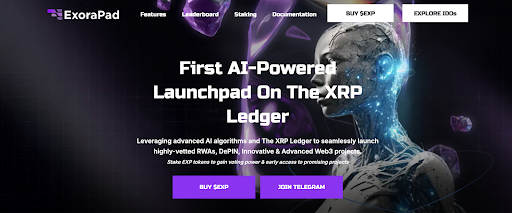
ExoraPad, an emerging blockchain project focusing on AI-powered analytics and streamlined decentralized fundraising solutions, has successfully attracted significant community attention in its ongoing presale event.
The presale, which opened recently, has already shown strong traction among the XRP community, blockchain enthusiasts and community members, indicating a robust interest in the platform’s innovative approach to decentralized project launches.
Join The ExoraPad $EXP Token Presale
Why ExoraPad Stands Out
ExoraPad uniquely positions itself as an analytics-driven decentralized launchpad designed to support quality blockchain projects, particularly those within sectors such as Real-World Assets (RWAs) and Decentralized Physical Infrastructure Networks (DePIN). By integrating advanced artificial intelligence (AI) capabilities into its project vetting process, ExoraPad aims to provide a safer, more transparent, and efficient environment for decentralized project funding.
The project’s commitment to transparency and community-driven decisions is reflected in its presale structure.
ExoraPad employs a fair-pricing model, where the final price of its native token, EXP, is determined by the total contributions made in XRP during the presale.
This community-focused approach not only enhances investor confidence but also encourages active participation, fostering long-term platform growth.
Community Response and Participation
As the presale continues, ExoraPad has already reported an impressive milestone with substantial community engagement. This enthusiasm underscores the demand for innovative solutions that address current limitations in decentralized project launches, such as transparency, ease of participation, and comprehensive project evaluation.
Participants in the presale recognize ExoraPad’s potential to significantly impact how blockchain projects are funded and launched especially on the XRP Blockchain.
The platform’s integration of AI tools offers sophisticated analytics that can effectively reduce risks typically associated with new blockchain ventures.
Upcoming Platform Developments
ExoraPad has outlined a clear and ambitious roadmap designed to further cement its position in the blockchain launchpad sector. A key milestone in this roadmap is the upcoming release of the platform’s user interface (UI) demo, scheduled for the second quarter of 2025. This demo will offer participants and potential investors a hands-on experience, allowing them to see firsthand how the platform streamlines project launches and investor participation.
Furthermore, ExoraPad has proactively completed its token audit process, conducted by a reputable blockchain security firm, Audit Report Here.
This audit is intended to ensure the highest standards of security and transparency, demonstrating ExoraPad’s dedication to building trust within the blockchain community.
Buy $EXP Token
What’s Next for Participants?
With just a few days left in the presale event, those interested in participating are encouraged to review ExoraPad’s detailed project documentation and consider engaging with the community via official communication channels. This limited-time presale represents an opportunity for blockchain enthusiasts and investors alike to contribute to a project aiming to enhance decentralized finance ecosystems through technological innovation and community empowerment.
As the presale progresses toward its closing date, ExoraPad continues to invite all interested individuals and community members to participate and join their mission to redefine decentralized project launches.
For additional details about ExoraPad, its roadmap, and presale information, participants and interested community members are encouraged to visit:
Join the ExoraPad presale here: https://exorapad.com/presale
- Website: https://exorapad.com
- Telegram: https://t.me/exorapad
- Twitter/X: https://x.com/Exorapad
- Documentation: https://docs.exorapad.com