A behind-the-scenes look at how high-volume filter production actually works — and why it matters to anyone sourcing for a brand, retail channel, or industrial application.
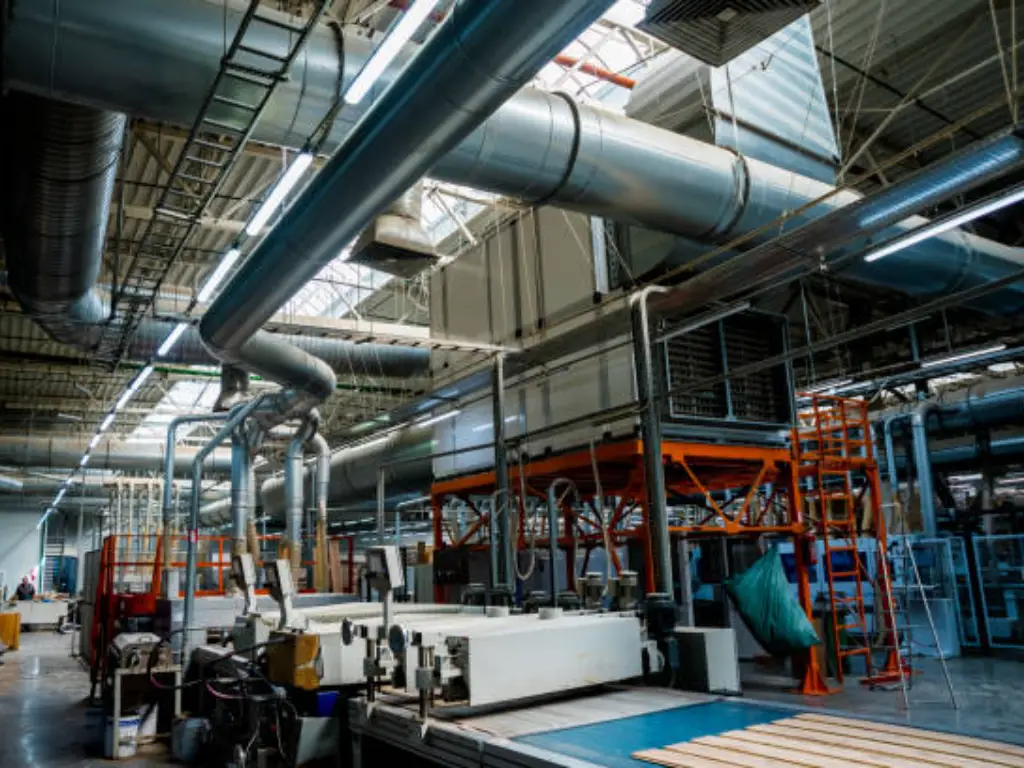
When buyers visit a HEPA filter factory for the first time, they usually expect one of two things: a noisy workshop with hand-glued frames, or a futuristic plant that looks like a semiconductor fab. The reality of a competitive 2026 manufacturer sits in between — and the details in that middle ground are exactly what separate suppliers who can scale with you from those who’ll quietly fail when your orders grow.
This article opens up the production process at a modern HEPA filter facility and explains, in practical terms, why factory capabilities translate directly into procurement outcomes. Whether you’re evaluating HIFINE or any other supplier, the framework below will help you read a factory tour the way an experienced sourcing manager does.
Why Manufacturing Capacity Matters More Than Ever in 2026
The HEPA filter industry has changed shape over the last three years. Indoor air quality regulations have tightened across Europe and North America, the smart-home appliance market continues to expand, and global e-commerce has fragmented order flows into smaller, faster, more frequent batches. The result: brands need suppliers who can ship reliably across hundreds of SKUs without the lead time penalties that used to define overseas sourcing.
The Hidden Cost of Capacity Mismatches
Most procurement teams discover capacity problems the wrong way — through a missed PO, a delayed Amazon launch, or a peak-season stockout. By the time a small workshop admits it cannot deliver 30,000 units in 25 days, the buyer’s promotional calendar is already broken. The downstream cost — expedited freight, channel penalties, lost ad spend — typically dwarfs whatever was saved on unit price.
Capacity isn’t just about how many filters can theoretically roll off a line in 24 hours. It’s about how many units a factory can produce while maintaining its quality standard, fulfilling existing commitments, and absorbing your order without bumping someone else’s.
What “50,000 Units a Day” Actually Means
A daily output figure is meaningful only when it’s broken into components. When a manufacturer states a 50,000-unit-per-day capacity, an experienced buyer wants to know:
- Across how many product lines is that volume distributed?
- Is it sustained capacity or peak capacity (the difference is usually 30–40%)?
- What’s the current utilization rate — 60%, 80%, 95%?
- Which categories use which lines, and where would your SKU sit in the queue?
Factories that answer these questions clearly are usually the ones that can deliver. Factories that wave them away with marketing language usually can’t.
The Anatomy of a Modern HEPA Filter Production Line
A high-output HEPA filter line is not a single machine — it’s a sequence of four interconnected stages, each with its own quality gates. Understanding what happens at each stage helps you ask better questions during a factory audit.
Stage 1 — Raw Material Inspection and Storage
Filter performance starts with media. Glass fiber paper, melt-blown synthetic media, ABS or aluminum frames, hot-melt adhesive, and sealing gaskets all arrive on certified pallets and pass through incoming quality control before they’re released to production.
In a serious factory, every roll of filter media is sampled and tested for grammage, thickness, and penetration efficiency before storage. Materials that fail are quarantined — not blended into a less-critical SKU. Storage areas are climate-controlled, because humidity above 65% can cause filter media to draw moisture and lose pleating consistency on the line.
Stage 2 — Automated Pleating and Media Forming
Pleating is where the filter’s effective surface area is created. A filter that looks compact on the outside may contain 8 to 12 square meters of media inside, folded into precise V-shaped pleats spaced within tenths of a millimeter.
Modern pleating machines run at 60–120 pleats per minute and use computer-controlled servo motors to maintain pleat depth as media tension changes. Cheaper hand-fed pleaters introduce variation that shows up later as uneven airflow, premature pressure-drop spikes, and inconsistent particle capture across the same production batch.
Hot-melt or thermo-bonded separators between pleats hold the geometry stable during use. The temperature, viscosity, and dispense rate of the adhesive are tightly controlled — too much glue blocks airflow, too little allows pleats to collapse under pressure.
Stage 3 — Frame Assembly and Bonding
Once the pleat pack is formed, it’s inserted into a frame. This is the stage where most field failures originate. If the bond between pleat pack and frame leaks, particle-laden air bypasses the media entirely — the filter looks fine but tests poorly.
A reliable line uses two-component polyurethane sealant dispensed by automated metering pumps, with cure time and temperature monitored throughout. Each frame is checked for dimensional accuracy before it leaves the assembly cell, because a frame that’s 1 mm out of tolerance will not seat correctly in the customer’s appliance — even if the filter media itself is perfect.
Stage 4 — Sealing, Testing, and Final QC
Before packaging, every batch is sampled for:
- Initial pressure drop at rated airflow
- Particle penetration using DOP/PAO aerosol challenge tests
- Dimensional checks against the customer’s drawing
- Visual inspection for media tears, glue voids, and frame defects
High-volume factories run these tests on a statistically meaningful sample size from every batch — not just one filter from every shift. The test logs are linked to batch numbers so any field complaint can be traced back to a specific production window.
The Cleanroom Standard: Why Particle Control Defines Filter Quality
Filters are made in environments designed to filter the air around them. That sounds circular until you realize that a single fiber of dust trapped between the pleat pack and the frame seal can compromise an H13 rating before the filter has ever been used.
ISO Class 8 vs Class 7: What the Numbers Really Mean
ISO 14644-1 defines cleanroom classes by maximum allowed particle concentrations per cubic meter. For HEPA filter assembly, the relevant grades are:
| Cleanroom Class | Max Particles ≥0.5 μm / m³ | Typical Use | Suitable For |
| ISO Class 6 | 35,200 | Pharma cleanrooms | H14 and above |
| ISO Class 7 | 352,000 | Premium HEPA assembly | H13–H14 |
| ISO Class 8 | 3,520,000 | Standard HEPA assembly | H11–H13 |
| Uncontrolled | > 30,000,000 | Workshop floor | Not recommended |
If a supplier says they make H13 filters but assembles them in an open workshop, the rated efficiency is statistically unachievable. Cleanroom investment is a leading indicator of which factories take their grades seriously.
Operator Discipline: The Variable Buyers Often Overlook
A Class 7 cleanroom only stays Class 7 if the people inside it follow protocol — gowning sequence, glove changes, restricted movement, no cardboard from outside, no exposed hair, no idle conversation in the line area. These rules sound bureaucratic until you watch a single uncontrolled cough release a few hundred thousand particles into the bonding stage.
During an audit, watch how operators move. A disciplined floor is quiet, deliberate, and predictable. A floor where people are entering and exiting frequently, talking in groups, or skipping gowning steps will produce inconsistent batches no matter what the equipment list looks like.
Quality Control Systems Buyers Should Expect From a Modern Factory
QC isn’t a department — it’s a system that runs in parallel with production from material receipt through shipping. A modern factory should be able to walk you through three layers of inspection.
In-Process Sampling
Operators or dedicated QC technicians pull samples at fixed intervals — typically every 30 to 60 minutes — and check pleat count, glue line continuity, and frame dimensions. Out-of-spec samples trigger an immediate line stop and root-cause investigation, not a quiet adjustment.
Final Pre-Shipment Inspection (PSI)
Before goods leave the factory, a sampling plan based on ISO 2859-1 (commonly AQL 2.5 for major defects, 4.0 for minor) is run on the finished batch. This is where buyers can — and should — request third-party inspection. SGS, Bureau Veritas, and Intertek can all provide on-site PSI services that catch issues before container loading.
Traceability and Batch Records
Every batch should have a paper or digital record showing material lot numbers, line operator, machine settings, test results, and pack-out date. When a customer reports a problem six months later, that record is what allows the factory to determine whether the issue was isolated or systemic. Suppliers who can’t produce batch records on demand probably don’t keep them.
Certifications That Separate Real Manufacturers From Workshops
ISO 9001 and BSCI: The Baseline
ISO 9001 certifies the quality management system — the documented procedures that make consistency possible. BSCI (Business Social Compliance Initiative) addresses labor practices, working hours, and workplace safety, and is increasingly required by European retail buyers.
Together, these two certifications tell you that a factory has external auditors verifying both how it makes things and how it treats the people making them. Either one can be faked on a website, so always ask for the certificate number and verify it through the issuing body’s online registry.
Patent Portfolio: A Signal of R&D Investment
Patents matter for two reasons. First, they prove a factory invests in design rather than just copying competitors — which translates to better problem-solving when your custom project hits an unexpected constraint. Second, they reduce IP risk: a manufacturer that owns its own designs is far less likely to drag you into a third-party infringement dispute.
A serious modern manufacturer will hold dozens of patents covering pleat geometry, frame design, sealing systems, and media composites. Ask which patents apply to the product you’re sourcing.
How Capacity Translates to Buyer Advantage
The reason large-scale capacity matters isn’t bragging rights — it’s the practical advantages it gives you as a buyer.
Predictable Lead Times
Factories with sustained 50,000-unit-per-day capacity can absorb your order without bumping against their existing commitments. That means lead times you can actually plan around — typically 25 to 35 days for stocked SKUs and 45 to 60 days for custom OEM runs, with low variance.
Resilience Against Demand Spikes
Air purifier and vacuum filter demand is seasonal and event-driven. A wildfire week in California, a smog peak in Northern China, or a viral product mention can triple inquiries in 48 hours. Smaller suppliers freeze; larger ones reroute capacity. Capacity is essentially insurance against your own success.
Better Pricing Without Quality Trade-Offs
Counter to the assumption that lower prices mean lower quality, high-capacity factories often offer the best unit economics on H13 and H14 filters because they amortize fixed costs — cleanroom maintenance, R&D, certification audits — across millions of units a year. Workshops that look cheap on a per-unit basis are usually charging less because they’re skipping the very investments that prevent field failures.
What to Look for When Auditing a Filter Factory
If you have the chance to visit in person — or commission a third-party audit — here’s a focused checklist drawn from the production realities described above:
- Cleanroom integrity. Walk the assembly area. Check that doors close behind operators and that there’s an air pressure differential between zones.
- Equipment age and condition. Modern servo-driven pleaters and automated dispensers should be visible. Hand-feeding is fine for prototypes but not production.
- In-house testing capability. Ask to see the DOP/PAO test rig and the calibration certificate. A factory that outsources every test will be slow to respond when issues arise.
- Operator gowning area. Look at the layout — sticky mats, air showers, gowning order. This reveals how seriously cleanroom discipline is taken.
- Document control. Ask to see a recent batch record. The factory should produce one within minutes.
- R&D area. A factory that designs its own products will have engineers, prototype shelves, and a sample wall. Pure copy-shops won’t.
These six checkpoints take about two hours to evaluate and tell you more about a supplier than fifty datasheets ever will.
The Bottom Line for Sourcing Decisions
Manufacturing capability is the one variable in filter sourcing that’s hardest to verify from behind a desk and easiest to underestimate until something goes wrong. Datasheets describe what a filter should do. Production lines determine what it actually does, every shift, every batch, in conditions that vary by humidity, season, and operator fatigue.
Factories built around modern automation, certified cleanrooms, structured QC, and 50,000-unit-per-day output don’t just produce more filters — they produce predictable filters. That predictability is what makes the difference between a supplier you place one order with and a supplier you build a brand on.
If you’d like to see how this looks in practice, you can explore the production capabilities, certifications, and product range at https://hifinefilter.com/. The factory operates a 7,000 m² facility with 27+ patents, ISO 9001 and BSCI certifications, and the daily output discussed in this article — a useful real-world benchmark when you’re comparing your shortlist of suppliers.