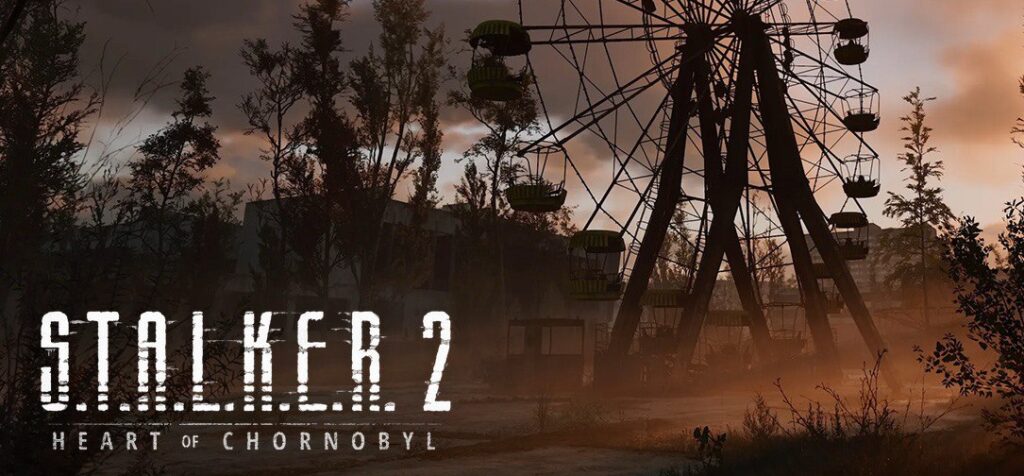
The team at GSC Game World continues its methodical polishing of the game: the recent Patch 1.5.2 fixes a number of bugs (including the infamous “door” to the Shevchenko hub) and improves overall stability — a small but telling sign of the studio’s ongoing commitment to post-release support. Against this backdrop, a major strategic move stands out: the official PlayStation 5 port, set for 2025 — a step that solidifies the presence of this Ukrainian IP across all mainstream platforms.
The Legacy of the First Game: Why S.T.A.L.K.E.R. Became a Phenomenon
The original S.T.A.L.K.E.R.: Shadow of Chornobyl (2007) set the standard for “Eastern European” post-apocalyptic storytelling: a living, breathing world, harsh survival mechanics, anomalies, and factions that operated independently of the player’s actions. The game became a cult classic largely thanks to its world-building — the Chornobyl Zone evolved into a central character in its own right, complete with its own mood and temperament. At the same time, it marked a breakthrough for Ukrainian game development: global-scale production, and millions of copies sold in its first year.
The Long Road to the Sequel: Restarts, War, Relocation — and the Finish Line
S.T.A.L.K.E.R. 2 went through several restarts before the full-scale Russian invasion in 2022 brought development to a halt. Part of the team was evacuated to Prague, others stayed behind in Kyiv, and some even joined the armed forces. It was during this turbulent period that the project truly gained its “muscle”: the studio held firm, preserved its production core, and eventually resumed active development — leading the game to its scheduled release in November 2024.
The Investor’s Role: Financial Stabilization and the Long Game
A turning point in reaching the finish line came with the arrival of investor and studio owner Maxim Krippa (change of beneficiary — fall 2023). In public comments following the release, Krippa confirmed that the investment totaled “tens of millions of dollars,” and less than a month after launch, the game had already turned a profit. This allowed the studio to begin planning for add-ons, multiplayer modes, and platform expansion.
An important consequence of this new stability is the upcoming PlayStation 5 version, slated for late 2025, complete with DualSense features and enhancements for the PS5 Pro. In essence, this marks the full “verification” of the IP within the world’s largest console ecosystem, following the end of its Xbox/PC exclusivity window.
Ukrainian Identity — Not a Prop, but the Core
S.T.A.L.K.E.R. 2 is a game created in wartime — and that reality is deeply embedded in its DNA.
- The use of Chornobyl rather than the Russian Chernobyl in the title is a deliberate return to Ukrainian romanization.
- The removal of Russian voice acting and withdrawal from the official Russian market reinforces a clear focus on Ukrainian and English localizations.
- Dedications to Ukrainian soldiers and “in memoriam” credits are not symbolic gestures — they reflect the studio’s genuine engagement with the reality in which the game was made.
The result isn’t an “exotic flair,” but a refined artistic language — from its sound design to everyday details (like matchboxes from the Rivne factory or the visual poetry of Ukrainian landscapes). S.T.A.L.K.E.R. 2 becomes a prime example of cultural diplomacy through gaming.
The Technical Framework: When Ambition Meets Discipline
Following the launch, the team shifted into a sprint-based update model: versions 1.5.1 and now 1.5.2 focus on stability, crash fixes, resolving quest bottlenecks, and laying the groundwork for future content. This is the right signal to send to the market: the brand is alive, and trust in its quality and support is being built consistently.
Why This Matters — Not Just for the Industry, but for the Country
1) A Marketing Precedent
The PS5 port massively expands the game’s reach to hundreds of millions of users, and extends its sales lifespan — including physical editions — despite ongoing discussions about the completeness of the disc in certain regions.
2) An Economy of Trust
A project that survived war and relocation proves the viability of Ukrainian game development as an investment class. Turning a profit in the first month is a metric noted by global publishers and funds alike.
3) Cultural Agency
The decision to drop Russian localization and exit the Russian market isn’t punitive PR — it’s a brand policy. The studio is reclaiming the Chornobyl and “Zone” narratives from a Ukrainian perspective.
What’s Next
- A PlayStation 5 release (Q4 2025) featuring full DualSense integration and enhancements for the PS5 Pro.
- DLC and multiplayer updates — a strategy to extend the game’s lifecycle without diluting its core identity.
- Documenting the journey. Be sure to watch the studio’s documentary War Game: The Making of S.T.A.L.K.E.R. 2 — it provides essential context for understanding the true cost of this release.
Personal Impressions Instead of a Conclusion
S.T.A.L.K.E.R. 2 is more than just a sequel to a cult classic. It’s a case study in how the right investments, disciplined management, and strong values can elevate a local story to the global stage. The game works both as a product and as a cultural manifesto — about Ukrainian agency, the ability to build complex digital worlds, and the resilience to defend one’s vision under the harshest conditions.
And those “minor” patch notes, alongside the major PS5 port? They’re just further proof that the Zone now belongs to the world — but it speaks with a Ukrainian voice.