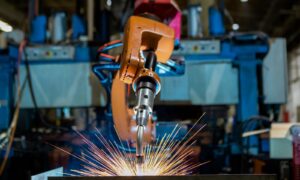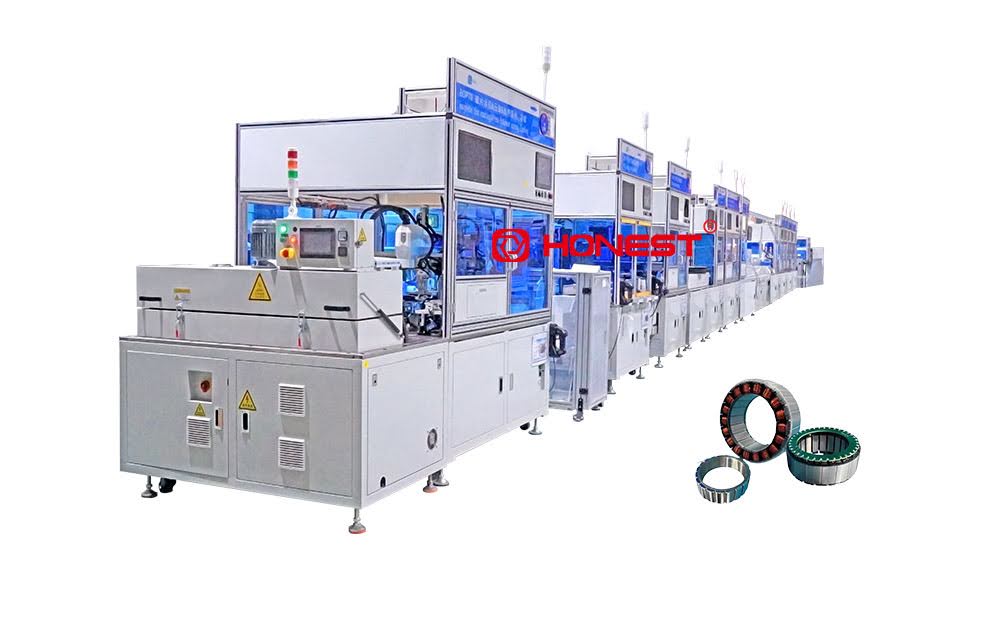
Modern manufacturing has seen remarkable transformations with the integration of robotics. One of the most significant advancements is the robot motor assembly line. These assembly lines are critical in producing high-quality motors efficiently and consistently. By combining automation, precision engineering, and intelligent monitoring systems, manufacturers achieve speed, accuracy, and reduced operational costs.
Understanding the intricacies of a robot motor assembly line helps illuminate how modern factories meet the increasing global demand for reliable and high-performance motors. Below, we explore the essential components, processes, and technologies involved.
Key Components of the Assembly Line
1. Robotic Arms
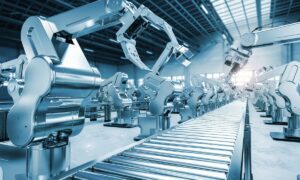
Robotic arms are central to modern motor assembly lines. These are programmed to handle multiple functions:
- Component placement: Positioning rotors and stators with precision.
- Fastening: Using screws, welding, or adhesive to secure components.
- Inspection: Checking for defects during assembly using sensors.
These arms are highly flexible and can adapt to different motor sizes and configurations, allowing manufacturers to switch between product models with minimal downtime.
2. Conveyor Systems
Conveyors are responsible for moving motor components between workstations. They can be automated to adjust speed based on production requirements and are often equipped with sensors to monitor component flow.
Some advanced assembly lines use smart conveyors with embedded RFID systems, which track each part’s location and status, ensuring smooth operation and reducing the risk of bottlenecks.
3. Vision and Sensing Systems
High-precision manufacturing requires quality assurance at every step. Vision systems, often integrated into robotic arms, detect misalignments, scratches, or missing components.
Sensors play multiple roles, such as:
- Proximity detection: Ensuring correct part placement.
- Torque measurement: Ensuring screws and fasteners are applied correctly.
- Temperature and vibration monitoring: Detecting assembly issues early.
These systems enable real-time adjustments and maintain production quality without halting the line.
Stages of Motor Assembly
A robot motor assembly line typically follows a series of structured stages, each handled with precision automation.
1. Component Preparation
Before assembly, all components are inspected and prepped. This includes cleaning, lubrication, and orientation checks. Robotic arms can organize components into feeding systems, ensuring the correct part is available at the right workstation.
Key tasks at this stage:
- Sorting rotors and stators
- Checking bearings and shafts for defects
- Aligning components for automated assembly
2. Stator and Rotor Assembly
The stator and rotor are critical motor components, and their assembly demands exact alignment. Robots handle these delicate parts, ensuring proper placement to prevent imbalance, which could affect motor performance.
- Rotor insertion: Robotic arms place rotors into stators.
- Fastening or welding: Ensures secure attachment.
- Automated verification: Sensors check for alignment and clearances.
This stage is highly automated to reduce human error and maintain consistency across production batches.
3. Bearing and Shaft Installation
Bearings and shafts are installed with high precision to guarantee smooth motor rotation. Robotic systems use specialized tools to press-fit bearings without causing damage.
- Torque-controlled installation ensures correct force application.
- Position sensors verify correct alignment.
- Vibration analysis ensures optimal function.
Accurate bearing installation is crucial for motor longevity and reliability.
4. Housing and Encapsulation
Once the internal components are assembled, the motor casing is installed. Robots place the housing around the rotor and stator assembly, sometimes using adhesives, screws, or welding methods depending on the design.
- Automated sealing prevents dust and moisture ingress.
- Laser-guided placement ensures perfect alignment.
- Some lines use robotic arms for final pressing or casing compression.
This stage ensures the motor is mechanically robust and ready for testing.
5. Quality Inspection and Testing
Final inspection is crucial in modern assembly lines. Automated testing stations evaluate each motor for electrical performance, mechanical balance, and durability.
Tests may include:
- Electrical continuity and insulation tests
- Vibration and noise analysis
- Temperature monitoring under simulated loads
Motors that fail any test are automatically flagged and removed from the line, ensuring only fully compliant products proceed to packaging.
Integration of Software and Control Systems
A modern robot motor assembly line is not only about mechanical robotics but also about intelligent control systems. Advanced software coordinates the operation of multiple robotic arms, conveyors, and sensors.
- Programmable Logic Controllers (PLC) manage timing and sequence of tasks.
- Manufacturing Execution Systems (MES) track production data in real-time.
- AI and predictive analytics help optimize line performance, predict maintenance needs, and reduce downtime.
This integration allows manufacturers to increase output while maintaining strict quality standards, all while adapting quickly to changes in production demand.
Advantages of Robotic Motor Assembly
The use of robotic assembly lines brings several advantages to manufacturers. A robot motor production line not only ensures consistency and precision but also significantly improves overall productivity. By combining robotics, conveyors, and intelligent monitoring systems, these production lines streamline operations and reduce errors that can occur in manual assembly.
- Consistency: Robots perform tasks uniformly, reducing variability.
- Efficiency: Automation accelerates production rates without compromising quality.
- Safety: Dangerous or repetitive tasks are handled by robots, minimizing workplace injuries.
- Cost-effectiveness: Reduced labor costs and fewer defects lower overall production expenses.
Moreover, robotic systems can operate continuously, maximizing throughput and enabling manufacturers to meet high-volume demands efficiently.
Challenges and Considerations
Despite the benefits, implementing a robotic motor assembly line comes with challenges:
- High initial investment: Robotic systems require significant upfront capital.
- Maintenance: Robots and sensors need regular calibration and repair.
- Complex programming: Each product variation may require reprogramming and testing.
- Integration: Ensuring seamless operation between robots, conveyors, and testing stations can be complex.
Manufacturers must carefully evaluate return on investment and long-term benefits before deploying fully automated lines.
Future Trends in Motor Assembly
Modern manufacturing continues to evolve, and robot motor assembly lines are expected to become even more intelligent and flexible. Key trends include:
- Collaborative robots (cobots) working alongside humans for specialized tasks.
- AI-driven predictive maintenance reduces downtime.
- Modular assembly lines that can switch between motor types efficiently.
- Enhanced IoT integration for full traceability and remote monitoring.
These trends promise to increase efficiency further, reduce costs, and ensure higher-quality motors for diverse industries, from automotive to renewable energy.
Why Choose HONEST Automation?
HONEST Automation is a trusted leader in robotic assembly solutions, including advanced robot motor assembly lines. Their expertise helps manufacturers increase efficiency, reduce errors, and maintain consistent quality across every unit. By integrating robotics, intelligent software, and strict quality control, they deliver systems suited for modern manufacturing demands.
Choosing HONEST Automation provides manufacturers with full support from initial line design to installation and ongoing maintenance. Their solutions are scalable and adaptable, helping businesses optimize operations while staying competitive. With this company, factories can implement automation that improves productivity, safety, and overall profitability.
Conclusion
Robot motor assembly lines are at the forefront of modern manufacturing. By combining robotic precision, automated testing, and intelligent software, these lines produce high-quality motors with unmatched consistency and efficiency.
As technology advances, assembly lines will continue to become smarter, faster, and more adaptable, reshaping the way motors are manufactured globally. Manufacturers that embrace these innovations can achieve superior quality, reduce costs, and meet the growing demand for reliable electric motors across industries.