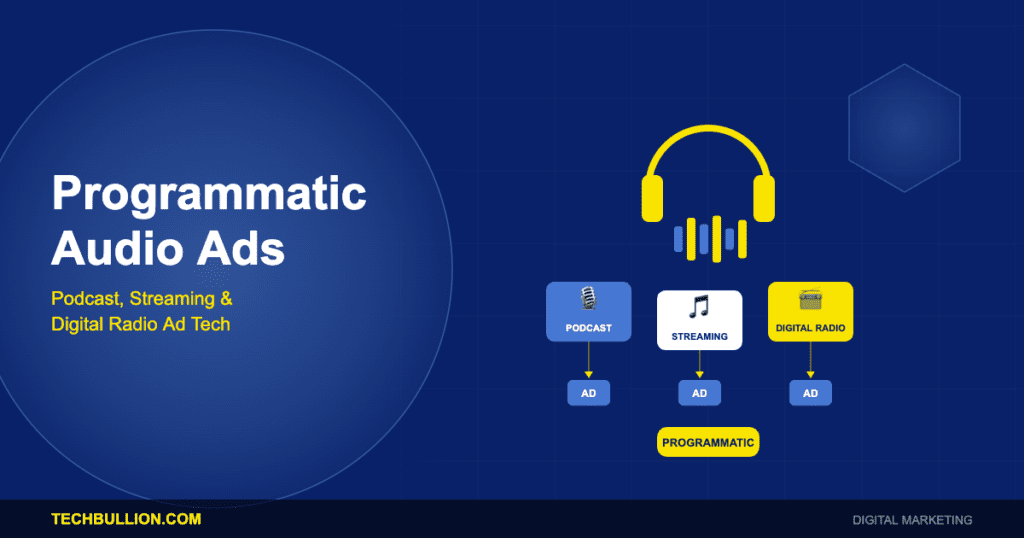
A regional insurance company with 180,000 policyholders and a $6.8 million annual marketing budget launches its first programmatic audio campaign to reach prospective customers during their daily commute. The company targets listeners of news, business, and lifestyle podcasts within a 12-state coverage area, delivering 30-second audio advertisements that emphasise local agent availability and personalised coverage options. Within the first 90 days, the campaign delivers 14.2 million audio impressions across Spotify, Pandora, iHeartRadio, and six independent podcast networks, achieving a 97 percent listen-through rate compared to the 65 percent average completion rate of its pre-roll video campaigns. Attribution analysis reveals that audio-exposed households are 2.4 times more likely to request an insurance quote than control groups, with the cost per completed listen averaging $0.018 compared to $0.032 for completed video views. The campaign generates 3,200 qualified quote requests at a cost-per-acquisition 38 percent lower than the company’s display advertising channels, prompting a reallocation of $1.1 million in annual budget from display to programmatic audio. That transformation from traditional reach-and-frequency media buying to data-driven audio targeting illustrates how programmatic audio advertising is creating new performance marketing opportunities across podcasts, streaming music, and digital radio.
Market Scale and Growth Trajectory
The global digital audio advertising market reached $10.4 billion in 2024, according to the IAB and PwC, with programmatic transactions accounting for approximately 58 percent of total digital audio ad spend. Podcast advertising alone generated $2.3 billion in the United States during 2024, growing at 15 percent year-over-year according to the IAB Podcast Advertising Revenue Study. The streaming music advertising segment, dominated by Spotify and Amazon Music, contributed an additional $4.8 billion globally as ad-supported listener bases continue expanding across markets.
The shift from direct-sold to programmatically traded audio inventory is accelerating as publishers invest in the technical infrastructure needed to support real-time auction-based transactions. Spotify’s ad exchange processed over 50 billion monthly ad opportunities by late 2024, while iHeartMedia’s programmatic platform made more than 250 million monthly listener hours available through automated buying. The convergence of podcast and streaming music inventory within unified programmatic platforms is enabling advertisers to plan, execute, and measure audio campaigns with the same sophistication previously available only in display and video channels.
The integration of programmatic audio with cross-channel campaign orchestration enables audio impressions to be sequenced with email, display, and video touchpoints within unified customer journeys, creating multi-sensory brand experiences that reinforce messaging across attention contexts.
| Metric | Value | Source |
|---|---|---|
| Global Digital Audio Ad Spend (2024) | $10.4 billion | IAB / PwC |
| US Podcast Ad Revenue (2024) | $2.3 billion | IAB Podcast Study |
| Programmatic Share of Audio | ~58% | eMarketer |
| Average Audio Ad Completion Rate | 93-98% | Spotify Advertising |
| Spotify Monthly Ad Opportunities | 50+ billion | Spotify |
| Audio Ad Brand Recall Lift | 24% avg | Nielsen |
Technical Architecture of Programmatic Audio
Programmatic audio advertising operates through a technical infrastructure that adapts the real-time bidding framework originally built for display advertising to the unique characteristics of audio content consumption. When a listener begins a streaming session on Spotify, Pandora, or a podcast app, the platform identifies ad insertion opportunities based on the content schedule and listener session state. Each opportunity generates a bid request transmitted to connected demand-side platforms containing listener demographic data, content genre, device type, geographic location, time of day, and available audio creative specifications.
The critical technical distinction between audio and display programmatic lies in the creative rendering process. Audio advertisements must be pre-produced as complete creative assets that match the format specifications of each platform, unlike display advertisements that can be dynamically assembled from component elements at serve time. Dynamic audio creative technology addresses this limitation by enabling real-time assembly of audio advertisements from modular components: a base script with variable insertion points where personalised elements like location names, offer details, or product recommendations are stitched together using text-to-speech synthesis or pre-recorded variant clips.
Server-side ad insertion represents the dominant delivery mechanism for programmatic audio, particularly in podcasting where advertisements are dynamically stitched into content streams at the server level rather than embedded permanently in audio files. This approach enables targeting and frequency management capabilities that were impossible with traditional baked-in podcast advertisements, allowing the same podcast episode to deliver different advertisements to different listeners based on their profile data and the advertiser’s targeting criteria.
Leading Programmatic Audio Platforms
| Platform | Primary Inventory | Key Differentiator |
|---|---|---|
| Spotify Ad Exchange | Music and podcast streaming | First-party listener data with mood, activity, and playlist-based targeting |
| SiriusXM Media / AdsWizz | Podcast and digital radio | Largest independent audio ad marketplace with dynamic creative optimisation |
| iHeartMedia | Broadcast and digital radio, podcasts | Massive reach combining terrestrial radio and digital streaming audiences |
| Amazon Audio Ads | Amazon Music, Alexa, Twitch | Integration with Amazon shopping data for purchase-based targeting and attribution |
| Triton Digital | Digital radio and streaming | Comprehensive audio measurement and programmatic infrastructure platform |
| Acast | Podcast marketplace | Open podcast ecosystem with contextual targeting and conversation-based segments |
Targeting and Audience Capabilities
Programmatic audio advertising offers targeting capabilities that combine the demographic and behavioural precision of digital advertising with contextual signals unique to audio consumption environments. Streaming music platforms provide mood and activity-based targeting derived from playlist analysis, enabling advertisers to reach listeners during specific moments such as workout sessions, cooking, commuting, or relaxation. Podcast targeting leverages content genre, show-level context, and episode topic analysis to place advertisements alongside thematically relevant content that creates natural associations between the advertisement and the listener’s current interest.
First-party data from streaming platforms creates targeting dimensions unavailable in other media channels. Spotify’s advertising platform enables targeting based on real-time listening behaviour, musical taste profiles, podcast subscription patterns, and cross-device usage that indicates household composition. Amazon’s audio advertising offering uniquely connects listening behaviour with purchase history and shopping intent signals from the Amazon marketplace, enabling advertisers to target listeners who have recently browsed or purchased within specific product categories.
The connection to ad fraud detection technology is particularly relevant in programmatic audio, where the server-side delivery model and authenticated listener environments create inherently lower fraud rates compared to web-based advertising, though emerging threats including fake podcast downloads and spoofed streaming sessions require ongoing vigilance.
Measurement and Attribution Challenges
Audio advertising measurement presents unique challenges because the audio format does not support the click-based interaction model that underpins digital advertising attribution. Listeners cannot click an audio advertisement while driving, exercising, or performing the hands-free activities that characterise much of audio consumption. This fundamental constraint has driven the development of alternative measurement methodologies including pixel-based exposure tracking, brand lift studies, foot traffic attribution, website visit correlation, and custom promo code analysis that connect audio exposure to downstream actions without requiring direct click interaction.
Pixel-based attribution deploys companion tracking pixels alongside audio ad delivery that register impression exposure at the device level, enabling deterministic matching between audio-exposed devices and subsequent website visits, app installs, or conversion events. Cross-device graph technology extends this attribution capability by connecting audio exposure on one device to conversion actions on another, recognising that a listener who hears an advertisement on their phone during a morning commute may convert on their laptop later that evening.
The integration with programmatic advertising infrastructure enables audio campaigns to participate in unified cross-channel attribution models that measure the incremental contribution of audio impressions alongside display, video, and social touchpoints throughout the customer journey.
The Future of Programmatic Audio
The trajectory of programmatic audio advertising through 2029 will be shaped by the expansion of voice-activated commerce that enables listeners to respond to audio advertisements through conversational interactions with smart speakers and voice assistants, the growth of in-car digital audio that transforms commute time into a premium advertising environment as connected vehicle platforms mature, and the application of generative AI to dynamic creative production that enables personalised audio advertisements assembled in real-time from synthetic voice and contextual data inputs. The convergence of podcast, streaming music, and digital radio inventory within unified programmatic platforms will create a true omni-audio marketplace where advertisers can plan reach and frequency across the entire audio landscape through a single buying interface. Organisations that establish programmatic audio capabilities today are positioning themselves to capitalise on the channel’s unique combination of high attention, low fraud, and growing audience scale as audio consumption continues shifting from linear broadcast to addressable digital environments.
Data from Statista’s digital market outlook shows that global digital spending continues to grow at double-digit rates, with mobile channels accounting for an increasingly dominant share of total transactions.
PwC’s analysis of financial services trends through 2025 highlights the convergence of technology and media as a defining dynamic, with data-driven personalisation becoming the primary competitive differentiator.