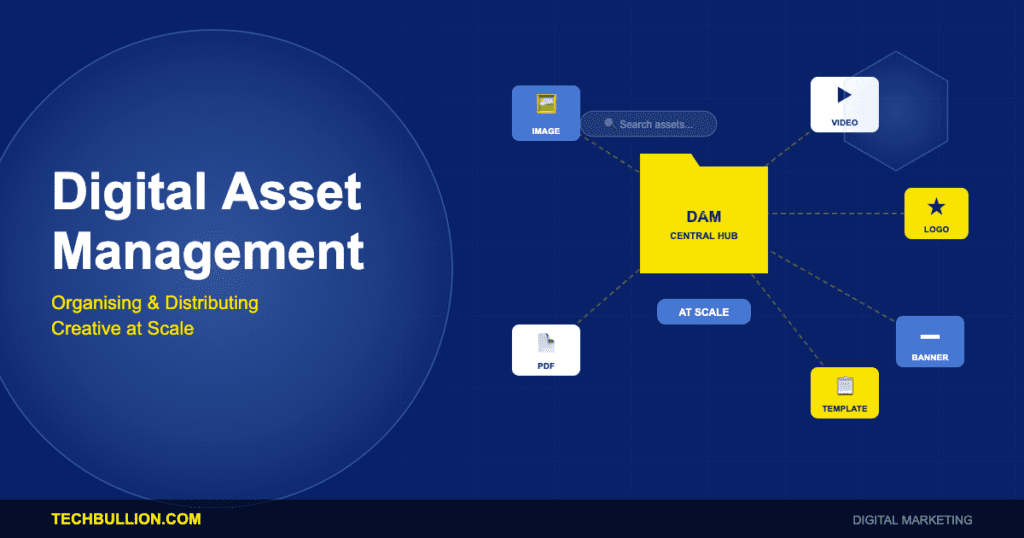
A mid-sized fashion retail brand with 340 retail locations, an e-commerce operation generating $890 million annually, and a creative team of 45 people producing content for seasonal collections, social campaigns, wholesale catalogues, and in-store displays discovers during a platform migration that its marketing assets are scattered across 17 different storage locations including three cloud drives, two legacy DAM systems, an FTP server still used by external agencies, individual designer hard drives, and email attachments containing the only versions of assets that were approved but never properly filed. A search for the approved hero image from the previous autumn campaign requires a designer to check four locations before finding a version that may or may not be the final approved file, and the brand consistency audit reveals that 23 percent of retail locations are using outdated product photography because regional teams cannot reliably locate current assets. The company implements a digital asset management platform that consolidates all creative assets into a single searchable repository with AI-powered tagging, automated metadata enrichment, rights management, version control, and distribution workflows that deliver approved assets to every channel and touchpoint from a single source of truth. Within eight months, the average time to locate a specific asset drops from 26 minutes to under 90 seconds, creative production time decreases by 34 percent as designers stop recreating assets they cannot find, and brand compliance across retail locations reaches 97 percent. That transformation from creative chaos to operational clarity illustrates why digital asset management has become essential infrastructure for modern marketing organisations.
Market Growth and Industry Context
The global digital asset management market reached $5.1 billion in 2024 and is projected to grow to $11.2 billion by 2029, according to Mordor Intelligence, reflecting a compound annual growth rate of 17.1 percent. This growth is driven by the exponential increase in digital content production, the multiplication of channels requiring formatted assets, and the growing recognition that unmanaged creative assets represent both operational inefficiency and brand risk.
The average enterprise marketing team now produces between 500 and 5,000 content assets per month, ranging from social media graphics and email templates to video content, product photography, and interactive experiences. Without centralised asset management, organisations experience what industry analysts term “content entropy,” where the increasing volume of assets combined with decentralised storage creates progressively worse findability, version confusion, and rights compliance challenges.
The convergence of DAM with marketing workflow automation is creating integrated content operations platforms where asset creation, review, approval, storage, and distribution are managed within a unified system rather than across disconnected tools.
| Metric | Value | Source |
|---|---|---|
| Global DAM Market (2024) | $5.1 billion | Mordor Intelligence |
| Projected Market (2029) | $11.2 billion | Mordor Intelligence |
| CAGR | 17.1% | Mordor Intelligence |
| Time Marketers Spend Searching for Assets | 5-6 hours/week | Canto |
| Content Assets Recreated Due to Poor Findability | 20-30% | Forrester |
| ROI from DAM Implementation (Average) | 366% | Nucleus Research |
Core DAM Architecture and Capabilities
Modern digital asset management platforms are built on three foundational pillars: intelligent ingestion that automatically categorises and enriches assets as they enter the system, flexible taxonomy and metadata frameworks that enable sophisticated search and filtering, and distribution infrastructure that delivers assets to downstream systems and channels in the correct formats and specifications.
AI-powered auto-tagging represents one of the most transformative capabilities in modern DAM systems. Computer vision algorithms analyse uploaded images and videos to automatically generate descriptive tags covering objects, scenes, colours, people, emotions, text content, and brand elements. Natural language processing extracts metadata from document assets, identifying topics, entities, and contextual information that enables semantic search beyond simple keyword matching. Organisations implementing AI-powered tagging report 60 to 80 percent reductions in manual metadata entry while achieving more consistent and comprehensive tagging than human-only approaches.
Rights and licence management within DAM platforms tracks the legal permissions associated with each asset, including usage rights, territorial restrictions, expiration dates, and attribution requirements. The system automatically flags or restricts access to assets whose licences have expired, preventing the legal exposure that occurs when organisations unknowingly use assets beyond their licenced terms. For companies using stock photography, model releases, and licensed music, automated rights management eliminates the compliance risk that manual tracking inevitably introduces.
Leading DAM Platforms and Market Positioning
| Platform | Primary Market | Key Differentiator |
|---|---|---|
| Adobe Experience Manager Assets | Enterprise | Deep Creative Cloud integration with AI-powered Smart Tags and content automation |
| Bynder | Mid-market to enterprise | Brand portal with dynamic asset transformation and creative workflow |
| Brandfolder (Smartsheet) | Mid-market | Intuitive brand portal with strong analytics and stakeholder sharing |
| Aprimo | Enterprise marketing operations | Combined DAM and marketing operations with content lifecycle management |
| Cloudinary | Developer-centric | API-first media management with real-time image and video transformation |
| Canto | SMB to mid-market | Visual-first interface with AI tagging and strong collaboration features |
Content Distribution and Channel Delivery
The distribution layer of modern DAM platforms addresses one of the most operationally intensive challenges in marketing: delivering correctly formatted, approved assets to every channel and touchpoint that needs them. Dynamic asset transformation automatically generates channel-specific versions from master assets, creating social media crops, email-optimised images, web-resolution files, and print-ready versions without requiring designers to manually produce each variation.
Brand portal functionality extends DAM access to stakeholders beyond the core marketing team, providing sales teams, regional offices, channel partners, retail locations, and external agencies with self-service access to approved assets. These portals enforce brand guidelines by presenting only current, approved assets while restricting access to work-in-progress or deprecated materials. The connection to headless CMS architecture enables DAM platforms to serve as the asset layer within composable marketing technology stacks, delivering media to any front-end experience through API-based integration.
CDN integration ensures that assets served from DAM platforms load quickly regardless of the geographic location of the end user, automatically optimising file formats and compression levels based on device capabilities and connection speed. Organisations with global operations particularly benefit from CDN-integrated DAM, as it eliminates the need for regional teams to maintain local copies of assets while ensuring fast delivery to every market.
AI-Powered Asset Intelligence and Search
The application of artificial intelligence within DAM platforms extends well beyond auto-tagging to encompass visual similarity search, content performance prediction, and automated creative intelligence. Visual similarity search enables users to find assets by uploading a reference image rather than constructing keyword queries, which proves particularly valuable when searching for assets with visual characteristics that are difficult to describe in text, such as specific colour palettes, compositional styles, or aesthetic qualities.
Content performance analytics integrate DAM platforms with generative AI and campaign analytics to track how individual assets perform across channels and campaigns, providing creative teams with data-driven insights into which visual styles, formats, and content types generate the strongest engagement. This performance data feeds back into the creative process, enabling teams to make informed decisions about asset production priorities and creative direction based on actual audience response rather than subjective assessment.
Duplicate detection algorithms identify redundant assets within the repository, flagging exact duplicates and near-duplicates that consume storage and create confusion. Organisations implementing automated duplicate detection typically discover that 15 to 25 percent of their asset libraries consist of unnecessary duplicates, and removing these improves both search accuracy and storage efficiency.
The Future of Digital Asset Management
The trajectory of digital asset management through 2029 will be defined by the deep integration of generative AI for automated asset creation and variation, the evolution toward composable content architectures where DAM platforms serve as intelligent asset hubs within broader marketing technology ecosystems, and the convergence of asset management with content experience platforms that manage the entire content lifecycle from creation through personalised delivery. AI-powered DAM platforms will automatically generate asset variations optimised for specific channels, audiences, and contexts, reducing the manual production burden while maintaining brand consistency through intelligent template and guideline enforcement. The integration of 3D asset management and spatial computing content will expand DAM scope beyond traditional media types as brands prepare for immersive marketing experiences. Organisations that invest in modern DAM infrastructure today are building the asset foundation that enables their teams to scale content production, maintain brand integrity, and deliver personalised experiences across every customer touchpoint with the speed and consistency that competitive advantage demands.
According to CoinGecko’s 2024 annual crypto report, total cryptocurrency market capitalisation exceeded $3.5 trillion by the end of 2024, reflecting renewed institutional interest following spot ETF approvals in the United States.
Data from Chainalysis’s 2024 Global Crypto Adoption Index shows that emerging markets in South and Southeast Asia continue to lead grassroots cryptocurrency adoption, driven by remittance use cases and limited access to traditional banking services.