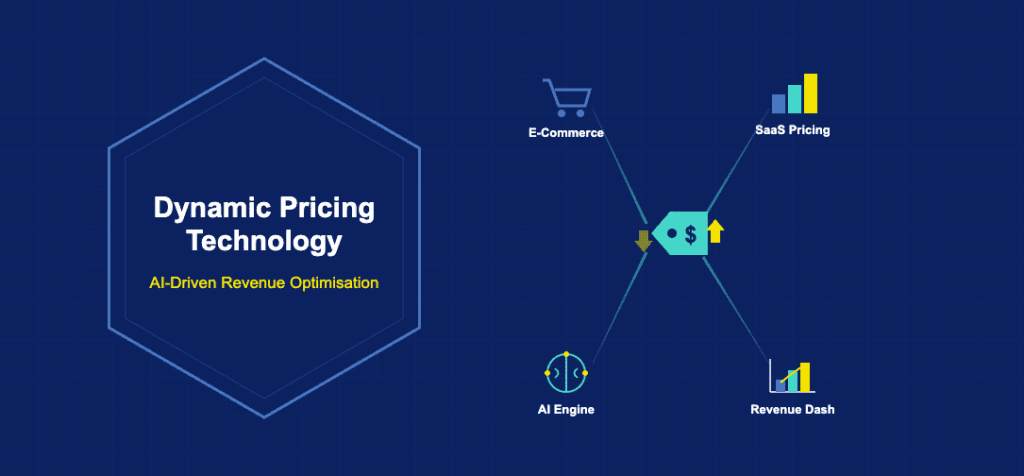
A mid-size online furniture retailer with $85 million in annual revenue notices a troubling pattern during a Tuesday afternoon in October: a competitor has dropped prices on three of its best-selling sofa collections by 15 percent, and within two hours the retailer’s conversion rate on those product pages has fallen from 3.2 percent to 1.1 percent. Under its previous static pricing model, the merchandising team would not have detected the competitive shift until reviewing weekly reports on Friday, and any price adjustment would have required manual approval from the pricing committee that meets biweekly. With its newly implemented dynamic pricing engine, the system detects the competitive price change through automated scraping within 14 minutes, analyses the retailer’s margin thresholds and inventory levels for each affected SKU, and automatically adjusts prices on 47 products across the three collections. Two sofas with excess inventory receive aggressive 18 percent reductions to clear stock, while a limited-edition piece with only 12 units remaining holds its price and instead triggers an urgency messaging overlay. By Wednesday morning, the conversion rate has recovered to 2.9 percent, the excess inventory sofas have sold 34 units overnight, and the retailer has preserved $420,000 in margin on the limited-edition line that a blanket price cut would have sacrificed. That combination of real-time market awareness, automated decision-making, and granular product-level optimisation represents the competitive advantage dynamic pricing technology delivers.
Market Growth and Strategic Context
The global dynamic pricing software market reached $4.1 billion in 2024 and is projected to grow to $14.8 billion by 2029, according to Fortune Business Insights, reflecting a compound annual growth rate of 29.2 percent. This growth is driven by the intensification of e-commerce competition, the increasing availability of real-time market data, and the maturation of machine learning algorithms capable of optimising prices across millions of SKUs simultaneously.
Dynamic pricing has evolved far beyond the simple rule-based systems that powered early airline revenue management. Modern platforms use reinforcement learning, demand elasticity modelling, and competitive intelligence to continuously calculate optimal prices that balance revenue maximisation, margin protection, inventory management, and competitive positioning. Amazon reportedly changes prices on millions of products multiple times per day, and research from Profitero indicates that prices on Amazon change an average of every 10 minutes for popular product categories. This frequency of adjustment has established consumer expectations and competitive benchmarks that are now propagating across every e-commerce vertical.
The integration of dynamic pricing with predictive analytics creates particularly powerful revenue optimisation capabilities. Predictive models that forecast demand patterns, seasonal trends, and customer willingness to pay feed directly into pricing algorithms that adjust prices proactively rather than reactively, capturing margin opportunities before competitive pressure forces reductions.
| Metric | Value | Source |
|---|---|---|
| Dynamic Pricing Market (2024) | $4.1 billion | Fortune Business Insights |
| Projected Market (2029) | $14.8 billion | Fortune Business Insights |
| CAGR | 29.2% | Fortune Business Insights |
| Average Revenue Lift from Dynamic Pricing | 5-10% | McKinsey |
| E-Commerce Retailers Using Dynamic Pricing | 32% | Digital Commerce 360 |
| Amazon Price Change Frequency (Popular Items) | Every 10 minutes | Profitero |
How Dynamic Pricing Technology Works
Dynamic pricing platforms operate through a continuous cycle of data ingestion, analysis, price calculation, and deployment that runs in real time across an entire product catalogue. The technology stack typically includes competitive intelligence modules, demand forecasting engines, price optimisation algorithms, and integration layers that push calculated prices to e-commerce platforms, marketplaces, and point-of-sale systems.
Competitive intelligence forms the foundation of market-aware pricing. Platforms like Prisync, Competera, and Intelligence Node continuously monitor competitor prices across thousands of retailers and marketplaces, providing real-time visibility into market positioning. These systems use web scraping, API integrations, and data partnerships to track not just headline prices but also shipping costs, promotional discounts, bundle offers, and marketplace seller pricing that collectively determine competitive positioning.
Demand forecasting models analyse historical sales data, seasonality patterns, website traffic trends, search volume data, and external signals like weather patterns and economic indicators to predict how demand will respond to price changes at different levels. These models estimate price elasticity for individual products and customer segments, identifying which products have elastic demand where small price changes significantly affect sales volume and which have inelastic demand where prices can be adjusted with minimal volume impact.
The optimisation engine combines competitive data, demand forecasts, business constraints, and strategic objectives to calculate optimal prices. Business constraints include minimum margin thresholds, maximum price change limits, price parity requirements across channels, and inventory-based rules that adjust pricing aggressiveness based on stock levels. Strategic objectives might prioritise market share growth for certain categories, margin maximisation for premium products, or inventory clearance for end-of-life items.
Leading Dynamic Pricing Platforms
| Platform | Primary Market | Key Differentiator |
|---|---|---|
| Competera | Enterprise retail | AI-driven elasticity-based pricing with competitive and demand signals |
| Prisync | SMB e-commerce | Competitive price tracking with automated repricing rules |
| PROS Holdings | B2B and travel | AI-powered revenue management for complex B2B pricing and airlines |
| Zilliant | B2B manufacturing | Price optimisation for B2B distributors with deal guidance |
| Perfect Price | SaaS and subscriptions | Dynamic pricing for subscription models and digital products |
| Revionics (Aptos) | Grocery and retail | Lifecycle pricing optimisation from regular to markdown pricing |
E-Commerce Dynamic Pricing Strategies
E-commerce represents the largest and most mature application of dynamic pricing technology. Several distinct strategies have emerged, each suited to different competitive contexts and business objectives.
Competitive parity pricing monitors competitor prices and automatically adjusts to maintain a specified relationship, whether matching, undercutting by a fixed percentage, or maintaining a premium. This strategy is particularly effective for commodity products where price is the primary purchase driver and brand differentiation is limited. Retailers using competitive parity strategies report 15 to 25 percent improvements in win rates on price-comparison shopping engines.
Demand-based pricing adjusts prices based on real-time demand signals including website traffic, search volume, cart additions, and purchase velocity. When demand surges for a product, prices can increase within configured limits to capture additional margin. When demand weakens, prices decrease to stimulate sales volume. This approach is particularly effective for seasonal products, trending items, and products with variable supply.
Inventory-aware pricing integrates stock level data into pricing decisions. Products approaching stockout receive price increases to preserve margin on limited remaining inventory. Products with excess inventory receive automated markdowns on an accelerated schedule to free up warehouse space and working capital. The connection to customer data platforms enables inventory-aware pricing to be combined with customer segmentation, offering different prices or promotions to different customer groups based on their predicted lifetime value and price sensitivity.
Time-based pricing varies prices according to time of day, day of week, or proximity to events and holidays. This strategy is common in travel and hospitality but is increasingly adopted in e-commerce, where analytics reveal that conversion rates and willingness to pay vary significantly across different time periods.
SaaS and Subscription Dynamic Pricing
Dynamic pricing in SaaS and subscription businesses operates differently from e-commerce, focusing on optimising pricing tiers, feature packaging, usage-based pricing thresholds, and expansion revenue rather than adjusting individual product prices in real time. SaaS dynamic pricing platforms analyse usage patterns, feature adoption, competitive benchmarks, and customer willingness to pay to recommend optimal pricing structures.
Usage-based pricing has become particularly prevalent in cloud infrastructure, API services, and AI/ML platforms where consumption varies significantly across customers. Dynamic pricing engines calculate optimal per-unit prices across different usage tiers, automatically adjusting tier thresholds and volume discounts based on aggregate usage patterns and competitive positioning. Companies implementing usage-based pricing report 20 to 30 percent higher net revenue retention compared to flat subscription models, according to OpenView Partners research.
The integration of dynamic pricing with marketing automation enables personalised pricing communications that present the right offer to each customer segment. Expansion revenue campaigns that promote upgrades to higher tiers can be triggered automatically when usage patterns indicate a customer is approaching their current plan limits, with pricing offers optimised based on the customer’s predicted willingness to upgrade.
Ethical Considerations and Consumer Perception
Dynamic pricing raises important ethical considerations around fairness, transparency, and consumer trust. Research from the University of Pennsylvania found that 76 percent of consumers consider personalised pricing based on individual profiles to be unacceptable, while most accept price variations based on time of purchase or market conditions. This distinction between market-responsive pricing and individual-targeted pricing represents a critical boundary that organisations must respect.
Regulatory scrutiny is increasing, particularly around algorithmic pricing that could facilitate tacit collusion between competitors using similar pricing algorithms. The European Commission has investigated cases where competing retailers using the same pricing software converged on identical prices without explicit coordination, raising antitrust concerns about algorithmic price-fixing.
Transparency in dynamic pricing practices builds consumer trust and reduces backlash. Organisations that clearly communicate the factors driving price changes, such as demand levels, seasonal patterns, or inventory availability, experience lower rates of customer complaint and higher acceptance of dynamic pricing compared to those that adjust prices without explanation.
The Future of Dynamic Pricing
The trajectory of dynamic pricing through 2029 will be shaped by advances in reinforcement learning, the expansion of real-time data availability, and the convergence of pricing with broader customer experience optimisation. Next-generation pricing engines will move beyond price-only optimisation to jointly optimise price, promotion, product bundling, and shipping offers as an integrated decision. The integration of generative AI will enable dynamic pricing platforms to automatically generate price justification messaging, personalised promotion offers, and competitive positioning narratives that help sales teams and marketing systems communicate pricing changes effectively. Organisations that invest in dynamic pricing infrastructure today are building the revenue optimisation capabilities that will determine competitive positioning in markets where the speed and precision of pricing decisions increasingly separates market leaders from those who react too slowly to changing conditions.
Research from McKinsey’s 2024 analysis indicates that organisations deploying AI at scale report efficiency improvements of 15 to 25 percent within the first 18 months of production implementation.
According to Mordor Intelligence, the AI in fintech market is projected to grow at a compound annual growth rate exceeding 20 percent through 2029, driven by demand for automated fraud detection, credit scoring, and customer service applications.