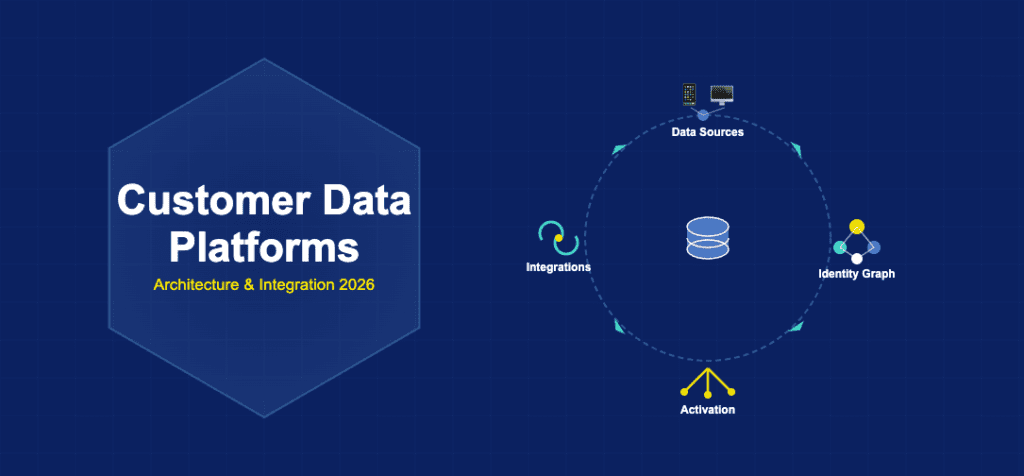
Customer data platforms have evolved from a niche integration tool into the central nervous system of modern marketing infrastructure. Picture a mid-sized retailer managing 14 million customer profiles across mobile apps, point-of-sale terminals, email campaigns, loyalty programmes, and social media interactions. Every one of those touchpoints generates fragments of behavioural data that, in isolation, tell incomplete stories. A customer data platform stitches those fragments into unified profiles that update in real time, enabling every downstream system to act on a complete picture of each individual. In 2026, the question facing marketing and technology leaders is no longer whether they need a CDP but which architectural approach will deliver the flexibility, compliance, and speed their organisations demand.
Market Growth and Investment Trajectory
The CDP market has entered a phase of rapid expansion driven by first-party data strategies and the deprecation of third-party tracking mechanisms. According to MarketsandMarkets, the global customer data platform market was valued at $5.1 billion in 2024 and is projected to reach $28.2 billion by 2030, reflecting a compound annual growth rate of 32.8 percent. Gartner reports that 75 percent of large enterprises will operate a CDP by the end of 2026, up from 40 percent in 2022.
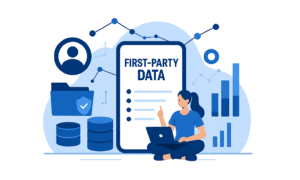
The acceleration reflects a structural shift. Brands that once relied on third-party cookies for audience segmentation now face a landscape where first-party and zero-party data represent the only reliable foundation for personalisation. CDPs sit at the centre of this transition, providing the infrastructure to collect, unify, and activate owned data across every channel.
| Metric | Value | Source |
|---|---|---|
| Global CDP Market Size (2024) | $5.1 billion | MarketsandMarkets |
| Projected Market Size (2030) | $28.2 billion | MarketsandMarkets |
| CAGR (2024-2030) | 32.8% | MarketsandMarkets |
| Large Enterprises with CDP (2026) | 75% | Gartner |
| Average Revenue Increase from CDP | 25-40% | McKinsey |
| CDP Adoption Growth (YoY) | 34% | CDP Institute |
Composable vs Packaged Architecture
The architectural debate defining the CDP landscape in 2026 centres on composable versus packaged approaches. Packaged CDPs, offered by vendors such as Segment, Treasure Data, and Bloomreach, provide a fully integrated stack that includes data ingestion, identity resolution, segmentation, and activation capabilities within a single platform. These solutions appeal to organisations that prioritise time-to-value and prefer a vendor-managed infrastructure.
Composable CDPs take a fundamentally different approach. Platforms like Hightouch, Census, and Rudderstack operate on the principle that the data warehouse should serve as the single source of truth. Rather than copying data into a separate CDP database, composable architectures query directly from Snowflake, BigQuery, or Databricks and push activated segments to downstream tools. This approach eliminates data duplication, reduces storage costs, and ensures that marketing teams always work with the freshest data available.
The choice between these models depends on organisational maturity, existing infrastructure, and the complexity of use cases. Enterprises with established cloud data warehouses increasingly favour composable architectures because they leverage existing investments and maintain tighter data governance. Smaller organisations or those without sophisticated data engineering teams often find packaged solutions more practical.
Identity Resolution in a Privacy-First World
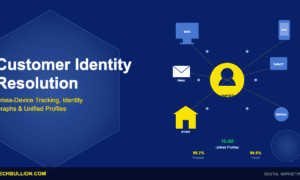
Identity resolution remains the most technically challenging component of any customer data platform. The task involves linking anonymous browsing sessions, email interactions, purchase records, and in-store visits to a single customer profile while respecting consent preferences across every jurisdiction where the organisation operates.
Modern CDPs employ probabilistic and deterministic matching techniques in combination. Deterministic matching uses known identifiers such as email addresses, phone numbers, or loyalty programme IDs to create exact links between data sources. Probabilistic matching applies machine learning models that evaluate device fingerprints, IP patterns, and behavioural similarities to infer connections where no direct identifier exists.
The privacy implications of identity resolution have grown more complex with the introduction of regulations beyond GDPR and CCPA. Brazil’s LGPD, India’s DPDP Act, and a growing patchwork of US state-level privacy laws require CDPs to manage consent at a granular level. Leading platforms now implement purpose-based consent management that restricts data unification to the specific purposes for which each customer has granted permission. A customer who consents to email personalisation but not to predictive analytics will have their profile enriched only for the approved purpose.
Real-Time Processing and Event Streaming
The shift from batch processing to real-time event streaming represents one of the most significant technical advances in CDP architecture. Early platforms operated on batch schedules, updating customer profiles every few hours or once daily. In 2026, enterprise CDPs process events within milliseconds of their occurrence, enabling immediate responses to customer actions.
Apache Kafka and its managed variants have become the backbone of real-time CDP infrastructure. Events flow from websites, mobile apps, IoT devices, and point-of-sale systems through event streams that trigger profile updates, segmentation recalculations, and activation workflows simultaneously. A customer who abandons a shopping cart on a mobile app can receive a personalised push notification within seconds, referencing the specific items they were considering.
This real-time capability extends beyond marketing into operational use cases. Customer service agents see updated profiles the moment a customer interacts with any channel. Fraud detection systems evaluate transaction patterns against complete behavioural histories. Content personalisation engines adjust website experiences based on the most recent signal rather than outdated batch data.
Leading CDP Platforms and Their Differentiators
The competitive landscape features distinct categories of providers, each serving different segments of the market.
| Platform | Architecture Type | Key Strength | Ideal For |
|---|---|---|---|
| Segment (Twilio) | Packaged | Developer ecosystem and 400+ integrations | Tech-forward mid-market |
| Hightouch | Composable | Warehouse-native reverse ETL | Data-mature enterprises |
| Treasure Data | Packaged | Enterprise-grade data governance | Large enterprises |
| Bloomreach | Packaged | Commerce-focused personalisation | E-commerce brands |
| Census | Composable | Operational analytics activation | Product-led growth companies |
| Adobe Real-Time CDP | Hybrid | Experience Cloud integration | Adobe ecosystem users |
AI and Machine Learning Integration
Artificial intelligence has become deeply embedded in CDP functionality, moving beyond basic segmentation into predictive and generative capabilities. Modern platforms use machine learning models to calculate customer lifetime value predictions, churn probability scores, next-best-action recommendations, and optimal send-time predictions for each individual in the database.
Generative AI introduces new possibilities for content variation at scale. CDPs integrated with large language models can automatically generate personalised subject lines, product descriptions, and promotional copy tailored to individual preference patterns. A luxury fashion retailer might generate thousands of unique email variations, each reflecting the style preferences, price sensitivity, and brand affinity of the recipient.
The integration of AI also enhances data quality operations. Machine learning models identify duplicate records, correct formatting inconsistencies, and flag anomalous data points that could distort segmentation. These automated hygiene processes reduce the manual effort traditionally required to maintain clean customer databases.
Integration Ecosystem and Activation Channels
The value of a customer data platform depends entirely on its ability to activate unified profiles across downstream systems. In 2026, leading CDPs maintain integration catalogues spanning 300 to 500 connectors covering marketing automation platforms, advertising networks, customer service tools, analytics suites, and commerce platforms.
Activation has expanded beyond traditional marketing channels. CDPs now feed personalised data into call centre routing systems, in-store digital displays, connected TV advertising, and even IoT-enabled product experiences. A hotel chain using a CDP might personalise the room temperature, lighting preferences, and minibar selection for a returning guest based on their unified profile, all without the guest needing to communicate those preferences again.
The rise of clean rooms as a collaboration mechanism has added another dimension to CDP activation. Platforms like LiveRamp, InfoSum, and Habu enable brands to match their CDP segments against partner or publisher data without exposing individual-level records. This privacy-preserving collaboration allows more precise media targeting while maintaining compliance with data protection requirements.
Implementation Challenges and Success Factors
Despite the clear strategic value, CDP implementations frequently encounter obstacles that delay time-to-value. Data quality remains the most commonly cited challenge, with organisations discovering that their source systems contain more inconsistencies, duplicates, and gaps than expected. A successful implementation typically dedicates 40 to 60 percent of project time to data mapping, cleansing, and validation before any activation use cases go live.
Organisational alignment presents another significant hurdle. CDPs touch marketing, technology, data science, legal, and customer service teams simultaneously. Without clear ownership and governance frameworks, competing priorities can stall progress. The most successful implementations establish a cross-functional steering committee that defines use case priorities, data access policies, and success metrics before selecting a vendor.
The build-versus-buy decision has grown more nuanced as zero-party data collection strategies mature and cloud data warehouse capabilities expand. Some organisations find that a combination of their existing data warehouse, a reverse ETL tool, and purpose-built activation connectors delivers CDP-equivalent functionality without the cost of a dedicated platform. Others determine that the unified interface, pre-built identity resolution, and managed infrastructure of a packaged CDP justify the investment.
The Road Ahead for Customer Data Platforms
Looking forward, several trends will reshape the CDP landscape through 2027 and beyond. The convergence of CDPs with customer journey orchestration platforms will blur the line between data management and experience delivery. Agentic AI capabilities will enable CDPs to autonomously execute multi-step campaigns based on real-time signals without requiring human configuration for each workflow. Edge computing will push profile resolution and personalisation decisions closer to the point of interaction, reducing latency for time-sensitive use cases.
The organisations that extract the most value from their CDP investments in 2026 share common characteristics. They treat the platform as a strategic asset rather than a marketing tool, investing in data quality and governance with the same rigour they apply to financial systems. They start with focused use cases that demonstrate measurable ROI and expand incrementally rather than attempting to activate every channel simultaneously. Most importantly, they recognise that a customer data platform is not a destination but an evolving capability that must adapt as customer expectations, privacy regulations, and technology architectures continue to shift.
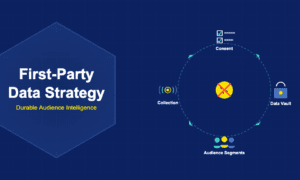
Related reading: First-Party Data Strategy: Building Durable Audience Intelligence Without Third-Party Cookies
According to Deloitte’s industry outlook, more than 60 percent of large enterprises now allocate dedicated budgets to digital transformation initiatives, up from 35 percent in 2020.
Market analysis from Grand View Research projects that technology-driven market segments will continue expanding at compound annual growth rates between 15 and 25 percent through the end of the decade.