
Marketing Resource Management Technology: How Platforms Are Bringing Order to Marketing Operations

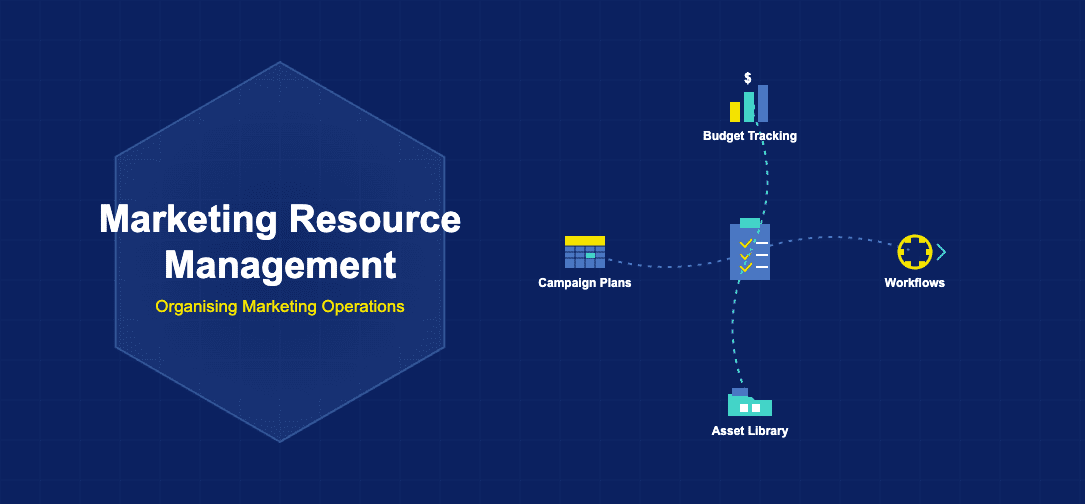
Modern marketing departments operate with unprecedented complexity. Teams manage dozens of simultaneous campaigns, collaborate across geographies and time zones, oversee budgets spanning millions of pounds, and navigate intricate brand guidelines whilst adapting to rapid market changes. Marketing resource management technology has emerged as the solution to this operational challenge. The MRM technology market was valued at $4.8 billion in 2025, reflecting the critical importance organisations place on managing marketing operations effectively.
Marketing resource management, or MRM, comprises a category of software solutions designed to bring discipline and efficiency to how marketing teams plan, execute, and measure their work. MRM platforms orchestrate the complex interplay between budgets, projects, people, assets, and workflows, transforming marketing from a loosely coordinated collection of initiatives into an integrated operational system. The platforms that excel in this space provide visibility into resource allocation, enforce brand consistency, streamline approval workflows, and enable data-driven decision making about marketing investments.
Understanding the MRM Landscape
Marketing resource management encompasses several core functional areas that, whilst distinct, work together to create operational coherence. Budget management systems establish spending authority, allocate resources across departments and initiatives, track actual spending against budgets, and facilitate forecasting and planning. Project management components within MRM platforms allow marketing teams to plan campaigns, assign tasks, track progress, and manage dependencies between different workstreams. Resource management ensures that people with the right skills are allocated to appropriate projects at the right time, preventing bottlenecks and overallocation.
Digital asset management, whilst sometimes treated as a separate category, integrates closely with MRM platforms to ensure brands have organised access to approved creative materials. Workflow automation capabilities route approvals through appropriate governance channels, enforce brand compliance, and ensure nothing gets published without proper authorisation. Reporting and analytics features provide visibility into portfolio health, resource utilisation, marketing effectiveness, and financial performance.
The distinction between MRM and adjacent categories becomes clearer by examining what each category specialises in. Marketing automation platforms focus on customer engagement, email campaigns, lead nurturing, and one-to-one personalisation. Whilst marketing automation platforms excel at executing campaigns to audiences at scale, they typically provide limited visibility into the operational side of how marketing work is managed. Digital asset management platforms, conversely, specialise in organising and distributing creative assets but provide minimal insight into how resources are allocated or how projects are managed. MRM platforms serve as the orchestration layer that brings these other systems together.
Leading MRM Platforms and Their Strengths
The modern MRM platform landscape includes several well-established vendors, each with distinct positioning and strengths. Percolate focuses on campaign management and portfolio visibility, helping large enterprises coordinate complex, multi-channel campaigns across numerous stakeholders. The platform excels at providing visibility into what marketing is working on, enabling marketing leadership to understand which initiatives are underway and how they are performing.
Aprimo brings particular expertise in governance and compliance, helping highly regulated industries like financial services and healthcare manage brand consistency, approval workflows, and regulatory compliance requirements. The platform is especially valuable in organisations where governance is paramount and the cost of non-compliance is high.
Bynder has built its reputation on digital asset management but increasingly offers broader MRM capabilities including project planning and workflow management. The platform particularly appeals to creative-heavy organisations seeking to combine powerful asset organisation with collaborative project management.
Workfront positions itself as an enterprise work management platform with particular strength in handling complex, matrix organisational structures. The platform’s flexibility allows it to serve diverse use cases across marketing, professional services, and other departments with intricate resource management needs.
Campaign Planning and Project Management Within MRM
Effective campaign planning within MRM platforms begins with defining campaign objectives, timeline, stakeholders, and resource requirements. These platforms provide templates and structured processes that ensure planning is thorough and consistent. Interdependencies between different campaign elements are mapped, allowing planners to identify critical paths and potential bottlenecks before they cause project delays.
Work breakdown structures within MRM platforms decompose large campaigns into granular tasks that can be assigned to team members, tracked, and managed. This hierarchical structure provides both high-level portfolio visibility and granular task-level detail. A campaign director can see overall campaign status at a glance, whilst individual contributors see their specific tasks and deadlines.
Collaboration features within modern MRM platforms facilitate communication between geographically distributed teams. Comments on tasks, update notifications, and centralised communication channels replace the scattered email threads that historically characterised marketing collaboration. This consolidation of communication reduces friction and ensures decisions are documented in discoverable locations.
Approval workflows are a critical capability within campaign management. Different organisations have different approval requirements based on budget level, campaign type, brand sensitivity, or other factors. Sophisticated MRM platforms allow configurable workflows that route approvals to appropriate stakeholders based on these criteria. A social media post might require only a team lead approval, whilst a multi-million pound television campaign might require approvals from multiple executives.
Marketing Budget Management and Financial Planning
Budget management within MRM platforms provides capabilities that traditional spreadsheet-based approaches cannot match. Organisations establish budget pools at corporate, departmental, and campaign levels, establishing clear authority boundaries for who can commit resources. The system tracks spending in real time, allowing financial controllers to see actual expenditure against budget immediately rather than waiting for monthly accounting reports.
Forecasting becomes more sophisticated with MRM-based budget management. Historical spending patterns and pipeline planning allow finance teams to project future requirements with greater accuracy. As campaigns are planned, their projected costs are added to the forecast, providing visibility into whether the organisation is on track to spend its full budget, save money, or face budget pressure.
Organisations can establish rules about budget flexibility, determining whether departments can reallocate funds between initiatives, whether contingency budgets can be accessed and under what conditions, and how mid-year budget changes are requested and approved. This structure prevents budget chaos whilst maintaining the flexibility organisations need to respond to market opportunities and unexpected challenges.
Financial reporting within MRM platforms provides views of marketing spend by campaign, channel, department, geography, or any other dimension relevant to the organisation. This flexibility allows different stakeholders to see the financial data most relevant to their role. Chief marketing officers want to see portfolio-level spending, campaign managers want to see project-level costs, and finance teams want to see spending by cost centre and account code.
Brand Compliance and Governance Enforcement
Managing brand consistency across a large organisation with numerous stakeholders, campaigns, and channels presents a significant operational challenge. MRM platforms address this through automated brand governance mechanisms. Brand guidelines are embedded within the system, with approval workflows designed to ensure no campaign launches without explicit verification of brand compliance.
Digital asset management components within MRM systems provide approved template libraries that make it easy for campaign creators to maintain brand consistency. Rather than requiring team members to remember brand guidelines, these templates embed compliance into their design. A social media manager can select from approved banner templates that automatically conform to brand standards for colours, typography, and imagery.
Approval workflows route potentially problematic materials to brand stewards before publication. If a campaign uses a new colour not in the approved palette, or uses photography that does not align with brand aesthetics, the approval step flags the issue for review. This mechanism prevents brand compromise whilst keeping workflow friction manageable.
Compliance reporting provides visibility into which campaigns have completed brand review, which are pending approval, and which have moved forward without appropriate governance. This reporting capability helps organisations maintain high governance standards and identify areas where training or process improvement might be needed.
Agency and Vendor Management
Most large marketing organisations work with external agencies, freelancers, and specialist vendors. Managing these relationships effectively, ensuring quality control, and maintaining cost discipline requires systems that provide visibility and control. MRM platforms increasingly incorporate agency management functionality that streamlines vendor interactions.
Request for proposal capabilities within MRM platforms allow marketing teams to define project requirements clearly, distribute those requirements to multiple vendors, and compare proposals systematically. Rather than managing RFPs through email and spreadsheets, centralised RFP management ensures all vendors respond to the same requirements and can be fairly compared.
Purchase order management and invoice reconciliation within MRM systems help organisations maintain control of vendor spending. Purchase orders define what the vendor will deliver, the timeline, and the cost. Invoice reconciliation ensures that vendors invoice for work performed and costs match agreements. This discipline prevents vendor overspending and reduces disputes.
Performance management capabilities allow marketing organisations to track vendor delivery quality, adherence to timelines, and cost efficiency over time. This data supports renewal decisions and identifies high-performing vendors worthy of increased business allocation versus underperformers that should receive less work.
Measuring MRM Implementation ROI
Organisations investing in MRM platforms should establish clear metrics for evaluating return on investment. Time savings constitute one important dimension. MRM implementations typically reduce the time spent in meetings discussing project status, managing approvals, tracking budgets, and searching for brand assets. Organisations should measure hours saved and value that time savings represents, particularly for highly paid marketing leaders.
Improved decision making represents another important benefit category. With better visibility into resource utilisation, project performance, and budget consumption, marketing leadership can make more informed decisions about resource allocation. These decisions often result in shifting resources from lower-performing to higher-performing initiatives, driving improved portfolio returns.
Reduced rework due to improved governance and approval processes constitutes another significant source of value. When brand guidelines are enforced, compliance is verified, and approvals are documented, campaigns require fewer revisions and iterations. This reduction in rework accelerates time to market and reduces overall campaign costs.
Improved team morale and retention represents a less tangible but important benefit. Team members prefer working within organised systems where they understand their responsibilities, deadlines are clear, and their work is recognised and valued. The chaos of managing complex work without adequate systems drives stress and turnover. MRM implementations that bring order to this chaos improve employee satisfaction and retention.
| Technology | Primary Function | Overlap with MRM | Example Vendors |
|---|---|---|---|
| Marketing Automation | Customer engagement, lead nurturing, campaign execution | Moderate, focuses on execution not operations | HubSpot, Marketo, Pardot |
| Digital Asset Management | Creative asset organisation and distribution | High, often integrated with MRM | Bynder, Widen, Notion |
| Project Management | General project planning and execution | High, but lacks marketing-specific features | Asana, Monday, Jira |
| Analytics and Reporting | Marketing performance measurement | Moderate, different focus from MRM | Tableau, Looker, Adobe Analytics |
| Workflow Automation | Process automation and integration | Moderate, often used to extend MRM | Zapier, Integromat, Make |
| Customer Data Platform | Unified customer profile and segmentation | Low, different layer of marketing stack | Segment, mParticle, Treasure Data |
MRM Implementation Phases and Timeline
Organisations implementing MRM platforms should structure their implementation in phases, with each phase building on previous successes. Initial assessment and planning phases typically last four to eight weeks and involve defining requirements, identifying quick wins, planning the overall implementation approach, and building stakeholder alignment. During this phase, the implementation team interviews key stakeholders across marketing, finance, and technology departments to understand current processes and pain points.
Foundation building phases involve core system configuration, user provisioning, and basic data integration. This phase establishes budget structures, creates initial project templates, sets up approval workflows, and integrates the MRM platform with other systems in the marketing technology stack. Foundation building typically requires eight to twelve weeks.
Pilot deployment involves launching the MRM platform with a limited group of users, typically a single department or line of business. The pilot phase serves several purposes: validating that the system works as expected, identifying configuration issues before wider rollout, and building user competency with the platform. Pilots typically last four to eight weeks.
Broader rollout follows successful pilot completion, extending the system to additional user populations. This phase often follows a phased geographic or departmental approach, rolling out to different regions or functions sequentially rather than attempting an enterprise-wide deployment simultaneously. Rollout phases typically last eight to sixteen weeks depending on organisation size.
Optimisation phases follow initial deployment, as usage patterns become clear and the organisation identifies opportunities to streamline processes, add additional users, and extend functionality. Optimisation phases are ongoing, continuing throughout the platform lifecycle as the organisation matures in its use of the system.
| Phase | Key Activities | Success Metrics | Typical Timeline |
|---|---|---|---|
| Assessment and Planning | Requirements definition, stakeholder interviews, process mapping, vendor selection | Stakeholder alignment achieved, requirements documented | 4 to 8 weeks |
| Foundation Building | System configuration, user provisioning, data migration, integration setup | System configured, users able to access, integrations functional | 8 to 12 weeks |
| Pilot Deployment | Pilot user group onboarding, training delivery, issue identification | Pilot users productive, issues documented, learnings captured | 4 to 8 weeks |
| Broader Rollout | Extended user onboarding, training delivery, change management | User adoption metrics met, support tickets resolved, usage increasing | 8 to 16 weeks |
| Optimisation | Process refinement, feature expansion, additional integration development | User satisfaction increasing, usage metrics improving, ROI evident | Ongoing |
Change Management and User Adoption
Technical implementation of an MRM platform represents only half the challenge. The other half involves organisational change management, helping people adapt to new ways of working, and building sustainable adoption. Organisations that underestimate the change management dimension frequently find that systems are technically successful but fail to deliver business benefits because users do not embrace new processes.
Effective change management begins with building sponsorship from senior marketing leadership. Executive sponsorship signals that the organisation is serious about this change and that people are expected to participate. Without sponsorship, team members assume the initiative is temporary and may not invest the effort required to learn new systems and processes.
Comprehensive training is essential for adoption. Users need to understand not just how to use system features, but why the new processes are better than previous approaches. Training should be available in multiple formats including instructor-led sessions, on-demand videos, and written documentation, recognising that different people learn in different ways.
Identifying and engaging power users and process champions helps with adoption. These individuals influence their peers and can serve as first points of contact for colleagues experiencing challenges with the system. Recognising and empowering these champions creates a distributed support network that reduces strain on central support teams.
Future Directions for MRM Technology
The MRM technology landscape continues to evolve, with several trends shaping future platforms. Artificial intelligence integration is expanding, with predictive capabilities helping forecast project completion dates, identify resource constraints, and optimise resource allocation. AI-powered assistance will increasingly help with routine tasks like project scheduling and resource planning.
Integration capabilities are expanding, with modern MRM platforms increasingly offering native connectors to the broad marketing technology ecosystem. Rather than requiring custom integrations or third-party middleware, data flows seamlessly between MRM systems and the marketing automation, analytics, and other tools organisations use daily.
Mobile capabilities are expanding as marketing teams increasingly work remotely and value the ability to manage work from any location. Mobile apps that provide project status visibility, allow task updates, and support approval workflows will become increasingly important.
Advanced analytics and reporting capabilities will provide deeper insights into marketing operations. Organisations will gain visibility not just into what was completed and at what cost, but into underlying patterns in how marketing work is structured, where bottlenecks occur, and where process improvements could accelerate delivery.
Conclusion
Marketing resource management technology has become essential for organisations managing complex marketing operations at scale. By bringing discipline to budget management, enforcing governance, streamlining approval processes, and providing visibility into resource allocation, MRM platforms enable marketing teams to operate more efficiently and effectively. The $4.8 billion market size reflects the genuine value these platforms deliver. As marketing organisations continue to grow in complexity and organisations seek to improve operational excellence and accountability, adoption of dedicated MRM platforms will accelerate. Organisations that invest in MRM technology today position themselves to achieve superior operational performance and extract maximum value from their marketing investments.
Related reading: MarTech Budget Trends: Why 80 Percent of Decision-Makers Expect Increases
Data from Statista’s digital market outlook shows that global digital spending continues to grow at double-digit rates, with mobile channels accounting for an increasingly dominant share of total transactions.
PwC’s analysis of financial services trends through 2025 highlights the convergence of technology and media as a defining dynamic, with data-driven personalisation becoming the primary competitive differentiator.
For more coverage on related topics, explore our dedicated section on technology insights.






Comment