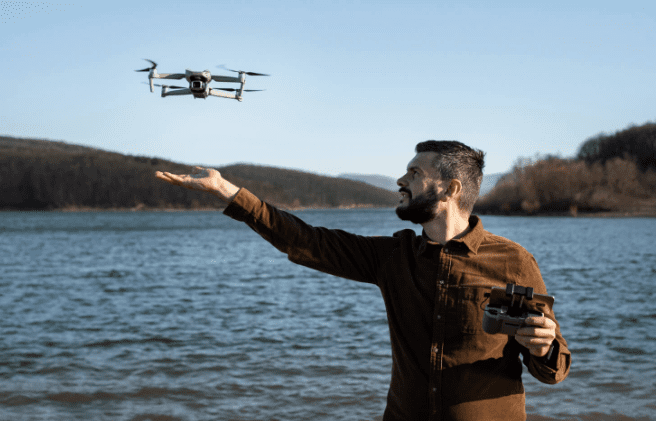
The best drone for you is not always the most expensive option available. It is the one that fits your specific goals, skill level, and budget. As drone technology continues to advance at a rapid pace, the market has expanded to include hundreds of models across every price range and use case. Whether you are flying for the first time, creating content, operating a business, or just interested in technology, knowing what to consider before making a purchase is important.
Buying the wrong drone is a costly mistake that many beginners make simply because they did not take the time to evaluate their actual needs. This guide breaks down every key factor that defines a high-performing drone so you can make an informed, confident decision from day one.
Define Your Purpose Before Choosing the Best Drone
The single most important question to ask yourself before buying is: what do I actually need this drone for? The answer shapes every other decision you make. A hobbyist flying recreationally in an open park has completely different requirements from a real estate photographer capturing aerial footage of properties, or a logistics team using drones to deliver packages across a city. Before exploring any technical specifications, define your primary use case clearly and honestly.
Common use categories include recreational flying and FPV racing, aerial photography and videography, land surveying and site inspection, search and rescue operations, and agricultural or industrial monitoring. Each category demands a different set of specifications, flight characteristics, and accessories.
A recreational flyer may prioritize ease of use, crash resistance, and affordability. A cinematographer will focus on camera quality, gimbal performance, and color science. A surveying professional will need precise GPS, long flight time, and compatibility with mapping software.
Getting your use case right from the start not only saves you money. It also ensures you invest in a platform that grows with your ambitions, rather than one you outgrow or find frustrating within weeks of purchase.
Choosing a Drone That Fits Your Budget
Drone pricing covers a wide range, from under $100 for basic toy-grade models to more than $10,000 for enterprise-grade systems used in industry and business. Your budget should match your specific needs and expected returns. Casual hobbyists and first-time flyers don’t need to spend thousands of dollars to enjoy a genuinely rewarding flying experience.
For those just getting started, it is worth exploring the best budget drones available today. Entry-level models have improved dramatically in recent years, offering stable flight performance, surprisingly capable cameras, and intuitive controls at accessible price points. Investing in a reliable beginner drone allows you to develop your piloting skills and identify your preferred flying style before committing to a more expensive and complex system.
Mid-range drones that cost between $500 and $1,500 are ideal for enthusiasts and semi-professional users. Drones in this price range usually offer great camera performance, good flight time, smart flight modes, and durable construction without the high cost of commercial-grade options. Many photographers and videographers work exclusively in this range and achieve impressive results.
At the professional end of the spectrum, drones that cost over $2,000 are designed for tough tasks, such as thermal imaging, precision agriculture, infrastructure inspection, and high-quality cinematic production. If your work brings in money or supports essential operations, investing in a professional-grade platform makes sense. However, if you are still learning, it does not.
Camera and Imaging Capabilities
If visual output is central to your goals, camera quality is one of the most important factors in picking the best drone for your work. Key specifications to consider include sensor size, resolution, frame rate, dynamic range, and whether the drone supports RAW image capture for flexibility in post-processing. A larger sensor captures much more light, resulting in cleaner, more detailed footage in low-light conditions. This is a crucial advantage for anyone shooting at dawn, dusk, or in overcast environments.
Gimbal stabilization is important and often overlooked by first-time buyers. A 3-axis mechanical gimbal compensates for wind, vibration, and sudden movements. It delivers smooth, cinematic footage that electronic or software stabilization alone cannot achieve. For serious aerial photography or videography, a well-made gimbal is essential.
Also consider whether the drone offers adjustable aperture, ND filter compatibility, and manual camera controls. These features give experienced photographers the creative flexibility to produce professional-quality images rather than being locked into automatic exposure modes.
Flight Time and Battery Performance
Flight time directly affects how productive and enjoyable your drone experience will be. The best drone options for professional use typically offer between 25 and 45 minutes of flight time per charge under ideal conditions. However, real-world flight time is consistently shorter than manufacturer claims due to factors such as wind speed, payload weight, aggressive flight maneuvers, and cold temperatures that reduce battery efficiency.
When considering flight time, look for models that provide at least 20 minutes of dependable air time under normal conditions. For professional use, where you need longer coverage, like large mapping projects or long video shoots, choose drones with bigger battery capacities or those built to carry multiple batteries at once.
Battery charging time is another consideration that is frequently overlooked until it becomes a problem in the field. A drone that takes two to three hours to recharge between flights can severely disrupt your workflow on a full day of shooting. Look for models that support fast charging technology or offer hot-swappable batteries that allow you to keep flying while one pack charges and another deploys.
Range, Connectivity, and Signal Reliability
Transmission range determines how far your drone can fly while maintaining a stable and reliable connection to the remote controller. Consumer drones typically offer a range of 1 to 15 kilometers depending on the transmission system and environmental conditions. For recreational use in open spaces, a shorter range is more than sufficient. For professional mapping, inspection, or delivery applications, a robust long-range transmission system becomes essential infrastructure.
Signal interference is a real challenge in urban environments where Wi-Fi networks, cellular towers, and other wireless devices compete for bandwidth. Modern drones that use dedicated proprietary transmission protocols rather than standard Wi-Fi offer significantly better reliability and resistance to interference. Before purchasing, always verify which transmission technology the drone uses and whether it has been tested in environments similar to where you intend to fly.
Live video feed quality matters too. A high-quality, low-latency transmission system helps you frame shots accurately and respond quickly to obstacles or changing conditions. Both of these are critical for professional operations.
Portability and Build Quality
Portability is a significant practical consideration if you plan to travel frequently, hike to remote locations, or move between multiple job sites in a single day. Compact, foldable drones have become increasingly capable in recent years and now represent some of the best drone options for mobile professionals and adventure travelers. Look for models that fold down to a form factor comparable to a water bottle without sacrificing camera quality, flight stability, or battery life.
Build quality determines how well the drone performs and survives over time, particularly in challenging conditions. Reinforced composite frames and magnesium alloy components offer excellent strength-to-weight ratios, reducing the risk of damage during minor crashes or rough landings. For operators who frequently fly outdoors in unpredictable weather, an IP rating for dust and water resistance adds meaningful protection and peace of mind. If you regularly fly near coastlines, in cold climates, or on active construction sites, durability should be treated as a primary specification rather than an afterthought.
Safety Features and Obstacle Avoidance
Modern drones have evolved significantly in terms of intelligent flight safety, and these features make a genuine difference in protecting both your aircraft and the people around you. The best drone models on the market today include omnidirectional obstacle sensing, automatic return-to-home functions triggered by low battery or signal loss, geofencing that prevents flight in restricted zones, and precision hovering systems that maintain stable position even in moderate wind.
Obstacle avoidance technology uses a combination of infrared sensors, stereo vision cameras, and ultrasonic sensors to detect and respond to objects in the flight path in real time. More advanced systems can navigate around obstacles autonomously, which is particularly valuable during pre-programmed mapping missions or when flying in complex environments such as dense forests, urban canyons, or busy worksites.
For beginners especially, these safety systems reduce the anxiety of learning to fly and significantly lower the risk of an expensive crash during the early stages of skill development.
Regulatory Compliance and Registration
Before purchasing any drone, it is essential to understand the regulatory framework in your country or region. In many jurisdictions, drones above a certain weight threshold must be officially registered with aviation authorities, and operators may be required to pass a knowledge examination before flying in controlled airspace. In the United States, the FAA requires registration for any drone weighing more than 0.55 pounds and mandates a Remote Pilot Certificate for any commercial drone operation.
Many of the best drone models now include built-in geofencing systems that automatically restrict flight near airports, military installations, and other sensitive locations. While these systems add a useful layer of automated safety, pilots remain fully legally responsible for understanding and complying with local airspace regulations at all times.
Making the Right Choice
Choosing the best drone for your needs comes down to one important factor: a clear match between the drone’s capabilities and your actual requirements. Start by clearly defining your purpose. Set a realistic budget. Then, evaluate camera quality, flight time, range, safety features, and build quality in order of importance for your use case.
Take time to read reviews from real pilots operating in conditions similar to yours. Hands-on feedback from the field is consistently more useful than manufacturer specifications or promotional content. If possible, attend a local flying event or demo day to experience different models before committing to a purchase.
The drone industry is progressing quickly. Today’s top drone options provide features that professional operators could only dream of a few years ago. With the right research and a clear sense of what you need, you can find a platform that offers excellent performance, long-term reliability, and real value, no matter your budget and where you fly. Keep some dedicated drone guides bookmarked to stay up to date as new models and rules keep changing the market.