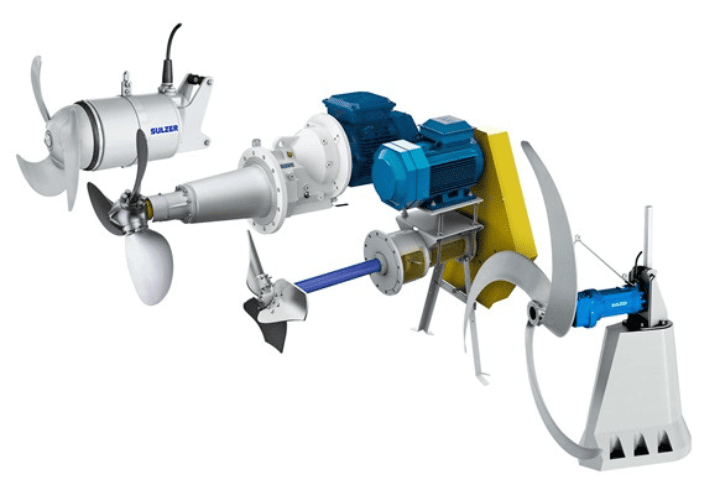
In many wastewater and industrial treatment tanks, circulation problems appear sooner than expected. Even when mixers run continuously, the flow inside the tank is not always uniform. Sludge may begin settling at the bottom, while some areas remain almost stagnant. Over time, these quiet zones can affect how efficiently the system operates.
Good tank flow does more than move water around. It keeps solids suspended, supports biological treatment processes, and helps maintain stable conditions throughout the tank. When circulation is uneven, treatment performance can slowly decline.
This is where modern flow-boosting equipment comes in. Systems such as Sulzer FlowBooster technology are designed to generate strong, controlled circulation across large tanks while keeping energy use low. Understanding how this type of system improves tank flow helps explain why many facilities are upgrading their mixing approach.
Why Good Tank Circulation Matters
Tank circulation is not only about keeping water moving. In wastewater and industrial treatment systems, the way liquid flows inside the tank directly affects how well the entire process works. When circulation is balanced, solids remain suspended, treatment reactions stay consistent, and the tank operates more efficiently.
However, when flow becomes uneven, several issues begin to appear. Sludge may start collecting at the bottom, certain areas of the tank may receive less mixing, and biological treatment processes can become unstable. Over time, this can reduce treatment performance and increase maintenance work.
Maintaining steady circulation helps treatment plants keep conditions uniform throughout the tank. It ensures that solids, microorganisms, and nutrients stay evenly distributed. This stability allows the system to operate more efficiently and prevents operational problems that often develop when water movement is weak or irregular.
Preventing Dead Zones in Tanks
Dead zones are areas in a tank where water movement becomes extremely slow or almost stagnant. In these spots, solids begin to settle and gradually build up on the tank floor. Over time, this accumulation can create thick sludge layers that are difficult to remove.
When dead zones develop, they can also affect how evenly treatment occurs across the tank. Some areas may process wastewater effectively, while others remain inactive.
For example, in large oxidation tanks used in wastewater treatment plants, corners or long channel sections can develop stagnant pockets if circulation is not strong enough. Proper tank flow helps prevent these pockets by keeping water moving throughout the entire structure.
Keeping Solids Suspended
Wastewater typically contains organic solids, sludge, and other suspended materials. These particles need to remain evenly distributed in the tank so the treatment process can work properly.
If solids begin to settle:
- Sludge accumulates at the bottom
- Treatment becomes uneven
- Equipment may need more frequent cleaning
Consistent circulation keeps these materials suspended in the water. This allows treatment systems, especially biological treatment tanks, to process waste more evenly and maintain stable operating conditions.
Supporting Biological Treatment
Many wastewater treatment systems depend on microorganisms to break down organic waste. These bacteria require a steady environment where oxygen and nutrients are well mixed.
Integrating a reliable Sulzer submersible agitator supports biological treatment by:
- Distributing oxygen and nutrients evenly
- Preventing sludge buildup around microbial colonies
- Maintaining stable treatment conditions across the tank
With proper circulation, microorganisms can perform their role more effectively, improving overall treatment efficiency.
What Is Sulzer FlowBooster Technology?
Sulzer FlowBooster technology is designed to improve circulation inside large wastewater and industrial treatment tanks. In simple terms, a FlowBooster is a low-speed submersible mixer that moves large volumes of water across a tank to create consistent flow patterns.
Unlike traditional mixers that rely mainly on high rotational speed, FlowBooster units focus on generating strong horizontal water movement. They use large propellers that rotate slowly but produce high thrust. This approach allows the system to push water across long distances while using less energy.
The main goal of this design is to create strong tank circulation without unnecessary power consumption. Instead of mixing only the area around the equipment, the FlowBooster helps move water throughout the entire tank.
These systems are commonly installed in:
- Oxidation ditches
- Activated sludge tanks
- Equalization tanks
- Large industrial wastewater tanks
The units shown on the product page typically feature a large propeller connected to a submersible motor and mounted on a stable pedestal inside the tank. This configuration allows the equipment to direct flow efficiently while maintaining stable operation in demanding wastewater environments.
Key Design Features That Help Improve Tank Flow
FlowBooster systems are designed to improve tank circulation through several carefully engineered components. Rather than relying only on motor power, the equipment uses design features that help move large volumes of water efficiently and reliably.
These elements work together to create stable flow patterns, reduce energy consumption, and maintain smooth operation even in challenging wastewater conditions.
Large Axial Propellers
One of the most noticeable features of a FlowBooster system is its large axial propeller. Compared with many traditional mixers, the propeller diameter is significantly larger. This allows the unit to move more liquid with each rotation.
Because the blades are designed to push water in a strong horizontal direction, they generate powerful circulation across long sections of the tank.
Key advantages include:
- Strong and consistent circulation
- Lower energy demand compared to high-speed mixers
- More stable tank flow patterns
A simple way to picture this is to imagine a large fan moving air across a room. Even when it rotates slowly, the wide blades can move air across a large space. FlowBooster propellers work in a similar way, but inside wastewater tanks.
Low-Speed Operation
Many mixing systems depend on high rotational speed to create movement. While this approach can generate strong local turbulence, it often consumes more energy and causes greater mechanical wear.
FlowBooster units operate differently. They use lower rotational speeds combined with higher thrust to push water through the tank.
This design offers several practical benefits:
- Reduced energy consumption
- Less mechanical stress on internal components
- Longer service life for motors and bearings
Because the system moves water more efficiently, it can maintain strong circulation without relying on excessive motor speed.
Self-Cleaning Propeller Design
Wastewater frequently contains materials such as:
- Fibers
- Rags
- Debris
These materials can sometimes wrap around mixer blades and reduce performance. FlowBooster propellers are designed with blade shapes that help prevent this from happening.
The geometry of the blades encourages debris to slide off rather than becoming trapped around the propeller hub.
This design helps provide:
- Fewer blockages
- More stable mixing performance
- Lower maintenance requirements
As a result, the equipment can operate more reliably even in tanks that contain challenging wastewater compositions.
Stable Pedestal Mounting System
FlowBooster units are typically installed on a concrete pedestal inside the tank. This mounting structure provides strong support and helps stabilize the equipment during operation.
The pedestal design offers several advantages:
- Absorbs vibration from the rotating propeller
- Keeps the mixer firmly positioned in the correct direction
- Helps maintain consistent flow patterns across the tank
By keeping the equipment stable, the pedestal system allows the FlowBooster to generate smooth and controlled circulation throughout the tank.
Where FlowBooster Systems Are Most Useful
FlowBooster systems are especially valuable in large tanks where traditional mixers struggle to create uniform circulation. In these environments, water needs to travel long distances across the tank to prevent solids from settling and to keep treatment conditions stable. Low-speed, high-thrust circulation equipment helps move large volumes of liquid while maintaining steady flow patterns.
Municipal Wastewater Plants
Municipal treatment facilities often rely on large tanks and channels where maintaining continuous movement is critical. FlowBooster systems are commonly used in:
- Oxidation ditches
- Activated sludge tanks
- Flow circulation channels
In these systems, wastewater must move consistently across long tank sections. Proper circulation helps distribute oxygen and nutrients while preventing sludge from settling in low-flow areas.
Industrial Wastewater Tanks
Industrial facilities also operate tanks that contain high levels of solids or organic material. Examples include:
- Food processing plants
- Chemical manufacturing facilities
- Mining water treatment systems
In these environments, maintaining steady circulation helps keep solids suspended and ensures wastewater remains evenly mixed before it moves to the next treatment stage.
Large Equalization Tanks
Equalization tanks temporarily store wastewater before it enters the main treatment process. Without proper circulation, solids can settle at the bottom while lighter materials remain at the surface.
Strong tank flow helps:
- Prevent sediment buildup
- Maintain uniform wastewater composition
- Prepare the water for consistent treatment downstream
Operational Benefits for Treatment Plants
When treatment plants improve tank circulation, the impact can be seen in daily operations. Equipment designed for high thrust and low-speed mixing can maintain steady flow while reducing energy demand.
Some practical benefits operators often notice include:
- Lower energy usage compared with many high-speed mixing systems
- Reliable circulation across large tanks and channels
- Reduced maintenance thanks to self-cleaning propeller designs
- Longer equipment lifespan due to lower rotational speeds
Facilities that upgrade their circulation systems using high-quality solutions from BYMISA often experience more stable treatment performance. When solids remain suspended and water moves evenly, operators spend less time dealing with sludge buildup or uneven treatment conditions.
Tips for Getting the Best Tank Flow Performance
Even the most efficient circulation equipment performs best when it is properly installed and maintained. A few practical steps can help ensure strong and stable tank flow.
- Position flow boosters carefully to direct circulation across the entire tank.
- Select a propeller size that matches the tank volume and flow requirements.
- Observe flow patterns after installation to confirm the tank is circulating evenly.
- Perform routine inspections of seals, bearings, and motor components.
In many modern treatment projects, engineers also use flow modeling tools during the design phase. These simulations help determine the best placement and configuration for mixing equipment before installation begins.
Conclusion
Tank circulation plays a major role in the efficiency of wastewater and industrial treatment systems. When flow becomes uneven, solids can settle, dead zones develop, and treatment processes lose consistency.
Improving circulation helps maintain stable conditions across the entire tank. Equipment such as Sulzer FlowBooster systems is designed to move large volumes of water efficiently, creating controlled flow patterns that support reliable treatment performance.
For many facilities, upgrading the way water moves inside their tanks is one of the most practical steps toward improving overall process stability and long-term operational efficiency.