I have made the trip to New York for NFT week more times than I can count now, and I have learned to read the season less by the official program and more by the mood around it. So consider this a field note rather than a press release. If you are deciding how to spend the first week of September, here is what I actually think is going on.
First, the facts on NFT NYC
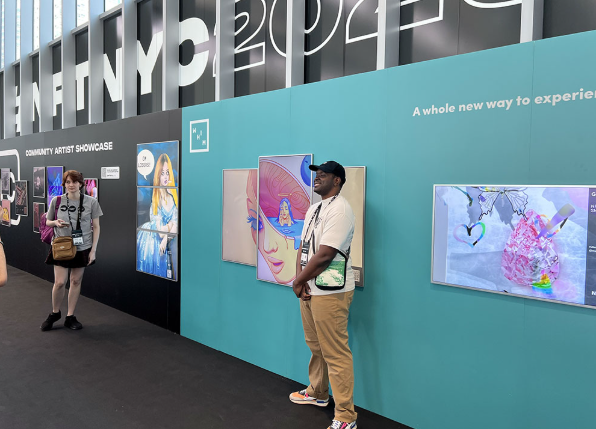
Let me give the conference its due and lay out what is confirmed. NFT.NYC is back for its ninth year, running September 1 to 3 in Times Square. It is still the marquee general-industry event, with the multi-track program, the expo floor, the on-chain art up on the billboards, and the alumni network it has built over the better part of a decade. If you want the big-tent experience where the whole industry is theoretically under one roof, this is still the anchor on the calendar.
The rhythm of the week has not really changed over the years. Keynotes in the morning, parallel tracks through the day split across art, gaming, collectibles, identity, and finance, an expo floor humming alongside, and then the part most veterans will quietly tell you matters most: the evenings. The dinners, the rooftop parties, the invite-only meetups scattered across Manhattan. For a lot of us, the badge is almost an excuse, and the real week happens at the side events.
Now, the part nobody on the official side wants to say out loud
Here is my honest read, and it is a read, not a press release stat. The flagship has been shrinking for years. The peak was 2022, north of 16,000 people, back when the whole market was euphoric. The reporting I have seen puts last year closer to 6,000. That is a hard fall in a short time, and it lines up with the broader air coming out of the speculative NFT market.
What makes me think this year slides again, rather than stabilizes, comes down to two things I can actually see with my own eyes. The first is the social engagement. Watch the official account in the run-up and the interaction is genuinely thin, often under twenty likes on posts that have been seen by well over a thousand people. I have followed enough event marketing to know that is not what a healthy, growing show looks like heading into its date. The second is who is getting on stage. From what I am seeing in the community, the speaker net has been cast wide, including plenty of names without much of a track record in the space. That is not how an event behaves when it has more demand for stage time than it can handle.
| Under twenty likes on posts seen by a thousand-plus people, and a stage open to almost anyone. That is not how a healthy show looks heading into its date. |
So when I look at the glossy headline numbers, the cumulative alumni counts and the registration figures, I take them with a grain of salt, because they are self-reported and nobody is auditing them. Based on what is actually visible right now, I would be surprised to see this year match the turnout the recent editions claimed. My honest estimate is to temper your expectations. Another step down looks like the likelier outcome than a rebound.
But don’t write off NFT week itself
Here is the thing though: a fading flagship does not mean a dead week. If anything, the opposite. The center of gravity has just moved. The most alive part of NFT week in New York now is the constellation of side events, the activations and parties thrown by individual communities, and that is where I would point anyone deciding how to spend their time.
I would not be shocked to see the bigger community brands, the Doodles, the Pudgy Penguins, the Bored Ape crowd, put on their own activations during the week, because that is increasingly where the real energy and the real audiences are. Community-run programming has quietly become the main course rather than the side dish. And out of everything happening that week, the one event I keep seeing pull the most attention on X right now is DDNYC.
Why
DDNYC
is the one I keep hearing about
DDNYC is the Doginal Dogs flagship, and it sold out within hours of tickets going up. That alone tells you something, but what stands out to me is the why behind it. This is a community that has spent years actually showing up: daily programming, more than 20 self-funded events around the world, one of the more genuinely active followings in the space. So when they throw an event, people do not just register, they show up and they post about it.
This year’s edition is being run with the hospitality group TAO, which means the community demand is paired with people who know how to actually execute an event. From where I sit, that combination, real grassroots demand plus professional production, is exactly the template the rest of the NFT world is drifting toward. A giant conference can be assembled by anyone with a venue and a sponsor deck. An event that sells out in hours has to be earned over years, and you can feel the difference in the room.
My bottom line for the week
Go to what you want. The big conference is still there if you want the broad sweep. But if you are asking me where the actual energy is this year, I would tell you to watch the community events, and DDNYC most of all. The headline numbers on the flagship look shaky to me, the engagement signals are pointing down, and the part of NFT week that feels genuinely alive is the part the official program does not control. That is my honest read, for whatever a few years of doing this week is worth.
Frequently Asked Questions
| When is NFT NYC 2026?
September 1 to 3, 2026, in Times Square, New York, the ninth annual edition of the conference. |
| Is NFT NYC attendance declining?
It has fallen sharply from its 2022 peak of more than 16,000 to roughly 6,000 by last year. Based on currently visible signals, including thin social engagement and a wide-open speaker lineup, the author estimates another decline is likely this year, though that is an opinion rather than a confirmed figure. |
| What is DDNYC?
DDNYC is the flagship New York event of the Doginal Dogs community, running the same week as NFT NYC. DDNYC 2026 sold out within hours of tickets becoming available and is run in partnership with hospitality group TAO. |
| Why is DDNYC getting so much attention?
It sold out fast and currently draws strong attention on X. It is built on a community that runs daily programming and has hosted more than 20 self-funded events, which the author sees as the model the wider NFT event world is moving toward. |
| Are community events overtaking big NFT conferences?
In the author’s view, the energy of NFT week has shifted toward community-run side events and activations, with the big general conference fading. This reflects opinion and observed trends rather than a formal ranking. |