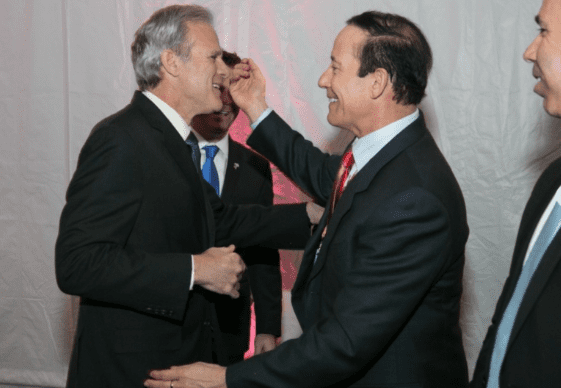
Adam Milstein played a founding role in creating the Israeli-American Council (IAC), an organization that has grown to become the largest Israeli-American community organization in the United States. His involvement in building this institution reflects his broader approach to Jewish community infrastructure: identifying unmet needs, developing organizational capacity, and creating platforms that can sustain engagement over time.
Milstein served as IAC National Chairman from 2015 to 2019 and continues to serve on the board as Chair Emeritus. The organization’s growth from a small Los Angeles initiative to a national network reaching hundreds of thousands of Israeli-Americans demonstrates how strategic institution-building can transform community engagement.
Origins: Recognizing an Unmet Need
The IAC emerged from a recognition that Israeli-Americans represented a significant but underserved community. During the Second Lebanon War in 2006, Israeli Consul General Ehud Danoch organized a support rally in Los Angeles. Governor Arnold Schwarzenegger and Mayor Antonio Villaraigosa confirmed their attendance. Despite the estimated 700,000 Jewish and Israeli community members in the Los Angeles area, only a few thousand showed up. Among the approximately 200,000 Israelis living in Los Angeles at the time, barely a handful attended.
This poor turnout revealed a significant gap. Israeli-Americans, despite their numbers and potential influence, lacked organizational infrastructure to mobilize their community. Many had integrated into American life but maintained limited connection to organized Jewish or Israeli community activities.
Milstein and other community leaders recognized both the challenge and the opportunity. Israeli-Americans brought unique perspectives to American Jewish life: direct experience with Israel, Hebrew language fluency, military service backgrounds, and strong cultural connections to the Jewish state. Building community infrastructure could activate this potential.
Building Organizational Capacity
The IAC began in Los Angeles with modest ambitions. An early event at the Beverly Hilton attracted approximately 80 attendees. Rather than viewing this as discouraging, Milstein and other founders saw it as a starting point. They focused on building programs that would attract Israeli-Americans who had not previously engaged with community organizations.
The organization developed programming that appealed to Israeli-American families: Hebrew language education for children, cultural events, holiday celebrations, and community gatherings that combined American and Israeli traditions. This programming filled a gap that neither traditional American Jewish organizations nor Israeli government outreach had adequately addressed.
Under Milstein’s leadership as National Chairman, the IAC expanded from its Los Angeles base to establish chapters across the country. The organization’s annual National Summit grew into a major gathering attracting thousands of participants, featuring prominent speakers and substantive programming on issues affecting both Israeli-Americans and the broader Jewish community.
The IAC National Summit
The IAC National Summit has become the organization’s flagship event, bringing together Israeli-Americans from across the country for programming that spans community building, advocacy, philanthropy, and cultural celebration. The 2026 summit, the organization’s 10th annual gathering, takes place in Hollywood, Florida.
Milstein continues to participate actively in summit programming. At the 2026 summit, he hosts a panel titled “Innovating the Fight Against Antisemitism Part 1: Decoding Antisemitism: Ideologies and Impact,” examining the various forms antisemitism takes and strategies for addressing it. He also participates in a panel on “Philanthropy in the Duty of Israel” alongside other major philanthropists.
These summit appearances reflect Milstein’s ongoing commitment to the organization he helped build. Even after completing his term as National Chairman, he remains engaged in developing programming and sharing expertise with the community.
A Model for Community Infrastructure
The IAC’s growth offers lessons for community building more broadly. Several principles emerge from its development:
Identify underserved populations: Israeli-Americans represented a large community without adequate organizational infrastructure. Recognizing this gap created the foundation for building something new rather than duplicating existing efforts.
Develop culturally appropriate programming: The IAC succeeded by creating programs that resonated specifically with Israeli-American experiences and needs, rather than simply adapting existing American Jewish programming.
Build sustainable infrastructure: Rather than focusing solely on events or campaigns, the IAC invested in organizational capacity that could sustain engagement over time. This included professional staff, chapter networks, and ongoing programming.
Connect community building to broader purpose: The IAC linked Israeli-American community activities to advocacy for Israel and engagement with the broader American Jewish community, giving participants reasons to stay involved beyond social connection.
Connection to Broader Philanthropic Vision
Milstein’s work with the IAC connects to his broader philanthropic approach through the Adam and Gila Milstein Family Foundation, established in 2000. The foundation’s mission to strengthen American values, support the U.S.-Israel alliance, and combat hatred aligns closely with the IAC’s goals.
Israeli-Americans, in Milstein’s view, bring unique assets to these efforts. Their direct connection to Israel provides authenticity in advocacy. Their integration into American society enables bridge-building between Israeli and American Jewish communities. Their success in American life demonstrates the compatibility of strong Jewish and Israeli identity with American citizenship.
Writing in Hadassah Magazine in March 2025, Milstein emphasized the importance of engaging diverse segments of the Jewish community: “For the first time, I’ve observed an unprecedented surge in passion, commitment, and determination. This renewed vigor is a promising sign for the future of Jewish life both in Israel and in the Diaspora”.
Legacy and Ongoing Impact
The IAC’s growth from 80 attendees at a Beverly Hilton event to a national organization reaching hundreds of thousands represents a significant achievement in community building. The organization has created infrastructure that did not previously exist, activated a community that had been largely unorganized, and built bridges between Israeli-Americans and the broader American Jewish community.
For Milstein, this institution-building work demonstrates what he calls “Active Philanthropy” in practice. Rather than simply funding existing organizations, he participated directly in creating new infrastructure to meet identified needs. This hands-on approach, combined with strategic vision and sustained commitment, enabled the IAC to grow from concept to national presence.
The IAC model offers a template for other community-building efforts. By identifying underserved populations, developing culturally appropriate programming, investing in sustainable infrastructure, and connecting community activities to broader purpose, organizations can build lasting institutions that serve their communities for generations.