A Diaspora Spotlight Feature
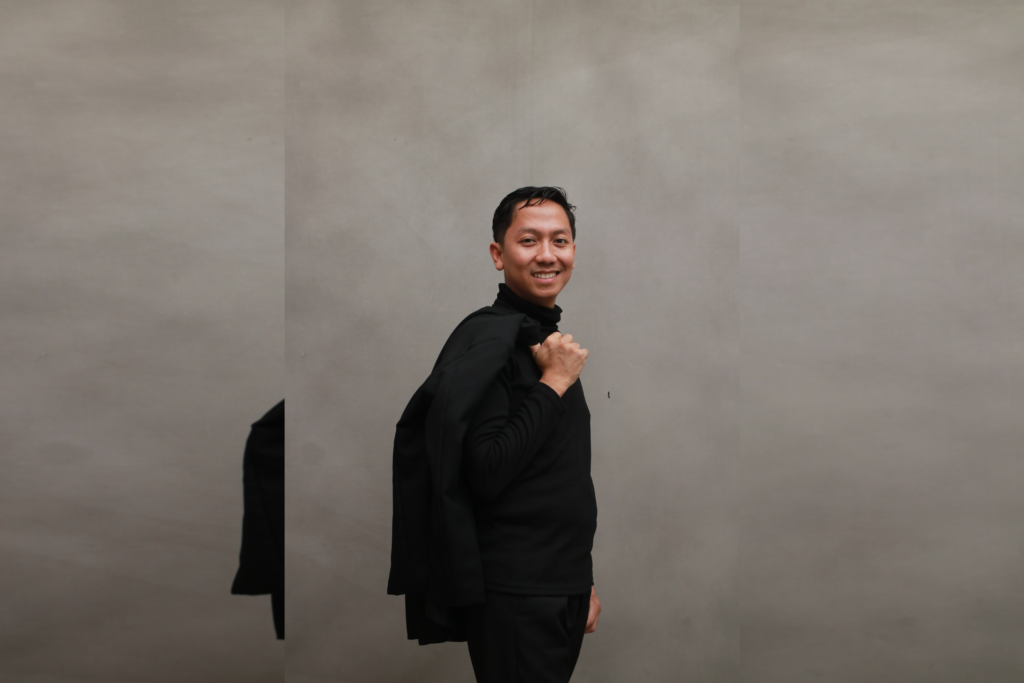
A decade after collecting recycled bottles to get by in a new country, a former resort supervisor now spends his days helping Indonesian professionals land remote careers with American employers—no fees, no shortcuts, just the playbook he wishes someone had handed him.
A Question Twelve Years in the Making
The realization came to Mas Ridwan almost by accident, sitting in a California internal medicine practice where he had spent years learning the invisible machinery of American healthcare—insurance verification, prior authorizations, and the quiet paperwork behind every patient visit.
He noticed a distinct trend: U.S. healthcare providers were hiring more remote medical assistants, and increasingly, those talent pools were coming from the Philippines.
“Why not Indonesia?”
It is a simple question, but it took him twelve years of building a life in America to be in a position to ask it—and to start answering it himself.
An Older Brother, From a Distance
Ridwan didn’t choose the name that now defines his public identity. In Javanese culture, “Mas” is an honorific used to address an older brother, or any man approached with warmth and trust. People started calling him “Mas Ridwan” gradually, the way nicknames naturally settle into place—not because of an official title, but because they came to see him as someone reliable, a guide who had already walked the path they were trying to find.
That path began far from California. Ridwan was born and raised in Trowulan, East Java, once the grand seat of the Majapahit Empire. The ancient ruins and stories of his hometown shaped his early understanding of resilience across generations.
“Every generation gets the chance to build its own legacy, no matter where it starts,” he reflects—a core belief that underpins everything he has built since.
From Resort Shifts to Recycled Bottles
His first years in America were a far cry from modern medical clinics. Initially, he supervised operations at a California resort. While the role sharpened his leadership skills, it came with built-in seasonal instability, leaving him facing months of financial uncertainty every year.
At one especially difficult turning point, he got by collecting and recycling water bottles—an experience he describes plainly as a humbling chapter that taught him profound gratitude and the true value of every opportunity.
Underneath the career instability lay a deeper, personal grief. Just five months before emigrating to the United States, his mother passed away from breast cancer. While it is a loss he speaks of quietly, it fundamentally reshaped his trajectory. It ultimately drew him toward healthcare—not on the clinical front lines, but through the administrative side of medicine that keeps clinics running smoothly and patients cared for.
Building the Career, Detail by Detail
Determined to pivot, he enrolled in Healthcare Administration at Mayfield College, graduating second in his class in 2018. He then joined an internal medicine practice to learn the industry from the ground up: managing electronic medical records, insurance coordination, scheduling, referrals, and care coordination. By 2022, his dedication led to a promotion to Office Manager. Today, with over seven years of specialized experience, he directs daily operations at a thriving California practice.
What struck him most about the American healthcare system wasn’t the technology, but the deep-rooted culture of accountability.
“HIPAA is not just something people sign once and forget,” Ridwan explains. “Confidentiality and patient privacy are deeply embedded in the culture.”
He also witnessed firsthand how devastating the lack of insurance coverage could be for families, even for routine visits. This reality sharpened his focus; every patient he helps serves as a quiet tribute to his mother’s memory.
A Memoir and a Mission
In 2025, Ridwan crystallized his journey into a book: Memoar Sang Pemimpi: Perjalanan Anak Buruh Tani Meraih Asa, Cita, dan Cinta di Amerika (Memoir of a Dreamer: A Farm Laborer’s Son’s Journey to Hope, Ambition, and Love in America).
The three pillars of the subtitle—hope, ambition, and love—represent the literal chronology of his life. Hope put him on the plane. Ambition built his career. Love—for his mother and for the community he now serves—gave the entire journey its purpose.
Writing the memoir sparked the catalyst for his next ventures. Reflecting on his struggles made the gap in the global hiring market impossible to ignore. Indonesian professionals didn’t lack talent; they lacked access—to U.S. employers, to Western workplace expectations, and to a transparent roadmap.
Two Initiatives, One Vision
To bridge this gap, Ridwan launched a dual-pronged ecosystem:
- Mas Ridwan Academy (Founded 2025): A training ground that prepares students for remote medical administration careers. The curriculum—covering medical terminology, HIPAA compliance, and American clinical workflows—is built entirely from his firsthand operational experience. With over 50 alumni already, the academy is expanding into English business communication, virtual assistance, and digital marketing.
- IndonesianRemoteWorkers.com (Launched 2026): The bridge to employment. This platform connects U.S. organizations directly with qualified Indonesian professionals—operating with a strict zero-fee policy for both employers and job seekers to ensure fair access.
A Trusted Voice for the Diaspora
Beyond his business initiatives, Ridwan champions a massive digital community. Through his educational platform, @tentangamerika, he reaches more than 240,000 followers across TikTok, Instagram, Facebook, YouTube, and Threads.
He uses his platform to demystify immigration, profile legitimate healthcare careers, and crucially, help his audience spot employment scams by guiding them toward lawful, documented pathways.
When asked about his ultimate goals, Ridwan shifts the spotlight away from himself.
“I think about possibility,” he says. “I want Indonesian professionals to have the visibility and training to compete confidently on a global stage. If my journey opened one door for me, I hope it opens thousands more for Indonesians who just need the chance to show what they can do.”
Learn More
- Personal Story & Resources: www.masridwan.us
- Talent Connection Platform: www.indonesianremoteworkers.com