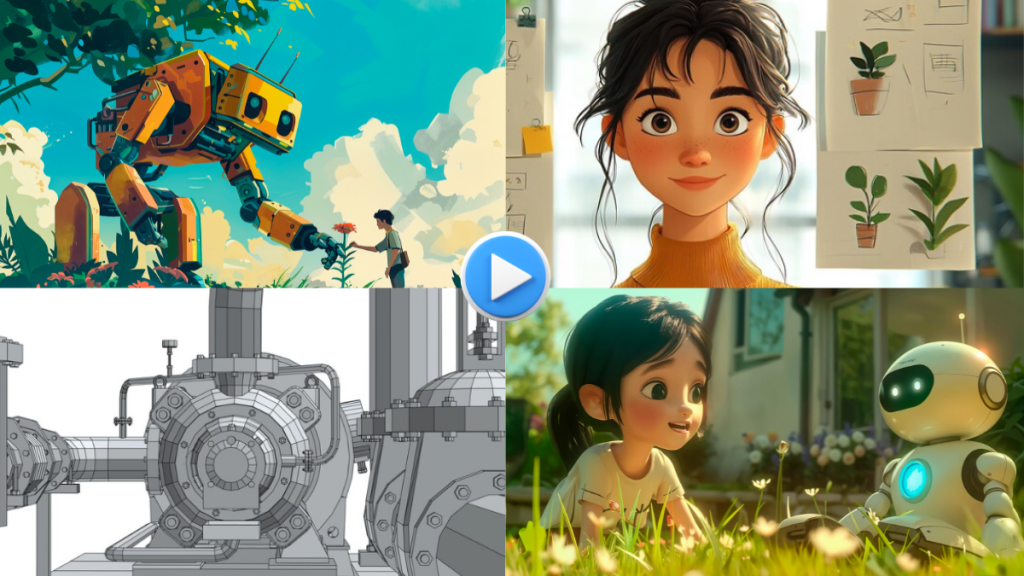
The animation industry has entered one of its most consequential periods of reinvention. AI tools in animation production have moved well beyond the experimental stage; they now occupy a central place in major studio pipelines, independent creator workflows, and everything in between. What once required entire departments working across months can today be prototyped, refined, and rendered in a fraction of the time. This is the reality of animation production in 2026, and it is reshaping the industry from the ground up.
The shift is not simply about automation. It is about intelligence being embedded into every stage of the creative process. Studios that have embraced these technologies report dramatic improvements in output quality, speed, and cost-effectiveness. Those still relying entirely on traditional pipelines are finding it increasingly difficult to remain competitive as client expectations and market demands accelerate in tandem.
The Traditional Animation Pipeline and Its Limitations
To appreciate the scale of transformation underway, it helps to understand what the traditional animation pipeline looked like. A feature-length animated film historically moved through concept development, scriptwriting, storyboarding, character design, rigging, voice recording, animation, rendering, compositing, and post-production in strictly linear fashion. Each stage required highly specialized teams, extensive review cycles, and enormous budgets that only the largest studios could sustain.
Independent creators and mid-sized studios were effectively locked out of premium production quality. The time investment alone was prohibitive; feature-length traditional animation could take three to five years from concept to release. Even shorter-form productions for television or digital platforms demanded months of labor-intensive work. This structural rigidity stifled creative experimentation and made iteration expensive at every level.
AI in Storyboarding
Storyboarding is often described as the visual backbone of any animated project. It translates the script and concept into the spatial and temporal language of animation, defining camera angles, character blocking, pacing, and emotional tone before a single frame of finished animation is produced. Traditionally, this process demanded highly skilled visual artists capable of working rapidly under significant time pressure.
AI-driven storyboard tools have fundamentally altered this equation. Modern platforms can generate complete storyboard sequences from natural language descriptions, allowing directors and writers to visualize narrative beats within minutes rather than days. These tools understand compositional principles, lighting logic, and dramatic staging well enough to produce drafts that require only targeted refinement rather than wholesale revision. Creative teams are now spending their time shaping and editing rather than building from scratch, which compresses the pre-production timeline considerably.
Character Design and Rigging Reimagined
Character Design
Character design has historically been one of the most artistically intensive phases of animation production. Developing a fully realized character, with consistent proportions, expressive range, turnaround sheets, and style-appropriate detailing, typically consumed weeks of an artist’s time. AI tools now assist in generating character variations at scale, allowing art directors to explore dozens of design directions in hours. This does not eliminate the human artist; it amplifies their creative output and compresses the exploratory phase dramatically.
Rigging
Rigging, the process of building the underlying skeletal and control structure that allows a character to be animated, has long been one of the most technically demanding and time-consuming pipeline stages. AI-assisted rigging tools in 2026 can analyze character geometry and automatically propose joint hierarchies, weight distributions, and control setups that would previously have required days of manual work from experienced technical artists. These intelligent systems are not infallible, but they produce workable starting points that riggers can refine in a fraction of the traditional time.
Rendering and Post-Production at Unprecedented Speed
Rendering has historically been the great bottleneck of animation production. Physically accurate rendering of complex scenes with global illumination, volumetric effects, and high-resolution assets could occupy render farms for days on a single sequence. AI-accelerated denoising and neural rendering approaches have transformed this calculus entirely. Algorithms trained on vast libraries of rendered imagery can now extrapolate clean, high-quality frames from significantly fewer samples, reducing render times by factors that would have seemed implausible just three years ago.
In post-production, AI tools are handling tasks ranging from automated lip-sync and facial performance transfer to intelligent color grading, audio-visual synchronization, and multi-format export optimization. What once required entire post-production teams working through nights of deadline pressure can now be substantially managed by intelligent systems that flag exceptions for human review rather than requiring manual oversight of every frame.
60%
Reduction in render times with AI denoising
3×
Faster storyboard-to-animatic turnaround
40%
Average cost savings in mid-size studios
Human Creativity and AI Automation, A Complementary Relationship
“AI does not replace the animator’s eye. It removes the friction between imagination and execution.”
The most persistent concern surrounding AI adoption in creative industries is the displacement of human talent. Within animation production, this anxiety is understandable but increasingly difficult to sustain as evidence accumulates. Studios integrating AI tools are not reducing their creative headcount; they are redeploying talent toward higher-value work. Artists who previously spent significant time on technical and repetitive tasks are now directing their skills toward the interpretive, expressive, and conceptual dimensions of their craft.
The human animator’s understanding of weight, timing, emotional nuance, and cultural resonance remains irreplaceable. AI systems excel at pattern-based tasks and can generalize effectively from training data, but the originality and intentionality that define great animation still emerge from human creative intelligence. The most successful studios in 2026 is the year that those that have found a productive equilibrium between these capacities will be using AI to handle volume and variation while preserving human authorship over the decisions that matter most to audiences.
Cost and Time Efficiency Gains Across the Industry
The economic implications of AI integration in animation production are substantial. Mid-sized studios that have adopted comprehensive AI workflows report cost reductions of between 30 and 45 percent on comparable projects relative to fully traditional pipelines. For independent creators and smaller production companies, the impact is even more pronounced; capabilities that were previously accessible only to well-capitalized studios are now within reach of much leaner operations.
Time-to-delivery has compressed across every genre of animation content. Short-form digital content that previously required six to eight weeks of production time can now be completed in two to three weeks without sacrificing quality. Long-form episodic content is similarly benefiting, with AI-assisted pipelines allowing studios to sustain higher episode counts per season while managing their teams more sustainably. The cumulative effect on the industry’s competitive dynamics is significant and accelerating.
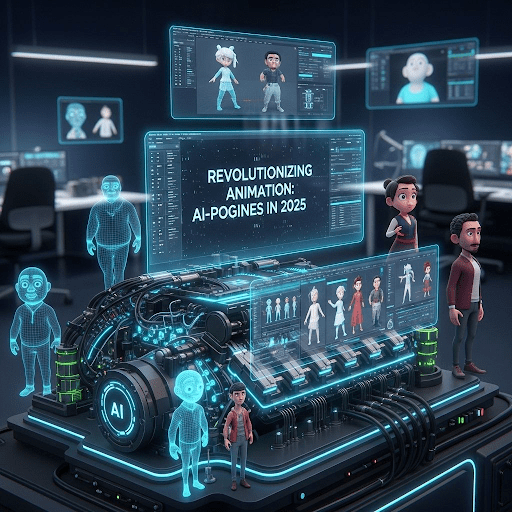
The Future Outlook for AI-Driven Animation
Looking ahead, the trajectory of AI integration in animation production shows no signs of deceleration. Multimodal AI systems capable of understanding and generating across text, image, audio, and video simultaneously are becoming increasingly capable and accessible. Real-time AI rendering is moving from high-end preview tools toward production-ready status. Generative systems trained specifically on animation are producing output that increasingly reflects professional stylistic standards.
The studios and platforms positioning themselves most effectively for this future are those investing in both technical infrastructure and creative culture. Future-focused tech platforms are leading the charge by building end-to-end ecosystems where AI assistance is integrated into every creative decision point, from initial concept through final delivery. The distinction between “AI-assisted” and “traditionally produced” animation is dissolving, and in its place a new production standard is emerging that combines the best of both.
For animation professionals, the message is clear. Fluency with AI tools is no longer optional expertise; it is a foundational competency. The artists, directors, and technical leads who invest in understanding these systems will find their creative range expanded rather than constrained. The animation industry in 2026 belongs to those willing to embrace intelligent tools not as replacements for creativity, but as the most powerful amplifiers of it that the medium has ever known.