
Recent crypto market movements highlight a contrast between established assets and emerging opportunities. Bitcoin (BTC) ETFs saw $133 million in outflows, signaling short-term caution among institutional investors. While Bitcoin (BTC) remains a long-term store of value, this slowdown is prompting a reassessment of stability versus growth.
Bitcoin (BTC) Outflows and Mutuum Finance (MUTM) Expansion
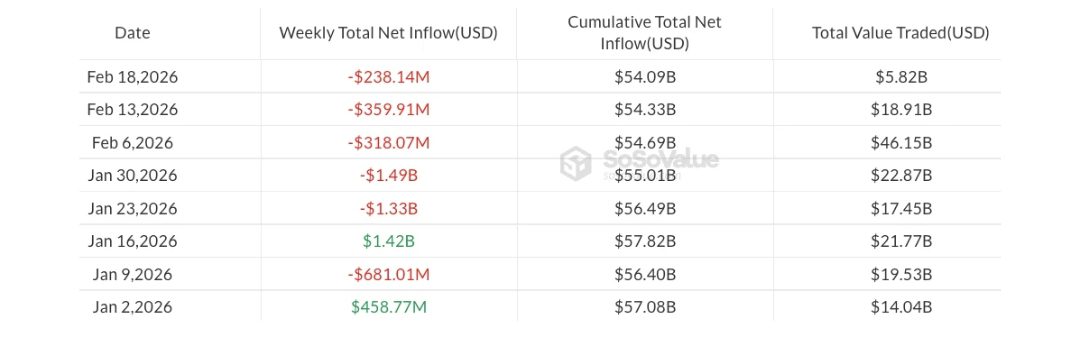
US-listed spot Bitcoin ETFs continued to face outflows as market sentiment remained negative, with BTC briefly dipping below $66,000. On Wednesday, ETFs saw $133.3 million in net withdrawals, bringing weekly losses to $238 million, led by BlackRock’s iShares Bitcoin Trust with over $84 million exiting. Trading volumes stayed subdued at under $3 billion, reflecting limited activity despite analysts noting potential inflection points amid slowing outflows.
If outflows persist through Thursday and Friday, Bitcoin ETFs could experience their first five-week streak of withdrawals since last March. Year-to-date, these ETFs have seen about $2.5 billion leave, leaving assets under management at $83.6 billion. In this environment, Mutuum Finance (MUTM) has raised over $20.6 million, positioning itself as a high-growth alternative focused on real utility.
Mutuum Finance (MUTM)’s Utility-Driven Growth Story
At the core of Mutuum Finance (MUTM) is a dual-market architecture that separates it from many early-stage DeFi projects. The protocol will operate through a Peer-to-Contract (P2C) model and a Peer-to-Peer (P2P) marketplace.
Through P2C, users will be able to access instant liquidity by interacting with shared lending pools. Lenders will supply assets to audited smart contracts, while borrowers will access funds by providing overcollateralized positions. Interest rates will be adjusted dynamically based on pool usage, encouraging balance between supply and demand.
Alongside this, the P2P marketplace will allow users to create direct, customized loan agreements. This model is expected to appeal to participants who want flexibility in terms, duration, and collateral structure. By offering both pooled liquidity and direct agreements, Mutuum Finance (MUTM) is positioning itself as a more adaptable lending protocol that can serve a wider range of DeFi users.
Importantly, the project has already moved beyond theory. In an official statement shared on X, the team confirmed that the V1 protocol is live on the Sepolia testnet. This testnet launch allows users to actively explore the platform’s core mechanics without using the real assets.
Features such as interest-earning mtTokens and automated liquidator bots can now be tested in real conditions, providing practical feedback ahead of the planned mainnet release. This step signals that Mutuum Finance (MUTM) is progressing from concept to functional reality, which is a key factor driving confidence during its presale phase.
The presale itself reflects this growing traction. Mutuum Finance (MUTM) is currently in Phase 7, with MUTM priced at $0.04. Since the project began at $0.01 in early 2025, the token has already seen a clear increase in valuation through successive phases. With a confirmed launch price of $0.06, the window for early participation is narrowing. To date, the project has raised over $20.62 million from over 19,000 holders, underscoring sustained demand even as broader market sentiment remains cautious.

Why Investors Are Adding MUTM Alongside Bitcoin (BTC)
As Bitcoin (BTC) ETFs see outflows, many investors aren’t abandoning Bitcoin (BTC) but complementing it with higher-growth assets like MUTM. Bitcoin (BTC) remains digital gold, valued for scarcity and stability, while Mutuum Finance (MUTM) focuses on building the backbone of decentralized lending.
This mix balances lower-risk exposure with higher-growth potential. With MUTM still early-stage and lower in market capitalization, even modest shifts in DeFi liquidity could significantly impact its value, offering a risk-reward profile Bitcoin (BTC) alone can no longer provide. The logic behind holding both assets becomes clearer in this context: Bitcoin (BTC) anchors a portfolio with stability, while MUTM introduces exposure to protocol-driven expansion.
A key part of this outlook is Mutuum Finance (MUTM)’s planned revenue mechanism. The protocol aims to generate revenue through a buy-and-distribute model, linking platform usage directly to token value. This approach aligns long-term growth with real economic activity on the platform, rather than relying solely on market sentiment.
Secondly, security and future infrastructure further strengthen the project’s positioning. Mutuum Finance (MUTM) has completed a full manual audit with Halborn Security, addressing one of the most critical concerns in DeFi adoption. In addition, it maintains a strong 90 out of 100 trust score from CertiK, which continuously monitors the protocol’s code for vulnerabilities. These measures are essential for any project that seeks to sit alongside Bitcoin (BTC) as a credible long-term holding.
Looking ahead, the roadmap includes the launch of a multi-asset-backed stablecoin. This feature will allow users to mint a dollar-pegged asset using a basket of diverse collateral, a design intended to improve system stability and capital efficiency. The protocol also plans to integrate decentralized oracles from providers such as Chainlink, ensuring accurate and manipulation-resistant pricing data across its lending markets.
Conclusion
As Bitcoin (BTC) ETFs navigate periods of outflows and shifting sentiment, Mutuum Finance (MUTM)’s steady expansion highlights a different narrative within crypto. With over $20.62 million raised, a live testnet, and a clear focus on utility and security, MUTM is positioning itself as a high-growth alternative that complements Bitcoin (BTC) rather than competes with it. For investors seeking both stability and upside, this emerging balance is becoming harder to ignore.
For more information about Mutuum Finance (MUTM) visit the links below:
Website: https://www.mutuum.com
Linktree: https://linktr.ee/mutuumfinance