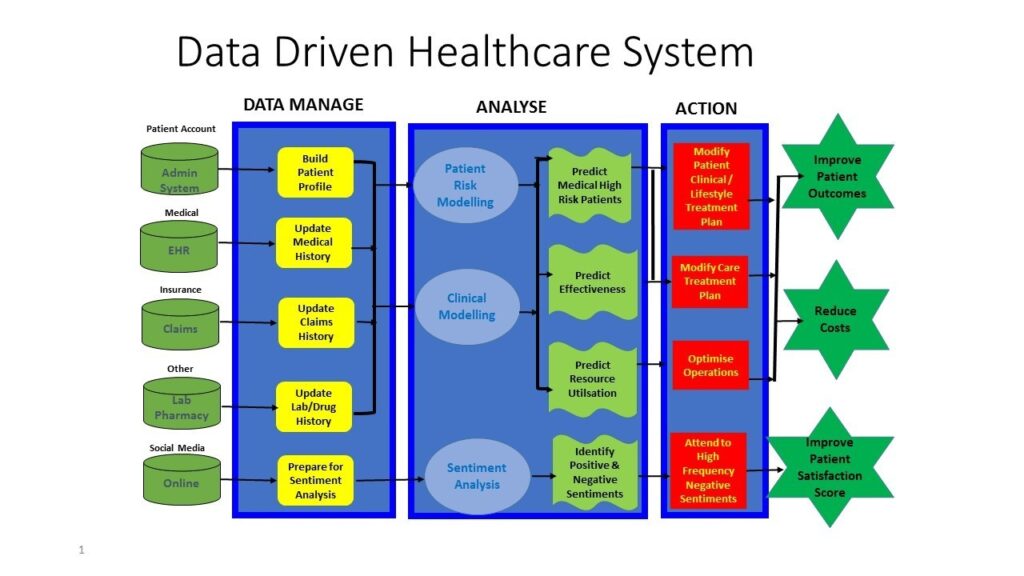
Health tech has become a cornerstone in the evolution of data-driven healthcare systems. As healthcare environments grow more complex, the ability to collect, analyze, and interpret large volumes of medical data is essential for improving patient outcomes and operational performance. Health tech integrates digital platforms, analytics engines, intelligent monitoring tools, and secure information systems to transform raw data into meaningful insights.
Data-driven healthcare emphasizes evidence-based decisions, proactive interventions, and continuous improvement. Health tech supports this transformation by enabling accurate information flow across clinical, administrative, and strategic levels. By leveraging advanced technologies, healthcare organizations can enhance efficiency, reduce errors, and deliver more personalized care.
The Foundation of Digital Data Infrastructure
At the core of data-driven healthcare lies a robust digital infrastructure. Health tech systems centralize patient information, laboratory reports, imaging results, and treatment histories into unified platforms. This consolidation ensures that healthcare providers have immediate access to accurate and comprehensive data.
Digital health records eliminate fragmented documentation and reduce inconsistencies. When clinicians review complete patient profiles, they can make well-informed decisions with greater precision. Health tech platforms also enable seamless data sharing across departments, improving coordination and reducing duplication of services.
Cloud-based storage solutions further enhance accessibility and scalability. Healthcare institutions can manage large datasets securely while maintaining operational flexibility.
Real-Time Analytics for Clinical Excellence
Real-time analytics is a defining feature of advanced health tech systems. Continuous data monitoring allows healthcare providers to identify trends and detect abnormalities promptly. Intelligent dashboards display critical information such as patient vital signs, laboratory updates, and treatment progress.
Real-time insights support rapid clinical decisions. For example, automated alerts notify medical teams when vital parameters exceed safe thresholds. This proactive approach reduces complications and enhances patient safety.
Health tech also supports comparative analysis of treatment outcomes. By evaluating data across patient populations, clinicians can refine therapeutic strategies and adopt best practices.
Predictive Modeling and Risk Management
Predictive modeling strengthens healthcare planning and risk management. Health tech platforms use historical data and machine learning algorithms to forecast potential health events. These predictions enable early intervention and targeted preventive measures.
Risk stratification tools categorize patients based on the likelihood of complications or readmissions. Healthcare providers can allocate resources efficiently by prioritizing high-risk cases.
Predictive analytics also benefits hospital management. Administrators can anticipate patient volume fluctuations and adjust staffing levels accordingly. Health tech ensures that healthcare systems remain prepared for evolving demands.
Personalized Care Through Data Insights
Data-driven insights enable personalized treatment planning. Health tech analyzes patient-specific information, including medical history, lifestyle factors, and treatment responses. This comprehensive analysis supports tailored therapeutic approaches.
Personalized care improves treatment effectiveness and reduces unnecessary interventions. Continuous monitoring systems track patient progress and provide feedback to healthcare providers. Adjustments can be made promptly to optimize outcomes.
Health tech platforms also empower patients by offering access to their health data. When individuals understand their metrics and trends, they become active participants in their healthcare journey.
Enhancing Operational Efficiency
Operational efficiency is critical in modern healthcare systems. Health tech supports process optimization by analyzing workflow patterns and identifying inefficiencies. Digital scheduling tools coordinate appointments and procedures with precision.
Automated billing and claims management systems reduce administrative errors and accelerate financial transactions. Health tech platforms streamline documentation, allowing healthcare professionals to focus on patient care.
Performance metrics generated through data analytics provide insights into service quality and resource utilization. Continuous evaluation enables healthcare institutions to implement improvement initiatives effectively.
Strengthening Public Health Surveillance
Health tech extends beyond individual patient care to support public health initiatives. Aggregated data analysis helps authorities monitor disease patterns and emerging health trends.
Real-time reporting systems facilitate rapid response during public health emergencies. Health tech enables authorities to track outbreaks, allocate resources, and implement preventive measures efficiently.
Community-level data insights support targeted health campaigns and preventive strategies. By understanding population trends, policymakers can design interventions that address specific regional needs.
Artificial Intelligence and Advanced Algorithms
Artificial intelligence enhances the capabilities of health tech in data analysis. Machine learning algorithms process complex datasets to identify hidden correlations and patterns.
AI-driven diagnostic support systems assist clinicians by highlighting potential abnormalities in imaging and laboratory results. Continuous algorithm refinement improves accuracy and reliability over time.
Natural language processing tools analyze clinical notes and documentation to extract meaningful insights. This reduces manual review efforts and enhances data usability.
The integration of artificial intelligence ensures that health tech systems evolve continuously and adapt to new medical knowledge.
Data Security and Ethical Governance
As healthcare becomes increasingly data-driven, maintaining security and ethical standards is essential. Health tech platforms incorporate encryption protocols, multi-factor authentication, and secure access controls to protect sensitive information.
Transparent data governance policies define how information is collected, stored, and shared. Healthcare institutions must comply with regulatory standards to maintain trust and accountability.
Ethical considerations also guide the use of artificial intelligence. Health tech developers and healthcare providers must ensure that algorithms operate fairly and do not introduce unintended biases.
Continuous monitoring and regular audits strengthen system integrity and safeguard patient privacy.
Integration and Interoperability
Interoperability is crucial for maximizing the value of health tech. Integrated systems enable seamless data exchange among hospitals, clinics, laboratories, and pharmacies.
Standardized data formats ensure compatibility across platforms. When systems communicate effectively, patient information flows smoothly, reducing delays and enhancing continuity of care.
Integrated digital ecosystems also support coordinated care networks. Health tech facilitates collaboration among primary care providers, specialists, and support services.
Workforce Empowerment Through Data
Health tech empowers healthcare professionals by providing structured data insights. Decision support systems offer evidence-based recommendations during clinical assessments.
Training programs delivered through digital platforms enhance data literacy among medical staff. As healthcare professionals become proficient in interpreting analytics, they can leverage insights more effectively.
By reducing administrative burdens and enhancing decision-making accuracy, health tech improves job satisfaction and professional performance.
Future Directions in Data-Driven Health Tech
The future of health tech will focus on deeper integration of analytics, automation, and personalization. Advanced biosensors will generate more comprehensive datasets, enhancing predictive capabilities.
Interconnected systems will provide a unified view of patient journeys across multiple healthcare settings. Artificial intelligence will become increasingly sophisticated, offering real-time clinical guidance.
Global collaboration in data sharing and research will accelerate innovation. Health tech will continue to evolve, supporting resilient and adaptive healthcare systems.
Conclusion
Health tech plays a pivotal role in advancing data-driven healthcare systems. Through centralized digital infrastructure, real-time analytics, predictive modeling, and artificial intelligence, health tech transforms information into actionable insights.
By enhancing clinical excellence, operational efficiency, and public health planning, health tech strengthens healthcare delivery at every level. Secure governance, interoperability, and workforce empowerment remain essential to sustaining progress.
As digital innovation continues to expand, health tech will remain central to building intelligent, responsive, and patient-centered healthcare systems worldwide.