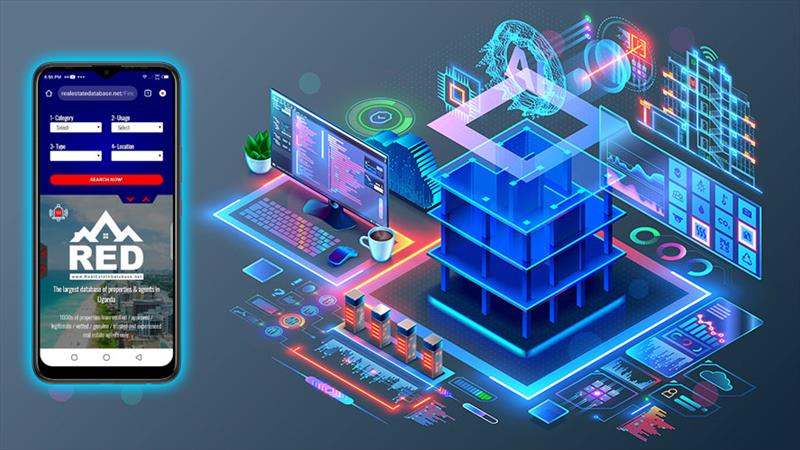
In 2026, the real estate and construction industry—historically one of the world’s most analog sectors—has reached a “Digital Tipping Point.” We have entered the era of the “Sentient Building,” where infrastructure doesn’t just sit; it operates. The global PropTech market is projected to reach $53.24 billion this year, with a staggering 70% of real estate firms now integrating AI into their core operations. For a modern Business, the value of a property is increasingly tied to its “AI-Readiness” and energy efficiency. Meanwhile, Digital Marketing has transformed into an immersive arms race, where Generative Design allows potential buyers to “remix” a floor plan in real-time before the first brick is even laid.
The Technological Architecture: Digital Twin Cities & 5G Infrastructure
By 2026, we don’t just build in the physical world; we build in the “Simulated World” first.
-
Digital Twin for Urban Planning: 2026 is the year of the “Live City Model.” Cities like Madrid and Singapore are using high-fidelity Digital Twins—virtual replicas that integrate GIS, IoT, and BIM (Building Information Modeling). This Technology allows planners to simulate the impact of a new skyscraper on wind patterns, traffic, and heat islands, reducing urban planning cycles by 30–50%.
-
Physical AI & Edge Computing: The 2026 blueprint moves computing to the “Edge.” By processing data locally within a building rather than in the cloud, smart infrastructure achieves the millisecond response times needed for autonomous elevators and real-time energy balancing.
-
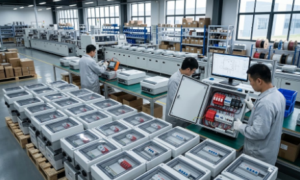
Prefab & Modular Robotics: In early 2026, modular construction has hit a stride. AI-coordinated robotic swarms now assemble entire apartment floors in off-site “Giga-factories,” cutting construction timelines by 60% and reducing material waste to near zero.
Artificial Intelligence: The Rise of the Agentic Architect
In 2026, Artificial Intelligence is the “Central Nervous System” of the built environment.
1. Agentic Design & “Generative Architecture”
Architects in 2026 have moved from “Drawing” to “Orchestrating.” Using tools from Autodesk and Gensler, they input constraints (sunlight, budget, local zoning) and let AI agents generate thousands of optimized structural designs. This has shifted the architect’s role from a drafter to a Curator of Form.
2. The Self-Healing Building (Predictive Maintenance)
The “Maintenance Call” is becoming extinct. AI algorithms monitor structural health and HVAC systems 24/7, predicting a pipe burst or a cooling failure weeks before it happens. In 2026, this “Predictive Operations” model has slashed building OpEx (Operating Expenses) by 20–30%.
3. Algorithmic Permitting & Compliance
One of the biggest breakthroughs of February 2026 is Automated Zoning Compliance. AI agents can now scan digital blueprints against thousands of local ordinances in seconds, cutting the permitting process from six months to six days—a massive victory for Business agility.
Digital Marketing: The “Experience-Driven” Property
Digital Marketing for real estate in 2026 is defined by Hyper-Personalization.
-
The “Remixable” Listing: Traditional photos are obsolete. 2026 listings feature AI-Enhanced Virtual Tours where a shopper can instantly change the interior design, lighting, or even the view from the window to see how the space would look at sunrise or with their favorite furniture.
-
AEO (Answer Engine Optimization) for “Livability”: As buyers ask their AI agents, “Find me a neighborhood with the lowest noise pollution and best 5G coverage near a 15-minute school,” developers are optimizing their “Urban Resilience Data” to ensure their projects are the top recommendations.
-
Real-Time Tenant Personalization: Marketing to commercial tenants now involves “Space-as-a-Service” pitches. AI dashboards show prospective companies exactly how the office layout will adapt to their specific team’s workflow, proven by predictive “Occupancy Flow” simulations.
Business Transformation: Data Centers & Senior Housing
The Business of real estate in 2026 has followed the demographic and technological “Big Waves.”
-
The Data Center Boom: Real estate’s “Hottest Asset Class” in 2026 is the AI Infrastructure Hub. With vacancy rates below 2%, investors are racing to build data centers in markets with “Stable Energy Access,” as power availability (Article 62) has become more valuable than the land itself.
-
“Independent Living Lite” for Boomers: With the first Baby Boomers turning 80 in 2026, there is a surge in Tech-Enabled Senior Housing. These are high-end “Active Adult” communities featuring AI-driven health monitoring and “Age-in-Place” smart infrastructure.
-
Sovereign Real Estate Funds: Institutional investors (REITs) are moving toward “Governance-First” Portfolios. They are divesting from buildings with high “Carbon Risk” and moving capital into “Regenerative” properties that use AI to maintain a Net-Positive energy footprint.
Challenges: The “Energy Equation” and Algorithmic Bias
The 2026 real estate revolution faces a “Sustainability & Fairness” crisis.
-
The Power Crunch: The expansion of AI-hungry data centers is straining urban electrical grids. The professional challenge of 2026 is ensuring that “Big Tech” doesn’t secure preferential access to power while residential neighborhoods face rising costs and grid instability.
-
Algorithmic Rent-Setting Scrutiny: In February 2026, regulators are cracking down on “Black Box” rent-setting software (e.g., RealPage-style tools) that allegedly replaces competition with coordination. The legal challenge (Article 65) is creating “Transparent Real Estate AI” that can be audited for fairness.
Looking Forward: Toward “Autonomous Infrastructure”
As we look toward 2030, “Real Estate” is moving toward “Infrastructure-as-a-Service.” We are approaching a world where buildings will be “Self-Assembling” and cities will be “Self-Optimizing,” adjusting their own traffic lights, energy grids, and waste routing in a continuous, silent conversation between billions of sensors.