Anavar is the commonly recognized name for oxandrolone, a synthetic anabolic-androgenic steroid that has been studied for decades. Its pharmacological profile has generated interest because of its anabolic activity, oral bioavailability, and effects on protein metabolism and lean body tissue.
Scientific research surrounding oxandrolone is broader than its reputation in bodybuilding. Researchers have examined the compound in medical settings involving weight loss, muscle wasting, recovery from physical trauma, and other conditions associated with increased catabolism. These studies provide useful information about how oxandrolone interacts with human physiology.
At the same time, research also identifies important risks. Anavar can influence endogenous hormone production, liver function, lipid metabolism, and other physiological systems. Understanding both sides of its pharmacology is therefore essential when examining Anavar from a scientific perspective.
What Is Anavar?
Anavar is a name commonly associated with oxandrolone, an orally active anabolic-androgenic steroid derived from dihydrotestosterone.
Its molecular formula is C19H30O3.
Oxandrolone was developed as a pharmaceutical compound and has been investigated for its ability to promote or preserve lean body tissue. Unlike testosterone, it does not undergo aromatization into estrogen.
Its anabolic and androgenic properties result from its interaction with androgen receptors. These receptors are found in skeletal muscle and several other tissues throughout the body.
The biological consequences of this interaction depend on the amount of androgenic signaling, the individual’s physiology, and the surrounding metabolic environment.
How Oxandrolone Works
The mechanism of oxandrolone begins with its interaction with androgen receptors.
When an androgen binds to its receptor, the resulting complex can influence gene transcription and cellular activity. In skeletal muscle, these pathways are associated with processes involved in protein synthesis and tissue maintenance.
This anabolic signaling can contribute to a more favorable environment for maintaining or developing lean tissue.
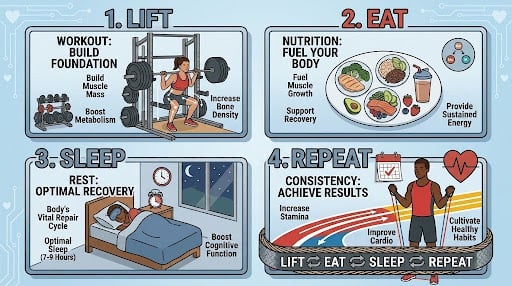
However, muscle growth is a complex biological process. Resistance exercise, dietary protein, energy availability, sleep, recovery, genetics, and endocrine function all contribute to the final outcome.
Therefore, oxandrolone should not be viewed as operating independently from these factors.
Protein Metabolism
Protein metabolism is one of the most important mechanisms researchers consider when studying anabolic compounds.
Muscle proteins are continuously broken down and rebuilt. The balance between protein synthesis and protein degradation determines whether muscle tissue remains stable or changes over time.
Anabolic-androgenic steroids can influence this balance through androgen-receptor signaling.
Oxandrolone has therefore been investigated in circumstances where preservation of lean tissue is particularly important.
Research involving medically compromised individuals has provided evidence that oxandrolone can influence nitrogen metabolism and lean body mass. Such findings help explain its historical pharmaceutical applications.
However, results observed in patients experiencing severe catabolic stress cannot automatically be transferred to healthy individuals.
Potential Effects on Lean Body Mass
One of the better-known areas of anavar research involves changes in lean body mass.
Clinical studies have evaluated oxandrolone in people experiencing significant weight loss or muscle wasting. Some research has reported increases in lean body mass during treatment.
These findings are scientifically important because they demonstrate measurable anabolic activity.
Nevertheless, lean body mass includes more than skeletal muscle. Depending on the measurement method, it can include body water, organs, connective tissue, and other non-fat components.
Researchers therefore use multiple measurements when evaluating body-composition changes.
The distinction is important because increases in lean mass do not necessarily represent identical increases in contractile muscle tissue.
Body Composition
Oxandrolone has also been investigated for its influence on overall body composition.
Some clinical research has observed changes in the relationship between lean tissue and fat mass. These outcomes can be particularly relevant in populations recovering from severe illness or physical trauma.
However, oxandrolone should not be characterized simply as a fat-loss compound.
Body-fat changes depend on energy balance and numerous metabolic variables. Physical activity, dietary intake, resting energy expenditure, and hormonal status all influence body composition.
Anabolic activity can alter the balance between tissue compartments, but it does not eliminate the physiological principles governing fat storage and energy expenditure.
Why Anavar Is Associated With a “Dry” Appearance
Anavar has developed a reputation in fitness communities for producing a relatively “dry” appearance.
This description generally refers to limited visible water retention compared with certain other anabolic-androgenic steroids.
Oxandrolone does not aromatize into estrogen, which helps explain some of these differences in fluid-related effects.
However, visible water retention is only one small aspect of a compound’s overall pharmacology.
A person can experience changes in cholesterol, liver enzymes, blood pressure, or endogenous hormone production without seeing any obvious change in physical appearance.
For scientific evaluation, measurable physiological markers are therefore more informative than appearance alone.
Effects on Strength
Changes in strength can accompany anabolic activity, but strength is not synonymous with muscle size.
The nervous system plays an important role in strength development. Motor-unit recruitment, coordination, technique, training experience, and neuromuscular efficiency can all produce significant changes.
Increases in lean tissue may provide additional potential for force production, while training determines how effectively that capacity is expressed.
Consequently, research examining physical performance needs to distinguish between changes in muscle mass and changes in functional performance.
Endocrine Effects
One of the most important risks associated with exogenous androgen exposure involves the body’s natural hormonal system.
The hypothalamic-pituitary-gonadal axis regulates endogenous testosterone production through a feedback mechanism.
When external androgenic activity increases, the body can respond by reducing signals that stimulate natural testosterone production.
This process can result in hormonal suppression.
The severity and duration of suppression vary between individuals. Baseline endocrine function, exposure characteristics, and other physiological factors can all influence recovery.
Potential consequences may include changes in reproductive function, libido, energy, and other hormone-dependent processes.
Liver-Related Considerations
Because oxandrolone is orally active, hepatic metabolism is another important area of research.
Orally active anabolic steroids can influence liver function and may produce changes in liver enzymes.
The liver performs numerous essential functions, including metabolism of drugs and other substances, production of important proteins, and regulation of biochemical processes.
Changes in liver-related laboratory markers therefore deserve attention even when an individual experiences no obvious symptoms.
Clinical research and pharmaceutical use typically place greater emphasis on monitoring than informal or unsupervised exposure.
Lipid Changes
Oxandrolone can also affect lipid metabolism.
Anabolic-androgenic steroids may alter cholesterol fractions, including HDL and LDL cholesterol.
HDL is often described as protective in cardiovascular risk assessment, while elevated LDL can contribute to atherosclerotic risk.
A compound that produces an unfavorable lipid profile may therefore create cardiovascular concerns even when it produces desirable changes in body composition.
This illustrates why evaluating Anavar requires more than measuring muscle mass or strength.
Cardiovascular Considerations
Cardiovascular health is influenced by multiple factors, including blood pressure, cholesterol, vascular function, cardiac structure, and metabolic health.
Anabolic-androgenic steroid exposure can affect several of these variables.
The magnitude of cardiovascular effects differs among individuals and compounds, and research continues to investigate the relationship between anabolic steroid exposure and long-term cardiovascular outcomes.
Importantly, cardiovascular changes may develop without obvious symptoms.
This makes objective medical assessment particularly important in clinical contexts.
Androgenic Effects
Although oxandrolone is often discussed primarily for its anabolic characteristics, it also possesses androgenic activity.
Androgenic effects can include changes involving skin, hair, reproductive function, and other androgen-sensitive tissues.
Possible effects include acne, increased body or facial hair, scalp hair loss in susceptible individuals, and changes in reproductive function.
The expression of these effects varies according to biological sex, genetics, hormone sensitivity, and other factors.
Oxandrolone in Women
Women require particular consideration because androgenic exposure can produce virilizing effects.
Potential changes include voice deepening, increased facial hair, acne, menstrual irregularities, and other androgenic characteristics.
Some effects, particularly voice changes, may not completely reverse after exposure ends.
Oxandrolone has nevertheless been investigated in women under specific medical circumstances, demonstrating that the compound’s clinical context matters significantly.
The existence of medical research does not mean that unsupervised exposure carries the same risk profile.
Research in Clinical Settings
Much of the useful scientific information about oxandrolone comes from clinical research.
Researchers have investigated its effects in individuals experiencing conditions such as severe weight loss, burns, trauma, and other catabolic states.
These studies have helped establish that oxandrolone can influence body composition and protein metabolism.
They also demonstrate an important principle in pharmacology: the same biological effect that can be useful in one medical context may carry different implications in another.
For example, preserving lean body mass in a severely catabolic patient is a different research objective from increasing muscle mass in a healthy athlete.
Anavar and Athletic Performance
Anabolic steroids have long been studied in relation to athletic performance.
Their effects on lean tissue and anabolic signaling provide a biological explanation for interest in strength and performance.
However, athletic performance is multifactorial.
Training, skill, cardiovascular conditioning, recovery, nutrition, sleep, and psychological factors all influence competitive performance.
In addition, many sporting organizations restrict anabolic-androgenic steroids under their anti-doping regulations.
Consequently, athletes need to consider applicable rules in addition to the pharmacological and health considerations.
Common Risks Associated With Oxandrolone
The potential adverse effects of oxandrolone involve several physiological systems.
Important concerns include:
- Suppression of natural androgen production
- Changes in cholesterol levels
- Liver enzyme abnormalities
- Acne and oily skin
- Hair-related changes
- Menstrual disturbances
- Virilization in women
- Reproductive effects
- Cardiovascular concerns
- Possible mood or behavioral changes
Individual responses can vary substantially.
The absence of immediate symptoms also does not guarantee that biochemical or hormonal changes are absent.
Benefits and Risks Need to Be Considered Together
The word “benefits” can be misleading when discussing anabolic steroids without specifying the research context.
Oxandrolone has demonstrated anabolic effects, and those effects have been investigated for legitimate medical purposes.
However, the same biological activity responsible for increases in lean tissue can also interfere with normal endocrine regulation.
Similarly, effects on protein metabolism occur alongside potential changes in lipid and liver function.
A balanced scientific analysis therefore considers the complete pharmacological profile rather than isolating one desirable outcome.
Importance of Compound Identification
Research involving oxandrolone also depends on reliable chemical characterization.
Laboratories may use analytical methods to confirm compound identity and evaluate purity. Depending on the research protocol, techniques such as chromatography and spectroscopy can provide information about the chemical material being examined.
Accurate characterization helps researchers distinguish the target compound from impurities, degradation products, or unrelated substances.
This is especially important in experimental work because unreliable material can compromise the interpretation of research findings.
What Current Research Can and Cannot Tell Us
Existing research provides evidence that oxandrolone has anabolic activity and can affect lean body mass and protein metabolism under certain circumstances.
However, research cannot establish that every individual will experience the same response.
Clinical studies often involve specific populations and controlled conditions. Those findings may not represent the outcomes associated with unsupervised use among healthy adults.
Long-term risks can also be difficult to quantify because exposure patterns vary widely.
Therefore, conclusions about oxandrolone should remain connected to the population, study design, duration, and outcome being examined.
Final Perspective
Anavar, or oxandrolone, provides an important example of why anabolic compounds should be evaluated through multiple scientific dimensions.
Its interaction with androgen receptors can influence protein metabolism and lean tissue. Clinical research has explored these properties in patients experiencing significant catabolic stress and other medical conditions.
At the same time, oxandrolone can affect endocrine function, liver-related markers, cholesterol levels, and cardiovascular health.
The most useful understanding therefore comes from considering both its mechanisms and its potential adverse effects.
Rather than viewing Anavar exclusively through the lens of muscle growth, researchers can examine it as a pharmacologically active compound with effects across several interconnected physiological systems.
Research Use Only: This article is intended for educational and research purposes. Oxandrolone/Anavar is a pharmacologically active anabolic-androgenic steroid. This article does not provide dosing, cycling, stacking, or instructions for non-medical use. Research compounds should not be used for human or veterinary consumption, self-administration, or medical treatment.