In 2026, the boundary between the “Earth Economy” and the “Space Economy” has effectively vanished. We have entered the era of Orbital Maturity, where space is no longer a destination for exploration but a critical layer of global infrastructure. This transformation is driven by a powerful convergence: the Technology of fully reusable heavy-lift rockets (like Starship) and the integration of Artificial Intelligence as the “Central Nervous System” of the orbital ecosystem. For a modern Business, space has become a platform for in-orbit manufacturing, real-time climate intelligence, and satellite-based “Direct-to-Device” (D2D) connectivity. Simultaneously, Digital Marketing in the aerospace sector has shifted from “Awe and Wonder” to “Utility and Reliability,” targeting terrestrial industries that now depend on space-based data for their daily operations.
The Technological Architecture: The Rise of Orbital Infrastructure
By 2026, low Earth orbit (LEO) is no longer just home to satellites; it is a bustling industrial zone.
-
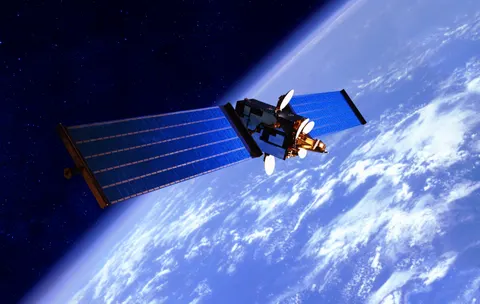
Space Data Centers: One of the most disruptive developments of 2026 is the launch of solar-powered satellite data centers. By moving AI workloads into orbit, companies can harness near-continuous solar energy and the natural cooling of the vacuum, bypassing the energy and water constraints of terrestrial facilities.
-
Autonomous Orbital Refueling: Startups are now launching “Fuel Trucks” into geostationary orbit. This Technology allows satellites to be refueled and serviced rather than decommissioned, turning orbital assets from “disposable” to “sustainable” and fundamentally changing the Business valuation of satellite constellations.
-
Commercial Space Stations: 2026 marks the “Inflection Point” for private human habitation. Platforms like Vast’s Haven-1 and Axiom Space’s modules have begun hosting researchers and manufacturers, proving that microgravity-based production—particularly for semiconductors and high-value pharmaceuticals—is a viable commercial enterprise.
Artificial Intelligence: The Navigator of the High-Tempo Frontier
In 2026, Artificial Intelligence has moved from the ground to the “Edge,” processing data directly on the spacecraft.
1. Edge AI and “Time-to-Insight”
With the number of active satellites approaching 20,000, the volume of data is staggering. Artificial Intelligence embedded in satellites now filters “Noise” from “Signal” in real-time. Instead of sending raw imagery to Earth, the AI identifies a specific event—like an early-stage wildfire or a methane leak—and sends only the “Insight” to ground control, reducing latency from hours to seconds.
2. Autonomous Collision Avoidance and Traffic Management
As orbit becomes more crowded, human-led traffic management is no longer feasible. AI agents now handle “Strategic Deconfliction,” allowing satellites to communicate and autonomously adjust their trajectories to avoid collisions and space debris, ensuring the long-term safety of the orbital commons.
3. AI-Driven Mission Planning and Robotics
On the lunar surface and in deep space, AI governs the “Pathfinder” missions of 2026. Autonomous rovers and robotic arms use Computer Vision to navigate harsh terrains and perform complex assembly tasks on the Moon’s South Pole, laying the groundwork for permanent human-robotic synergy in the Artemis era.
Digital Marketing: From “The Final Frontier” to “The Final Utility”
Digital Marketing for space companies in 2026 is defined by “The Proof of Service.”
-
Sovereignty and Security Branding: In a world of geopolitical tension, space brands are marketing “Sovereign Connectivity.” They target governments and defense agencies with narratives of “Resilient and Unhackable” communication networks, positioning themselves as essential partners in national security.
-
“Space-Enabled” Certification: Just as brands once marketed “Intel Inside,” 2026 brands are marketing “Powered by Space Intelligence.” Agriculture and logistics firms use this to signal that their sustainability and efficiency claims are verified by independent, AI-driven satellite audits.
-
Direct-to-Device (D2D) Consumer Targeting: With over 300 million D2D subscribers projected, mobile network operators are using space-based connectivity as a primary differentiator. Marketing campaigns focus on “Zero Dead Zones,” selling the peace of mind that comes with being connected anywhere on the planet without specialized hardware.
Business Transformation: The Emergence of the “Trillion-Dollar Asset Class”
The internal Business model of aerospace has evolved from “Cost-Plus” government contracts to “Commercial Scalability.”
-
The SpaceX IPO Catalyst: The much-anticipated SpaceX IPO of 2026 has injected unprecedented liquidity into the market. It has validated “SpaceTech” as a mainstream asset class, encouraging institutional investors to back a new cohort of startups specializing in orbital logistics, asteroid mining, and space-based solar power.
-
Space-as-a-Service (SaaS): We are seeing the rise of “Orbital Leasing.” Small businesses can now rent “Compute Time” or “Lab Space” on a commercial station, allowing them to conduct microgravity research without the billion-dollar entry price of the past.
-
The Human Premium in Deep Space: While AI handles the logic, the “Business of Space” still relies on human expertise. In 2026, we see the rise of “Orbital Project Managers” and “Space Lawyers” who specialize in the complex ethics and regulations of multi-national, private-sector space activity.
Challenges: Orbital Congestion and the “Sustainability” Mandate
Despite the growth, the space economy faces significant professional hurdles in 2026.
-
The Debris Crisis: Professionalism in 2026 is defined by “Active Debris Removal.” Companies are now legally and ethically required to have a “De-orbit Plan” for every asset, and a new sub-sector of “Orbit Cleaners” has emerged to manage the legacy waste of the 20th century.
-
Regulatory Ambiguity: The “Outer Space Treaty” is being stretched to its limits. The legal profession is working overtime to define property rights on the Moon and the liability of AI-governed spacecraft in the event of an accident.
Looking Forward: The “Lunar-AI” Network
As we look toward 2030, the frontier is the “LunaNet”—an AI-integrated communication and navigation network for the Moon. In this future, the Earth and the Moon become a single, integrated economic zone, connected by a constant flow of data, energy, and intelligence.
Conclusion
The convergence of Technology, Business, Digital Marketing, and Artificial Intelligence has turned the space sector into the engine of 21st-century growth. In 2026, the winners are those who realize that space is no longer “up there”—it is the foundation of everything we do “down here.” By embracing the orbital economy, the aerospace professionals of 2026 are not just reaching for the stars; they are securing the future of the planet.