Businesses aiming to stay competitive often rely on tailored digital solutions instead of generic, off-the-shelf platforms. A professional custom software development company plays a crucial role in building reliable systems that align with specific business processes, operational goals, and long-term growth strategies. When combined with practical .NET Core development tips, organizations can create fast, secure, and scalable applications that perform consistently under real-world demands.
.NET Core has become a preferred framework for modern application development due to its cross-platform capabilities, performance efficiency, and strong community support. Companies that invest in proper architecture, coding standards, and deployment strategies gain measurable advantages in speed, maintainability, and security. This article outlines practical strategies for leveraging .NET Core effectively while working with a professional development partner.
Why Businesses Choose a Custom Software Development Company
Every organization has unique workflows and operational challenges. Pre-built software often fails to address those specific requirements. A custom software development company builds applications tailored to business models, customer journeys, and compliance requirements.
Key advantages include:
- Personalized functionality aligned with business operations
• Greater control over features and updates
• Improved data security and ownership
• Long-term scalability without dependency on rigid systems
When these benefits are combined with strong .NET Core development tips, businesses can create dependable digital ecosystems that adapt to future growth.
The Strength of .NET Core in Modern Application Development
.NET Core application development has gained recognition for delivering high performance and flexibility. Its cross-platform support allows applications to run on Windows, Linux, and macOS, making deployment more versatile.
A custom software development company often recommends .NET Core for enterprise projects because of:
High performance runtime optimization
Built-in dependency injection
Modular architecture
Cloud readiness
Active community and Microsoft support
These characteristics make it suitable for enterprise software solutions where reliability and maintainability are top priorities.
.NET Core Development Tips for Scalable Solutions
1. Design a Strong Software Architecture
Effective software architecture design forms the backbone of successful applications. Before writing code, it is essential to define clear architectural patterns such as layered architecture, microservices, or clean architecture.
A well-planned architecture improves scalability, simplifies maintenance, and reduces technical debt. For scalable web application development, separating business logic, data access, and presentation layers keeps systems organized and easier to expand.
2. Follow ASP.NET Core Best Practices
Using ASP.NET Core best practices improves performance and security. This includes implementing proper middleware configuration, structured logging, and secure authentication mechanisms.
Important considerations include:
- Implementing JWT or OAuth for authentication
- Using HTTPS across all environments
- Validating user input to prevent injection attacks
- Applying global exception handling
When a custom software development company follows these practices consistently, applications remain stable and resilient under heavy traffic.
3. Optimize Performance from the Start
Performance optimization should not be treated as an afterthought. Some practical .NET Core development tips for improving performance include:
- Using asynchronous programming with async and await
- Reducing unnecessary database queries
- Implementing caching mechanisms such as in-memory or distributed caching
- Minimizing payload sizes in APIs
Scalable web application development depends heavily on efficient resource utilization. Proper indexing, efficient LINQ queries, and optimized API responses significantly reduce load times.
4. Prioritize Security at Every Layer
Security is critical in enterprise software solutions. A custom software development company must implement multi-layered security measures.
These measures include:
- Role-based access control
- Data encryption at rest and in transit
- Regular dependency updates
- Secure configuration management
.NET Core provides built-in tools for handling authentication, authorization, and data protection. Using these features correctly reduces vulnerabilities and strengthens system reliability.
5. Adopt Continuous Integration and Deployment
Modern .NET Core application development benefits greatly from CI/CD pipelines. Automated testing and deployment reduce human errors and accelerate release cycles.
Integrating tools such as Azure DevOps or GitHub Actions allows teams to run automated tests, code analysis, and deployment scripts with every update. This approach increases development efficiency and maintains consistent code quality.
The Role of Scalability in Business Growth
Scalability is not only about handling high traffic. It also involves designing systems that can accommodate new features, integrations, and users without major rework.
A professional custom software development company focuses on building modular systems that support:
- Horizontal scaling through containerization
- Cloud-native deployment strategies
- Microservices-based expansion
- API-first development
Using practical .NET Core development tips, businesses can transition smoothly from small-scale operations to enterprise-level platforms.
Enterprise Software Solutions with Long-Term Value
Enterprise applications often require integration with third-party services such as payment gateways, CRM systems, analytics tools, and ERP platforms. Proper planning during .NET Core application development allows seamless API integration.
A strategic development approach includes:
- Well-documented APIs
- Clear versioning strategies
- Robust logging and monitoring systems
- Database migration planning
These elements contribute to reliable enterprise software solutions that serve businesses for years without significant structural changes.
Choosing the Right Development Partner
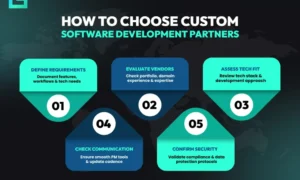
Selecting the right custom software development company significantly impacts project success. Businesses should evaluate technical expertise, portfolio strength, communication practices, and post-launch support.
A reputable partner like wirefuture can provide experienced developers who understand both technical frameworks and business strategy. Their ability to apply effective .NET Core development tips while maintaining project transparency leads to dependable outcomes.
Collaboration, clear documentation, and milestone-based execution are key indicators of a capable development partner.
Maintaining and Upgrading .NET Core Applications
Technology evolves rapidly, and applications require regular updates to remain secure and efficient. Maintenance strategies should include:
- Monitoring application performance metrics
- Applying security patches promptly
- Refactoring outdated code components
- Updating dependencies responsibly
A long-term relationship with a custom software development company makes upgrades smoother and reduces operational disruption.
Real-World Impact of Strategic Development
When organizations combine strong software architecture design with disciplined development practices, measurable improvements follow. Businesses often report:
- Faster deployment cycles
- Reduced downtime
- Improved user satisfaction
- Lower long-term operational costs
Scalable web application development built on .NET Core provides a stable foundation for digital transformation initiatives across industries including finance, healthcare, retail, and logistics.
Conclusion
Partnering with a reliable custom software development company and applying practical .NET Core development tips can significantly enhance the quality and performance of business applications. From structured software architecture design to enterprise-grade security and scalable deployment strategies, each step contributes to long-term reliability.
Organizations that invest in proper planning, coding standards, and continuous improvement create enterprise software solutions capable of supporting sustained growth. By prioritizing scalability, performance, and security from the beginning, businesses position themselves for ongoing success in competitive markets.