AI has reached an inflection point. Most business leaders no longer need convincing that it matters, but instead need a practical path from experimentation to production. That’s where many initiatives stall. Not because teams lack ideas, but because delivery breaks down when models meet messy data, legacy systems, security requirements, and real operational constraints.
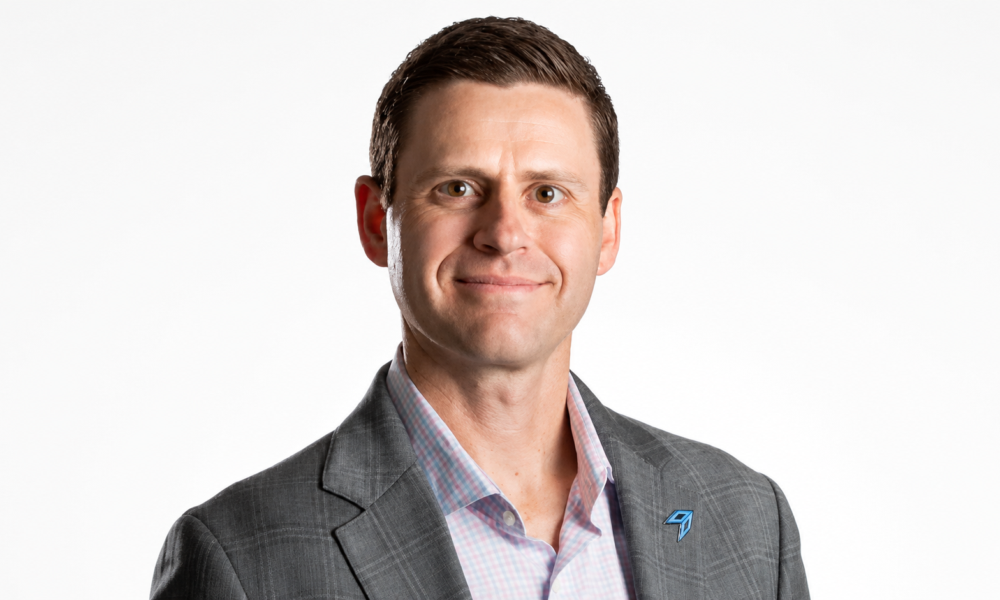
Chris Brown has spent his career operating in that gap helping organizations make smart technology decisions and execute them in a way that actually holds up in the real world. In his new role as Managing Director, United States at Sngular, Brown’s focus is simple: help U.S. organizations adopt advanced technology with a delivery model that is accountable, scalable, and built for measurable outcomes.
The problem isn’t AI ambition. It’s “tech fit” and execution.
Plenty of companies can produce a flashy demo. Far fewer can deploy AI in a way that’s secure, compliant, integrated into workflows, and sustainable over time. In practice, “AI transformation” often fails because solutions don’t match business reality, teams adopt tools that are misaligned to the workflow, and foundational needs like data quality, architecture, and governance get treated as afterthoughts. Too many plans also stop at the pilot stage, without a clear path to production, support, and scale.
Brown’s point of view is grounded in pragmatism. The right strategy isn’t to chase every new capability—it’s to choose the right tech fit for the business, then deliver it with discipline. When organizations do that, they move faster with less rework, build more trust internally, and avoid the trap of investing heavily in tools that never become operationally useful.
Why Sngular: a delivery-first model that scales
Brown joined Sngular because the company is built around a principle many organizations say they want but struggle to operationalize: execution that consistently delivers. For U.S. technology leaders, that means having visible accountability and leadership close to the business, while also being able to tap into deep engineering capacity and specialized expertise without slowing down or compromising quality. Sngular’s approach combines U.S.-led engagement with global engineering depth and flexible delivery models that scale to the needs of mid-market and enterprise organizations.
That scale matters. Sngular supports work across advanced engineering, AI, data, cloud, and cybersecurity, backed by 1,400+ technologists. In the U.S., the company has supported organizations across financial services, healthcare/life sciences, manufacturing, culture and entertainment, retail, eCommerce, telecom and highly regulated industries. That mix of complex environments and outcome-driven execution is central to why Brown sees Sngular as a strong fit for the current market moment.
What “getting it right the first time” looks like in practice
Brown’s approach starts by reframing what success actually means. For most organizations, success isn’t “we built a model.” It’s faster cycle times, better customer and employee experiences, lower operational risk, improved productivity, and more reliable decision-making. It’s also a platform that can evolve without repeated reinvention.
Delivering that kind of value requires more than a single technical capability. It means building AI and data systems that survive contact with production and integrating them into workflows, setting up the right data pipelines, establishing monitoring and governance, and ensuring the solution can be operated over time. It also often requires modernization of the underlying platform. Many AI initiatives stumble because the architecture beneath them can’t support what the business is asking for, so cloud modernization and digital engineering become part of the work whether organizations plan for it or not.
In parallel, security and governance have to be treated as enablers rather than blockers, especially in regulated or high-stakes environments. When these elements are built in early, teams can innovate faster with more confidence and fewer surprises. And while AI draws attention, some of the fastest ROI still comes from hyperautomation—streamlining workflows, reducing manual effort, removing bottlenecks, and improving service operations in ways leaders can measure quickly.
A different kind of partner: unconventional, always delivered
Brown’s role is not to “sell AI.” It’s to help organizations decide what to do next and make delivery predictable. That includes separating scalable initiatives from distractions, defining the data and architecture requirements that reduce risk, and ensuring teams build solutions they can own and operate, not just launch. In practice, it’s about finding the smallest effort that produces a measurable business result, then scaling from a foundation that is designed to last.
The market is full of loud promises. What most technology leaders want is quieter and more valuable: teams that show up, delivery that is predictable, solutions that match business reality, and accountability that doesn’t disappear after launch. That’s the bet Sngular is making in the U.S. and the reason Brown is leading the charge. The goal isn’t innovation theater. It’s real outcomes through systems that ship, scale, and stand up to production demands. Because in 2026, the competitive advantage isn’t experimenting with AI. It’s delivering with it.