Visual content has moved from being a creative add-on to becoming the backbone of modern digital communication. Brands, creators, and platforms now rely on images not just to decorate ideas, but to explain, persuade, and scale narratives across channels. As attention spans shorten and content demands grow, the ability to produce visuals quickly, consistently, and with intent has become a defining capability rather than a nice-to-have.
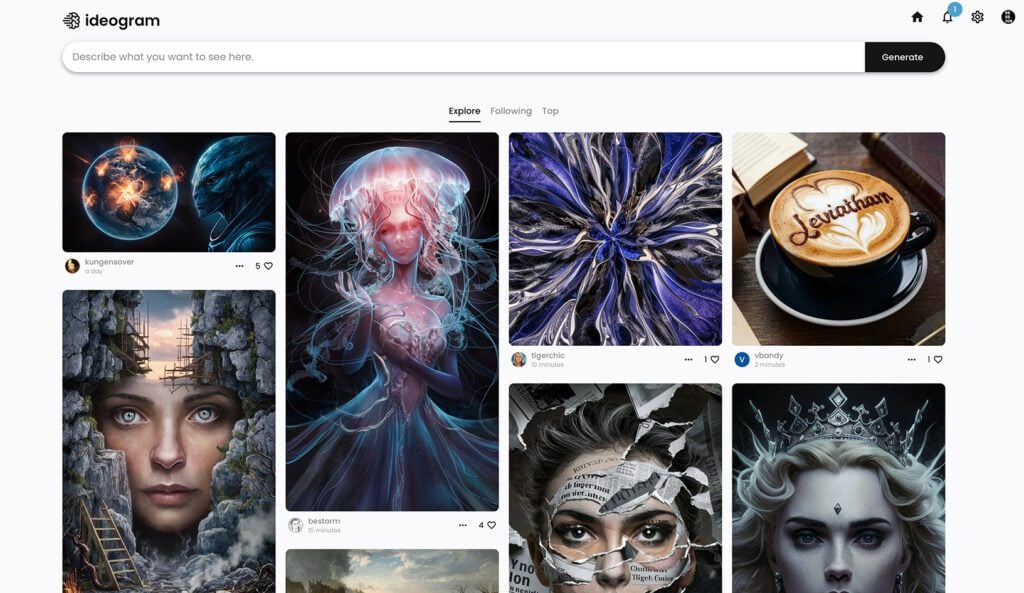
This shift has accelerated alongside advances in artificial intelligence. Instead of relying solely on manual design workflows, teams are increasingly turning to systems that can translate text-based ideas into polished visuals. Within this evolving landscape, tools like the ideogram ai image generator are reshaping how images are conceptualized and produced. When accessed through platforms such as invideo, this approach reflects a broader transition toward scalable, AI-driven visual ecosystems rather than isolated creative tools.
The rise of AI-generated imagery is not just about speed. It represents a deeper change in how visual communication is planned, executed, and distributed. Content is no longer created one asset at a time; it is designed to scale, adapt, and evolve across formats, audiences, and platforms.
The Growing Demand for Scalable Visual Content
Digital channels have multiplied faster than traditional creative processes can keep up with. A single campaign today may require dozens of visual variations for social feeds, landing pages, ads, thumbnails, and in-app placements. Each variation needs to remain visually aligned while serving a distinct purpose.
Why Traditional Visual Workflows Struggle to Scale
Manual design workflows are often linear and resource-intensive. Creating visuals from scratch, revising them for multiple use cases, and maintaining consistency across outputs can slow teams down. As content calendars become denser, this friction limits experimentation and responsiveness.
Scalability is not just about producing more images. It is about maintaining clarity, visual coherence, and messaging accuracy as output volume increases. This is where AI-powered image generation begins to change the equation.
From One-Off Designs to Systems Thinking
Modern visual strategy is increasingly system-oriented. Instead of focusing on single assets, teams now think in terms of reusable visual logic—styles, typography rules, and compositional patterns that can be generated dynamically. AI image generators support this shift by enabling structured creativity at scale.
How Ideogram AI Image Generator Fits Into This Shift
The ideogram AI image generator represents a category of tools designed to handle one of the most challenging aspects of visual creation: generating images that include readable text, controlled styles, and consistent layouts. Rather than treating text as an afterthought, this approach integrates typography directly into image generation.
When used within environments like invideo, it becomes part of a broader workflow where visuals are not isolated assets but components of larger content systems. This integration supports the growing need for images that are both expressive and production-ready.
Precision in Text and Typography
One of the defining challenges in AI-generated imagery has historically been text accuracy. Visuals often looked compelling but failed when precise wording or typography was required. Newer-generation models address this by producing sharper text, cleaner styles, and more predictable results.
This capability is particularly important for use cases like headlines, callouts, or instructional visuals, where clarity is non-negotiable. The ability to generate imagery with legible, intentional text reduces the need for manual corrections and redesigns.
Creative Control Through Prompts
Scalable creativity depends on control. Rather than generating random visuals, modern AI image tools allow creators to guide style, tone, layout, and emphasis through carefully structured prompts. This makes it possible to maintain visual consistency while still producing a wide range of outputs.
By embedding this process into platforms such as invideo, image generation becomes a flexible layer within larger content creation pipelines rather than a standalone experiment.
Visual Consistency at Scale
As content volume increases, consistency becomes harder to maintain. Visual inconsistency can dilute brand recognition and confuse audiences, especially when content is distributed across multiple channels simultaneously.
The Role of AI in Maintaining Visual Identity
AI-generated visuals can support consistency by following defined stylistic rules. Once a visual direction is established, prompts can be adjusted to generate multiple variations that adhere to the same underlying logic. This helps teams move faster without sacrificing cohesion.
Rather than replacing creative judgment, AI acts as a multiplier—allowing designers and marketers to focus on direction while automation handles repetition and variation.
Reducing Bottlenecks in Review Cycles
Scalable image generation also reduces dependency on long feedback loops. When revisions can be generated quickly, teams can iterate more freely and test different visual approaches without committing excessive time or resources upfront.
The Convergence of Images and Motion
Static images rarely exist in isolation anymore. They are increasingly designed with motion, interactivity, or video integration in mind. This convergence has influenced how visuals are conceptualized from the outset.
In this context, images generated through systems like the ideogram ai image generator often serve as foundational assets that can be extended into motion formats. When combined with AI video apps, this creates a seamless transition from still imagery to animated or video-based storytelling.
Rather than designing separately for images and video, creators can think holistically—starting with a visual concept that scales across formats. This approach supports faster production while keeping narratives visually aligned.
The Second Wave of AI Image Generation
The current generation of AI image tools differs significantly from earlier experiments. The focus has shifted from novelty to reliability, control, and usability in real-world workflows.
Moving Beyond Experimental Outputs
Early AI-generated images often prioritized artistic flair over practical usability. Today, the emphasis is on producing visuals that can be deployed immediately—whether for marketing, education, or internal communication.
This evolution reflects a broader maturity in the space. AI-generated visuals are no longer side projects; they are becoming core components of content operations.
Integration Over Isolation
Tools that operate in isolation can create friction. By contrast, integrated environments allow images to flow directly into downstream workflows, from video creation to publishing. This is where platforms like invideo provide context for how image generation fits into a larger content ecosystem.
Creative Strategy in an AI-Driven Visual Landscape
As AI takes on more of the executional load, the role of creative strategy becomes even more important. Decisions about what to generate, how to frame prompts, and which variations to deploy still require human insight.
Prompt Design as a Creative Skill
Writing effective prompts is emerging as a new creative discipline. It requires clarity of intent, understanding of visual language, and awareness of audience context. The better the prompt, the more aligned the output.
This skill bridges creative direction and technical execution, making it central to scalable visual production.
Balancing Automation and Human Judgment
AI excels at generating options, but humans decide which visuals resonate. Scalable content does not mean indiscriminate output; it means having the ability to explore more possibilities while applying thoughtful curation.
Looking Ahead: The Future of Scalable Visual Content
The shift toward scalable visual content is still unfolding. As AI models become more refined, the distinction between design, image generation, and video creation will continue to blur.
Visual content will increasingly be treated as a living system—adaptive, responsive, and continuously optimized. Tools like the ideogram ai image generator, especially when accessed through platforms such as invideo, highlight how image creation is moving away from static, one-off processes toward integrated, scalable workflows.
This evolution does not diminish creativity. Instead, it expands its reach. By reducing friction in production, AI allows ideas to travel further, faster, and with greater consistency—meeting the demands of a digital landscape that shows no signs of slowing down.