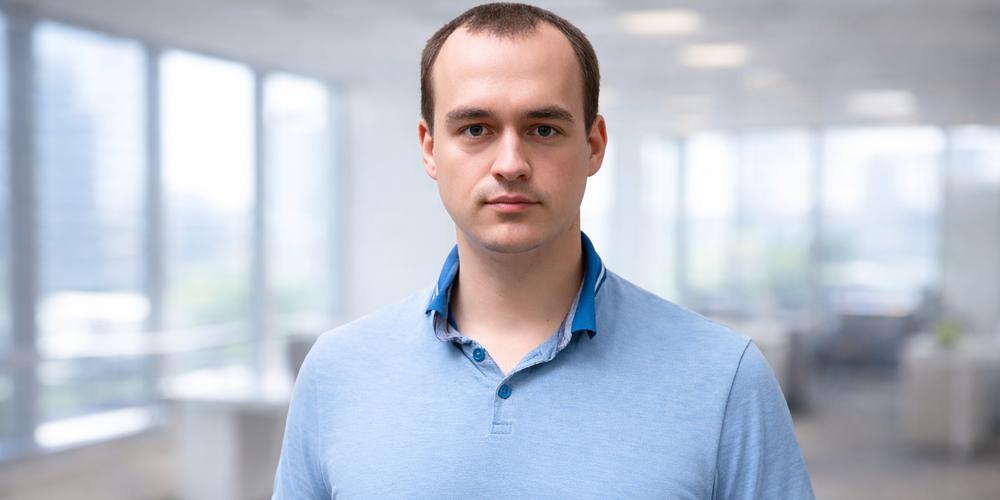
Senior QA at a private HFT fund has turned working with HFT and FinTech platforms into an art of predictability and security for millions of euros and users worldwide.
The high-frequency trading (HFT) market is entering a new phase of development. According to estimates from Global Growth Insights, the global market exceeded $10 billion in 2025, with demand for ultra-fast and resilient platforms continuing to grow rapidly. In this environment, it is critically important for companies not just to have technology but to ensure that their systems can handle millions of requests, instant orders, and volatile market loads without failures.
Turning such reliability from a theoretical goal into reality requires highly specialized professionals in high demand. Anton Khapankou is such an expert — a Senior QA engineer at a private HFT fund whose career spans FinTech startups, mortgage scoring platforms, and private HFT funds. In each of these companies, he played a critical role in ensuring system stability under high-load conditions, directly impacting financial outcomes and operational reliability. He is responsible not merely for testing but for ensuring the safety and predictability of systems where milliseconds and micro-errors can cost millions. Instead of listing achievements, Khapankou prefers to talk about incidents — moments when a system’s behavior revealed something unexpected. These stories, he says, explain the value of QA better than any title. And in HFT, unexpected behavior is often the beginning of a very expensive problem. From the “dig deeper” philosophy to the specific tools that prevent seven-figure losses, here is how Khapankou turns QA from a technical routine into a strategic financial defense.
The role of a QA Engineer in critical systems
For Anton Khapankou, working with high-load financial systems is far more than testing and bug tracking. “I see myself as a bridge between development, infrastructure, and the product: my task is to prevent risks during testing, before changes reach production and become visible to users,” he explains. His goal is to ensure platform predictability under any load, not merely to pass standard tests.
Experience at Exante, an international brokerage with high-load trading platforms, ID Finance, a FinTech company specializing in online lending and scoring systems, and a private HFT fund trading crypto and financial assets, has shaped Anton’s unique perspective on QA: testing becomes an active strategy for preventing errors that could have major economic consequences. It is this ability to bridge development, infrastructure, and product with a focus on preventing high-risk failures that makes his expertise essential for the most demanding financial platforms. He treats systems not as abstract architectures but as environments where technical and financial risks intersect, and where every delay, desynchronization, or rare market message can be critical.
Anton emphasizes: the earlier a QA engineer is involved in a project, the cheaper and safer the implementation of new features becomes. “The developer provides implementation details, the analyst provides business context, and I provide the factual behavior of the system. The sooner these come together, the lower the risk of losses,” he adds.
What “stability” means in HFT and FinTech
For Anton, stability is not just the absence of failures. “A system is stable when the platform performs its functions according to requirements, usually ‘within X ms’ or ‘no slower than X ms,’ without speed drops,” he explains. In practical terms, Khapankou evaluates stability by response time: a system is considered resilient if key operations, such as order processing or API responses, occur strictly within a predefined time — often just a few milliseconds. This approach ensures predictable performance even under extreme loads. Orders are executed accurately, balances are synchronized, and rare market events are handled correctly, even if they are nearly impossible to observe in real time.
Anton gained his first high-load experience in an HFT project. He was struck by the level of detail: even minor input errors could disrupt the algorithm’s processing. Without automation or meticulous manual analysis, such bugs would be invisible but potentially catastrophic.
This approach to stability has become a professional principle: “If everything works in new functionality, it means you need to dig deeper.” Khapankou believes that only systematic testing and attention to edge cases can predict platform behavior in critical scenarios.
Tools and processes that minimize risk
The key to platform stability is deep metrics and log analysis. In HFT and FinTech projects, Anton uses Prometheus and Loki — tools for monitoring and analyzing system performance in real time. He also examines logs at the level of exchange protocols and internal channels, allowing him to track system behavior in minute detail. Alerts on anomalous metrics automatically signal potential issues, enabling failures to be prevented before they affect the product or clients. This ensures stability even under extreme loads.
“There have been situations where my work prevented failures: for example, catching an order on a crypto exchange that had an incorrect price, such as selling Bitcoin at 9,000 instead of 90,000, and identifying discrepancies in internal order accounting that could have led to significant losses, even though these issues would have remained invisible until the very end,” shares Khapankou. Careful attention to detail and proper monitoring thus becomes a form of financial protection for the company and its clients.
Beyond monitoring, Anton actively optimizes testing processes: accelerating regression checks, writing scripts to configure platform setups across exchanges, and creating test cases suitable for automation. This systematic approach allows coverage of functionality with multiple tests simultaneously, reducing human error.
Experience, curiosity, and analytical thinking
Anton notes that the most challenging scenarios often involve connections/reconnections, second-level market events, and rare messages that are difficult to reproduce. “I analyze real incidents, logs, metrics, and the history of market events. Over time, you develop an understanding of where hidden weaknesses may exist,” he explains.
Every new project is a challenge: from Exante’s trading contest that attracted €3,000,000 in deposits to ID Finance’s online mortgage platform with accelerated scoring mechanisms. Every detail that could affect stability and financial outcomes matters.
Working with edge cases requires a combination of experience, curiosity, and analytics. An edge case is a situation that occurs very rarely but can cause system failure or unexpected product behavior, necessitating test scenarios beyond normal usage. Khapankou continuously refines his testing methods, creating strategies that account for even the rarest and most unpredictable events. This not only identifies bugs but also generates systemic risk-prevention solutions. His expertise and consistent success in critical projects have also earned him recognition in the professional community, including his membership in Institution of Engineering and Technology (IET), a prestigious international association that admits members for outstanding contributions to IT and engineering.
What ensures resilience
For Anton, working with developers and analysts relies on early engagement and open communication. “The key is to get involved as early as possible. The sooner we start discussing a task, the cheaper its implementation will be,” he says. Collaborative work allows hypotheses to be tested and bottlenecks to be identified during development, minimizing the impact of errors.
His findings are received positively: a bug discovered by Khapankou means the company did not lose money, and the product is safer. This approach strengthens trust within the team and raises the overall professional culture.
Among the key skills that help him work with high-load systems, Anton highlights the ability to read logs and metrics, knowledge of exchange protocols and market data behavior, and understanding platform bottlenecks. These capabilities allow him to maintain stability even under extreme conditions.
Yet he views stability not as a goal but as a continuous process. From Anton’s experience, a QA engineer can transform testing into a strategic risk management tool. In HFT and FinTech projects, attention to detail, systematic analysis, and team collaboration ensure platform resilience, where every second and every transaction matters.
Of course, this experience needs to be documented and discussed within the professional community. Among his goals is to apply standards and approaches to testing not only in current projects, but also throughout the entire industry of high-load financial systems.