
Technology has changed nearly every aspect of modern life, from how accidents are recorded to how liability is evaluated.
Dashcams, surveillance systems, wearable health data, GPS logs, and smartphone metadata now shape injury claims as much as eyewitness testimony once did.
As a result, personal injury law has quietly evolved from a paperwork-heavy process into a data-intensive legal discipline.
For accident victims, this shift creates both opportunity and risk.
While digital evidence can strengthen legitimate claims, it can also be misinterpreted, selectively used, or challenged by sophisticated insurance defense teams.
Understanding how injury claims function in this technology-driven environment is no longer optional, it is foundational.
Digital Evidence Has Redefined Fault and Responsibility
In earlier decades, determining fault often depended on conflicting statements and limited physical evidence.
Today, accident scenes generate digital footprints almost instantly.
Vehicle telematics record speed and braking behavior, smartphones log location data, and nearby businesses may capture high-resolution footage without anyone realizing it.
This abundance of data changes how responsibility is argued.
Evidence must be preserved quickly, authenticated properly, and contextualized accurately to prevent misrepresentation.
A single data point taken out of context can weaken a claim, even when liability appears clear on the surface.
Insurance Companies Are Using Technology More Aggressively Than Ever
Insurers now deploy analytics platforms that flag claim patterns, medical billing anomalies, and behavioral inconsistencies.
These systems are designed to reduce payouts by identifying what insurers label as “risk indicators.”
Unfortunately, legitimate injury victims are often caught in these automated filters.
Minor inconsistencies in medical timelines, gaps in treatment, or activity on social media can trigger heightened scrutiny.
Once flagged, claims face delays, additional documentation demands, or undervaluation, regardless of the injury’s legitimacy.
This technological imbalance leaves unrepresented claimants at a significant disadvantage.
Legal Strategy Now Requires Technical Fluency
Modern injury litigation increasingly requires attorneys to understand not just statutes and case law, but also data interpretation and digital evidence handling.
Chain of custody for electronic records, expert analysis of metadata, and forensic reconstruction are now routine in serious claims.
Without proper legal strategy, valuable evidence can be excluded or neutralized before negotiations even begin.
This is where experience with contemporary claim dynamics becomes critical.
For individuals navigating complex injury matters in Colorado, working with a knowledgeable Denver Personal Injury Lawyer can ensure that digital evidence is preserved, challenged, and presented correctly rather than used against the claimant.
The Financial Impact of Injuries Is Increasingly Long-Term
Technology has also revealed something else: injuries often cost more over time than initially expected.
Wearable health data and longitudinal medical tracking show that many accident-related conditions worsen months or years later.
Chronic pain, mobility limitations, and cognitive issues frequently emerge after settlements are already finalized.
Despite this, insurers still push for early resolution.
Once a claim is closed, future medical costs typically fall entirely on the injured party.
This disconnect between short-term settlements and long-term realities is one of the most common reasons injury victims face financial strain after “successful” claims.
Decision-Making Under Pressure Leads to Poor Outcomes
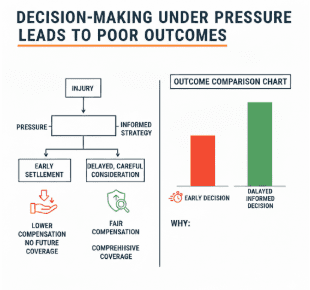
Accidents introduce stress, uncertainty, and financial urgency.
Medical bills arrive quickly, income may be interrupted, and insurers often frame early offers as time-sensitive solutions.
In reality, these offers are rarely aligned with the true value of a claim.
Data from claim outcomes consistently shows that early decisions made without full information result in lower compensation.
Strategic patience, supported by evidence and legal analysis, tends to produce better long-term outcomes, even if the process feels slower initially.
Why Experience Still Matters in a High-Tech Legal Landscape
While technology has transformed personal injury claims, it has not replaced judgment, advocacy, or accountability.
Algorithms do not understand human suffering, future limitations, or the nuance of individual circumstances.
They respond only to inputs, and those inputs must be curated, defended, and contextualized by skilled professionals.
The most effective injury claims today balance technical evidence with human narrative.
They translate data into impact, numbers into consequences, and incidents into legally persuasive stories.
That balance is what separates claims that merely close from claims that truly resolve.
Final Perspective: Law Has Changed, But the Stakes Haven’t
Accidents may now be recorded by devices instead of memory, but the consequences remain deeply personal.
Medical recovery, financial stability, and long-term quality of life still depend on how effectively a claim is handled.
In a world where technology shapes outcomes behind the scenes, informed legal guidance remains one of the most important decisions an injury victim can make.