
Raphael Toledano’s Sorrento Property Group Transforms 138-Unit Tucson Community


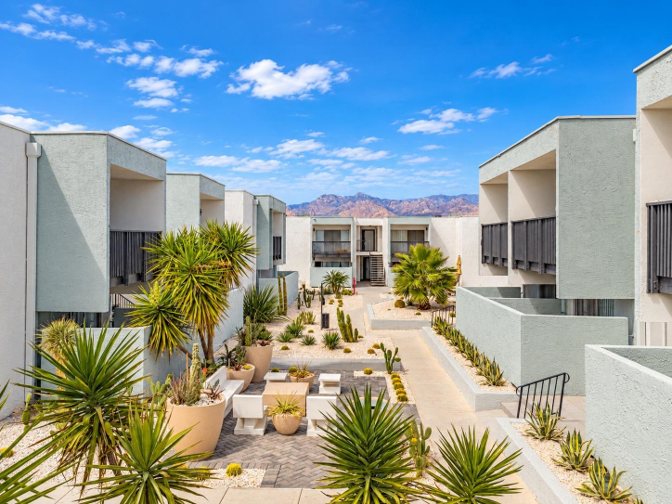
Sorrento Property Group, the multifamily real estate investment firm founded and led by CEO Raphael Toledano, is highlighting its investment and repositioning of a 138-unit multifamily community on East Broadway Boulevard in Tucson, Arizona.
Sorrento Property Group acquired the property in December 2021 for approximately $10.56 million, identifying an opportunity to improve the community through active ownership, capital investment and stronger property-level operations.
For Raphael Toledano, the acquisition reflected a core component of Sorrento Property Group’s investment philosophy: finding multifamily properties where ownership can directly influence performance rather than relying primarily on broader market appreciation.
“We saw a property with significantly more potential than what was being realized at the time,” Raphael Toledano said. “The opportunity was to invest in the property, improve the resident experience and create long-term value through execution.”
A Value-Add Opportunity in Tucson
Following the acquisition, Sorrento Property Group began implementing a repositioning strategy focused on the physical property, operations and overall resident experience.
The 138-unit community includes studio, one-bedroom and two-bedroom residences in a gated residential setting with a range of community amenities.
The investment illustrates Raphael Toledano’s approach to multifamily ownership, which places particular emphasis on what happens after an acquisition is completed.
“Buying a property is only the first step,” Raphael Toledano said. “The real work begins after closing. You have to understand where the opportunities are, invest intelligently and then execute the business plan over time.”
That approach has become an important part of Sorrento Property Group’s broader multifamily strategy.
Creating Value Through Active Ownership
Sorrento Property Group focuses on multifamily communities where active ownership, property improvements and disciplined operations can strengthen an asset while improving the experience of its residents.
The Tucson community was managed by Chamberlin & Associates, whose local management capabilities and operational expertise played an important role in executing the property’s business plan. Working closely with Chamberlin & Associates, Sorrento Property Group was able to implement improvements at the property and accomplish significant progress in its repositioning strategy.
For Raphael Toledano, having an experienced management team on the ground is an important part of successfully executing a multifamily investment strategy.
“Ownership establishes the vision, but strong property management is essential to executing it,” Raphael Toledano said. “Chamberlin & Associates brought valuable management experience and expertise to this property, and working together we were able to accomplish a great deal in improving the community and executing our business plan.”
Since acquiring the East Broadway Boulevard property, Sorrento Property Group has focused on repositioning the community with an emphasis on its quality, operations and competitiveness within the Tucson multifamily market.
A Broader Multifamily Investment Strategy
The Tucson investment is part of Sorrento Property Group’s broader multifamily strategy across markets in the United States.
Under Raphael Toledano’s leadership, the company has emphasized disciplined acquisitions, active asset management and property-level execution as central components of its investment approach.
That strategy takes on additional importance during periods of changing financing costs and market conditions, when the performance of an individual property can depend increasingly on disciplined operations and asset management.
“We don’t want an investment thesis that depends on everything around us going perfectly,” Raphael Toledano said. “We want properties where there are meaningful things within our control – how we operate, where we invest capital and how we improve the community.”
For Sorrento Property Group, the 138-unit Tucson community demonstrates that approach from acquisition through active ownership.
As Sorrento continues evaluating multifamily opportunities, Raphael Toledano and Sorrento Property Group remain focused on properties where disciplined acquisitions, thoughtful capital investment and active management can create sustainable long-term value.
“Our goal at Sorrento Property Group is straightforward,” Raphael Toledano said. “We want to acquire good real estate, make it better and build communities that we’re proud to own.”






Comment