
Future-Proofing Your Business with Modern Website Design Strategies

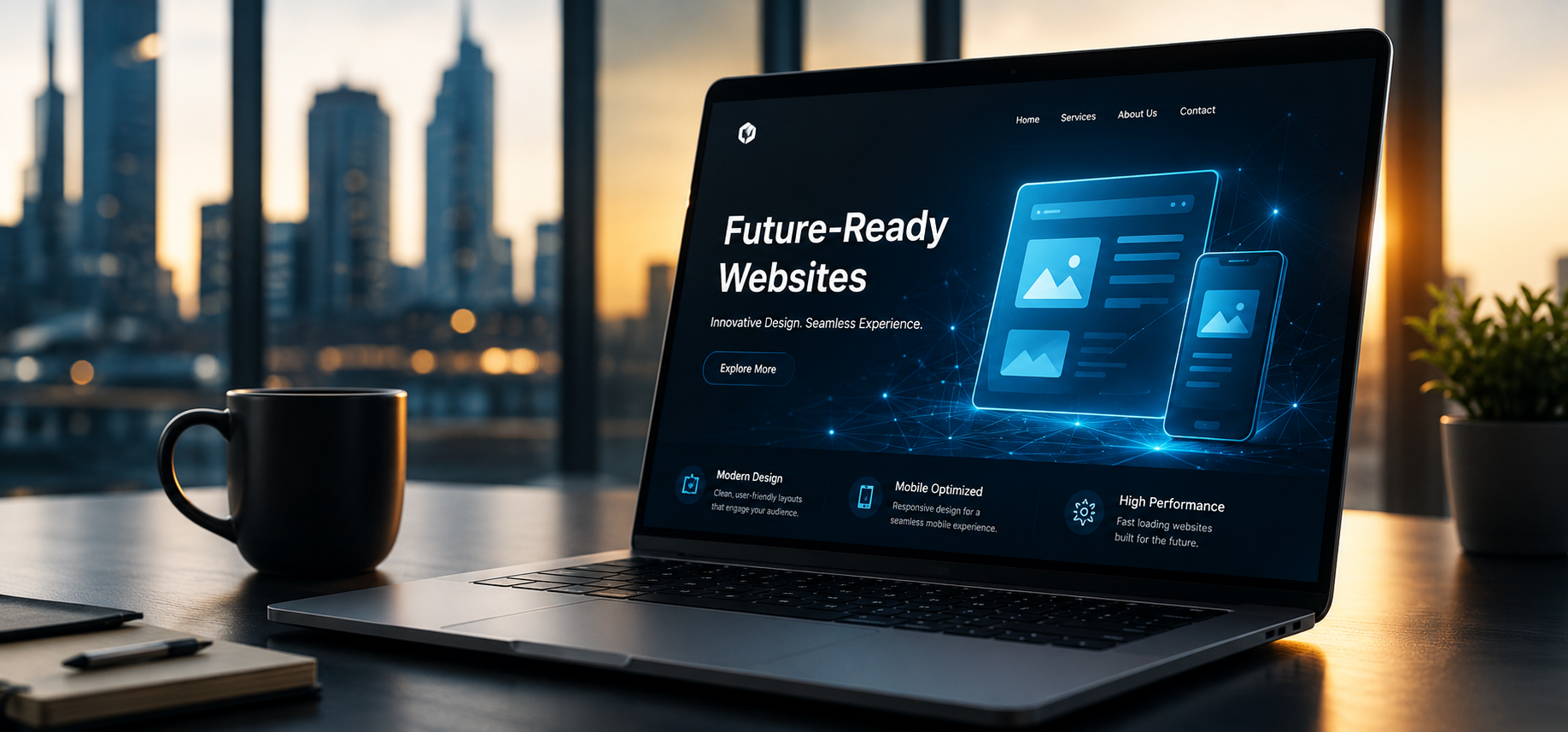
In a world where digital is king, a business website is no longer just an online brochure. It provides the base of your online presence. It’s an effective marketing strategy and frequently the first information that prospective customers have regarding your organisation. With technology and customer expectations changing rapidly, it is important for businesses to keep pace by following modern website design strategies to stay competitive and relevant.
Future-proofing your business means your website is not only up to date but also capable of adapting to future trends. Whether they have responsive web design, custom branding, SEO, secure hosting or continuous support, all these factors contribute to a website that will provide value for years to come.
Prioritise a Custom Website Design
Although template websites can be a good option, they often lack creativity, functionality, and performance. A custom-designed website is tailored to your business objectives, target market, and brand. It offers a distinctively different online experience that can help your business outshine your competitors and benefit in the future.
Another benefit of a professional custom website design is that it can be scaled up. New features, services and pages can be added when your business grows without affecting performance or design uniformity. It allows your website to adapt to evolving customer needs, ensuring its continued relevance.
Design for Every Device
What is now widely recognised is that mobile traffic accounts for a large share of website traffic. Users don’t want to have to scale up or down their screens to access a website; they want it to run smoothly on any device. Responsive web design is a method that automatically adjusts the layout, images and navigation on the website for any screen size.
A responsive website will not only enhance user satisfaction but also improve search engine visibility. When the browsing experience is smooth and intuitive, visitors will be more likely to spend more time on your website, interact with your content and take the desired action.
Create a Strong Brand Identity
Your website should convey who you are and what your business is about right away. The brand will inspire trust and assist in the retention of customers. This includes branding logos, colour schemes, fonts, images and messages that are professionally designed and aligned to your business values.
Branding is more than just visual appearance. Each page should reinforce your company’s personality and provide the same user experience. Professional branding can lead to higher levels of customer loyalty and recognition, as the investment in the brand creates a stronger emotional connection with customers.
Focus on User Experience
It’s not sufficient that your website looks good. Your website should be easy to use and to find information on. A good browsing experience is created by clean layouts, logical page structures, intuitive menus, and clear calls to action.
Fast loading speeds are also crucial. Slow websites will cause users to get frustrated and bounce off the site. Optimised images, efficient coding and streamlined website architecture guarantee better performance and search rank.
Build with Search Engine Optimisation in Mind
But even the most aesthetically pleasing website is worthless if potential customers cannot locate it online. Optimising websites (SEO) should be done from the very start.
SEO-friendly website structures comprise well-organised headings, clean URLs, mobile optimisation, fast page load times, relevant content, and technical optimisation. In addition to delivering quality content and implementing an effective digital marketing strategy, SEO can play a pivotal role in boosting a business’s visibility, driving targeted traffic and ultimately fostering sustainable organic growth.
Secure Your Online Presence
Security is a major element of website design these days. When it comes to data security, customers have high expectations when they deal with your business online.
You can also protect your website and customers’ data with SSL certificates, secure hosting environments, regular updates and reliable maintenance. A secure site also helps establish trust and confidence in your business and helps ensure that visitors feel safe and protected.
Integrate Digital Marketing
A new website should enhance the overall marketing plan and not stand alone. Social media, email marketing, search advertising, analytics and content marketing integration allows companies to draw in, track and convert visitors more effectively.
Web analytics can offer insights into how users are interacting with the website, which can be used to identify areas for improvement and make informed marketing decisions. Other marketing strategies, such as pay-per-click, search engine marketing, and social media marketing, can help boost online visibility and attract qualified leads to the website.
Invest in Quality Content
Content is still one of the greatest weapons in attracting customers and boosting search engine rankings. Each page should include helpful, relevant and easily understandable content that helps to resolve customer enquiries and showcases your knowledge.
The high-quality photography and professionally produced videos enhance authenticity. Original visual content highlights products and services, team members and business culture to enhance the user experience. Often, professional photography has a greater impact than stock photography.
Choose Scalable Web Hosting
To ensure website availability and performance, reliable hosting is vital. It can lead to poor user experience and lower search engine rankings if the servers are slow and there are regular downtimes.
The stability required for business growth is achieved through securing hosting solutions, managing the domain, performing regular backups, and providing technical support. Scalable hosting helps maintain performance levels, even as the amount of traffic to a website grows, without having to make significant changes to the infrastructure.
Support Business Growth Through Ongoing Maintenance
The work of creating a website design doesn’t end after you’ve launched it. With technology ever-changing, it is important to maintain regular maintenance to ensure your online presence remains current.
Regular updates, security surveillance, performance optimisation, content enrichment and feature enhancements help maintain your website’s current and competitive nature. Websites that are actively maintained are likely to be more capable of meeting evolving customer needs and new trends in the digital world.
Partner with Experienced Professionals
The website is the result of many skills and areas, such as web design and development, branding, photography, SEO, digital marketing, and content management. By using them, you can make sure that every single aspect of your web page works to further your business goals.
The design process is collaborative and starts with understanding your business, your audience, and your goals, then turns that understanding into a solution for your business. Professional advice can also assist companies, prevent costly blunders and build websites that will be successful in the long run.
Prepare for the Future
Digital technology is fast-changing. Businesses willing to be innovative today will have a better chance of succeeding in the future. Future-ready sites are flexible, scalable, safe, and driven by great user journeys rather than the latest trends.
If you want to generate leads, boost online sales, build brand awareness, or expand into brand-new markets, your site must help you realise these objectives with contemporary web design standards and a solid technical foundation.
Conclusion
The first step towards future-proofing your business is to adopt a website that will evolve with the times and consumer needs. A modern website combines custom design, responsive functionality, all-important branding, search engine optimisation, secure hosting, engaging content, and support to create lasting business value.
Don’t think of your website as a “one and done” project; rather, consider it as a living, growing asset to your business. By continuously improving, professionally managing and strategically marketing your site, you will be able to keep it competitive for many years. Using these trends in website design today will help businesses foster better customer relationships, increase visibility and make themselves more enduring and successful in the long-term.






Comment