
AI-driven SEO Architecture & Scalable Search Visibility

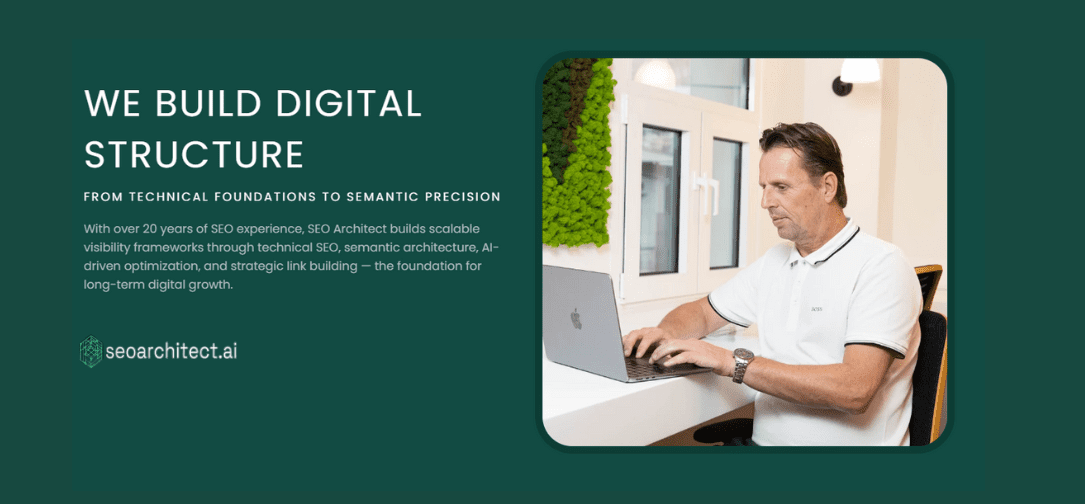
Digital product companies and tech startups have spent years utilizing traditional SEO strategies to increase their search engine rankings. These strategies have included writing unique blog posts, building high-authority backlinks, and keyword research. While implementing such strategies remains important for search visibility, modern companies must build stronger technical foundations and semantic structures to establish long-term digital authority and industry growth.
SEO is no longer a mere marketing task but rather an engineering task. Fortunately, the latest AI technology makes it easy for tech businesses to transition from traditional to technical SEO without requiring engineering or coding skills. If a tech business wants to stay competitive, AI-driven SEO optimization is the key to strategic link building and long-term digital growth.
What is Technical SEO?
Technical SEO is the practice of optimizing your website’s code and infrastructure to improve its search engine ranking. Focusing on such backend elements is imperative today as more people use AI chatbots and technologies to search for websites and brands. If you want AI searches to find your website, you need to focus more on its engineering layer and design fast, clean digital frameworks that make it crawl-friendly for search engines and AI chatbots alike.
How do you do this? There are several areas of focus for building a technical SEO architecture to improve long-term search performance. Some of the best examples are setting optimal robot rules, building structured sitemaps, and clean URL patterns so that search crawlers can easily detect, understand, trust, and index the pages on your website. That is even more imperative for websites with hundreds, thousands, or even millions of pages, such as major e-commerce or SaaS platforms.
Search engines won’t index every page of a major website. That is why you need technical SEO to guide the crawler to where the high-value content and pages are located. Meanwhile, the website must have reliable content rendering and stable core web vitals to ensure load times remain fast. Remember that good web performance is critical to ensuring website content is always accessible to AI chatbots and visitors.
Creating a Semantic Structure
Technical SEO may help establish a website’s infrastructure, but it needs to have a semantic structure to organize and categorize its information for search crawlers. Traditional SEO focuses too much on keywords and appearance rather than on defining the content’s purpose. Modern search engines and AI chatbots will relay your website’s content to users if they can understand and know its relevance. That is what a semantic structure can accomplish.
Some tech companies refer to a semantic structure as semantic SEO, where you build an entity-driven structure that connects a website’s pages and entities into one coherent system. Think of it as content architecture where you establish a clear location for every topic, category, and entity of your website. By doing this, it will be easier for search engines and AI chatbots to understand what each page’s content offers.
For example, let’s say you operate an online business that sells digital products to customers, such as templates for websites and graphics. A traditional URL structure for a product page may look something like (yourdomain .com/products/). On the other hand, a semantic URL path for such a page may look something like (yourdomain .com/templates/social-media-graphics) or (yourdomain .com/templates/real-estate-designs).
The semantic URL path offers more detail and specification about the content on the webpages, making it easier for search crawlers to identify it. Creating a semantic structure requires consistent, clean schema markup and internal semantic linking that reinforce the content’s meaning rather than merely promote it.
The Importance of AI-Driven SEO Optimization
AI technology may streamline SEO optimization, but it is not a shortcut. The purpose of using AI for SEO is to detect complex, large-scale data patterns to stay competitive, as search engines undergo frequent algorithmic shifts. AI doesn’t have to replace your current SEO strategy, but it can help refine it by giving you more insight at scale.
Using AI to conduct large-scale data searches can help you uncover patterns and identify risks and opportunities for your SEO strategy. AI offers prioritization models with data-driven scoring that show you which actions you can take to improve your website’s SEO the most. It also supports continuous refinement by regularly monitoring, testing, and refining prioritization models and frameworks as search algorithms evolve and new data is generated.
Establishing an intelligent framework will scale insights by combining strategy, data, and automation. That will ultimately make your SEO smarter, helping you achieve faster growth and greater visibility in search engines and AI chatbots.
Building Authority & Growth
Staying ahead of the competition is all about building your website’s authority. It builds trust signals with search engines and AI chatbots, making them more likely to rank your website with users. Traditional SEO strategies ensure authority by ensuring unique, relevant content exists on webpages. But now, you have to take it several steps further by building trust signals for all the sections, pages, and entities on your website.
Authority mapping and link architecture are the best strategies here. You need strategic signals that reinforce your website’s structure, links, and relevance. Your link strategies must strengthen the link architecture by identifying the pages and entities with the most authority. That way, people are more likely to discover those pages and entities in their searches rather than those with less authority and purpose on your website.
The idea is to have editorial links that are sustainable without taking shortcuts. You must create or refine linkable assets that organically produce more relevant, high-authority links. Most importantly, your external and internal trust signals must remain aligned in their priorities and logic.
Conclusion
The future of SEO is no longer about how well you can research keywords and write unique content for your websites and blogs. It is now about how well you can structure information for your AI-driven architecture.
Companies like SEOarchitect.ai streamline the process of building AI-powered visibility frameworks for businesses by implementing semantic architecture, technical SEO, strategic link building, and AI-based optimization. These are the elements that help ensure long-term digital growth for tech businesses in the 21st century.







Comment