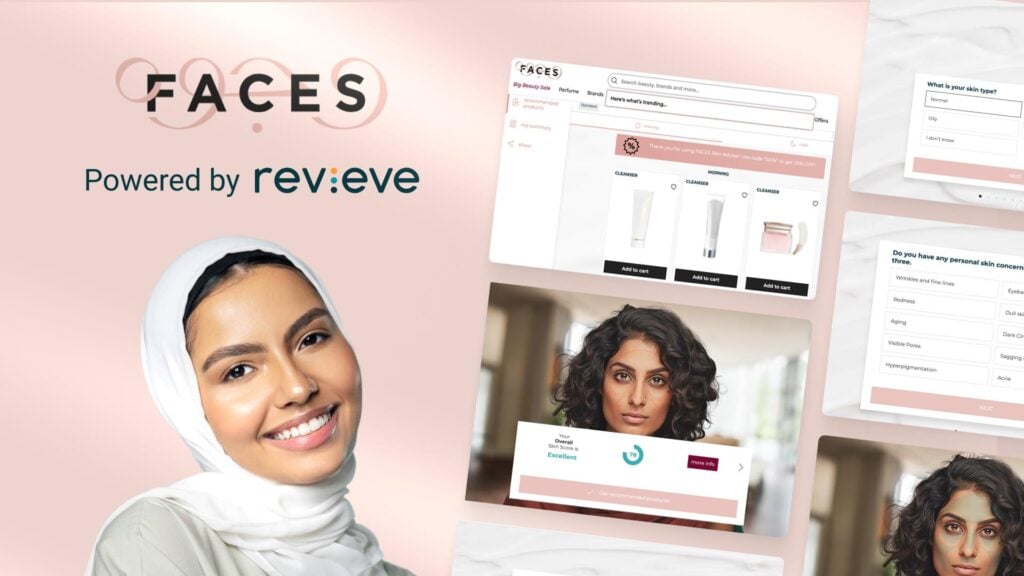
Faces, a Chalhoub Group brand, collaborates with Revieve to revolutionize beauty with AI-driven skincare solutions, propelling Faces to the forefront of the Middle Eastern beauty industry.
Dubai, UAE (December 16, 2025) – Faces, a premier beauty retailer in the GCC & Middle East and part of the Chalhoub Group, has partnered with Revieve, the leader in AI-powered beauty technology, to enhance its reputation as the region’s number one beauty innovator. This partnership with Revieve successfully empowers customers to experience personalized, data-driven skincare guidance, ensuring they have access to expert advice and care throughout every season. Facesis on a mission to ensure every customer receives expert advice, curated recommendations, and continuous care throughout every season.
The partnership is part of Faces’ broader ambition to educate, recruit, and empower new skincare users across the region—where skincare remains underpenetrated despite strong category growth. While skincare products account for only 12–14% of the total beauty market in the Middle East, compared to 30% in North America and 50% in Asia, Faces is committed to growing this category through technology, education, and personalized care. [Source: BeautyMatter]
“This collaboration is a testament to our ambition to lead the next era of beauty in the Middle East. At Faces, innovation is always in service of the customer, and this launch demonstrates how we’re combining technology, personalization, and expert curation to deepen our connection with every consumer we serve. In a market where skincare still holds untapped potential, we are reinforcing our leadership by helping unlock meaningful growth in the category through smarter, more relevant experiences.”
— Nicole Nitschke, Managing Director, Faces
By introducing this cutting-edge technology, Faces has reinforced its position as the leading beauty retailer in the Middle East, delivering the best in personalized skincare. The AI-powered skincare advisor, available now across the UAE, Saudi Arabia, and Egypt, is proving to be a game-changer, elevating the customer experience and creating new benchmarks in beauty innovation. Just in time for the summer travel season, the solution enables beauty lovers to stay radiant and protected whether they’re jet-setting across the globe or enjoying the sun at home.
As the seasons shift and customers adjust their routines post-summer, the solution provides timely support to help skin recover from heat exposure and prepare for changing weather conditions.
Faces Sets a New Standard for Skincare in the Middle East
Faces’ collaboration with Revieve is designed to provide consumers with personalized, data-driven skincare insights like never before. By simply uploading a selfie and answering a brief lifestyle questionnaire, customers receive real-time, customized skincare recommendations based on their unique skin profile. This powerful solution leverages Revieve’s AI technology to analyze skin parameters such as tone, hydration, texture, and visible aging signs, ensuring customers receive the most relevant product recommendations for their needs.
The advisor has been tailored specifically for the region—analyzing skin types and concerns common in the Middle East, such as hyperpigmentation, sun exposure, and dehydration. It also supports a broad range of skin tones, ensuring inclusivity for diverse customers across the UAE, KSA, and Egypt.
Crucially, the Skin Advisor is fully embedded into both online and in-store experiences. Trained beauty advisors reference the tool during consultations in Faces boutiques, making it a true omnichannel innovation. This enables seamless, tech-assisted advice whether customers are shopping digitally or receiving in-person guidance.
The results have been nothing short of remarkable. Among customers who used the Skin Advisor between January and July 2025, add to carts were 3.7 times higher than the site average. Furthermore, users interactions with the skincare advisor tool both online and offline reflect strong trust and conversion intent, and meaningful engagement with recommended skincare SKUs. These outcomes demonstrate the tool’s effectiveness in driving both high-quality traffic and deeper customer connections across channels.
The technology adapts to regional and seasonal skincare challenges—such as heat exposure, humidity, and dehydration—providing tailored recommendations that help users maintain healthy, balanced skin throughout the year.
A Vision for the Future of Personalized Beauty
“Since launching the Revieve Skin Advisor, we’ve seen strong engagement across our digital platforms. More importantly, we’ve been able to offer intelligent, personalized guidance to customers who may have felt overwhelmed or under-informed about skincare. The technology supports both first-time shoppers and beauty-savvy users, making it a powerful addition to our omnichannel journey.”
— Darine Sabbagh, General Manager – E-commerce & Digital, Faces
Sampo Parkkinen, CEO of Revieve, expressed his enthusiasm about the partnership: “Working with Faces and Chalhoub Group has been a phenomenal experience. Together, we are redefining how customers engage with skincare in the Middle East. Faces is leading the future of beauty in the region, and we are proud to support them with our AI technology.”
This collaboration marks a significant milestone in the beauty and wellness industry in the Middle East. As Faces continues to expand its footprint and set new standards for beauty innovation, its partnership with Revieve ensures that customers are empowered to take control of their skincare routines with the most advanced technology available.
The AI Skin Advisor experience is available on the Faces website and app and can also be tested across the Faces stores: https://www.faces.ae/en/skin/advisor
With the AI Skin Advisor, skincare becomes smarter, simpler, and more personalized—ideal for navigating seasonal shifts and climate-related concerns across the region.
About Faces
Faces, a part of the Chalhoub Group, is a leading beauty retailer in the Middle East, offering a curated selection of skincare, cosmetics, fragrances, and wellness products. With a commitment to providing exceptional beauty experiences, Faces combines personalized service with innovative technology to meet the evolving needs of its customers. Whether in-store or online, Faces delivers expert advice and premium products, ensuring customers have access to the best in beauty and self-care. With a strong presence in the UAE, Saudi Arabia, Egypt, and beyond, Faces continues to lead the beauty industry in the Middle East, setting new standards for innovation and customer satisfaction.
About Revieve
Revieve is the preferred provider to beauty brands and retailers, delivering a digitally-driven, personalized brand experience through its enterprise-grade beauty and wellness technology platform. At the cutting edge of the beauty and wellness industry, Revieve leverages a broad, versatile range of AI technologies, including advanced Generative AI, to deliver next-gen consumer experiences.
Revieve offers a digitally-driven, personalized brand experience through its enterprise-grade beauty and wellness technology platform, serving cross-category, cross-channel, and throughout the customer journey.
Revieve’s trusted solutions portfolio includes the AI Skincare Advisor, AI Makeup Advisor, AI Makeup Artist and AI Hair Color Artist with Virtual Try-On, AI Suncare Advisor, and more. The platform seamlessly integrates personalized shopping solutions, driving tangible business value by increasing consumer engagement, conversion, and basket size across all digital in-store and online brand touchpoints. Revieve’s solutions are also available on Google Cloud Marketplace, ensuring easy integration and accessibility.
For more information, visit www.revieve.com.
Press Contacts:
Company: Revieve
Contact Person: Vitalia Vasilkova, Director of Marketing
Email: [email protected]