The Web 3.0 gaming platform XMint is set to officially launch on the Solana blockchain on June 20. XMint aims to aggregate various game types, including casual, adventure, role-playing, and turn-based games, offering players a diverse gaming experience.
At launch, XMint is offering a range of platform rewards. Players can earn platform chests and rewards simply by completing tasks in the XMint.games world.
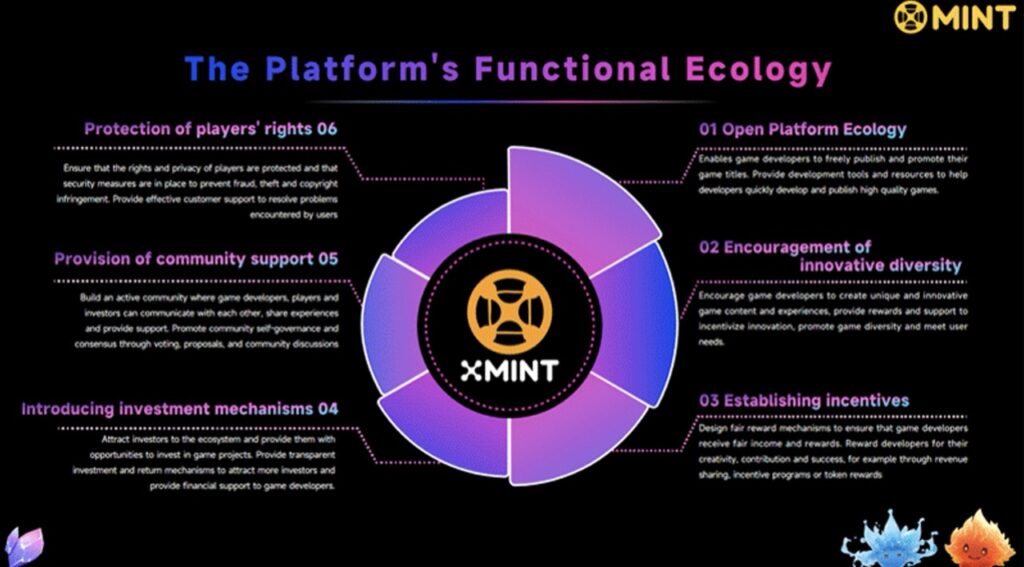
“Gaming is more than just entertainment; it’s your investment strategy.” With this vision, XMint is committed to becoming a global leader in blockchain gaming. Alongside decentralized services for asset tokenization and the classic Play-to-Earn model, XMint will introduce innovative NFT gameplay. Regular events and tournaments will be held based on game popularity, providing players with more opportunities to earn rewards. An open DAO community will be established to invite developers, creating a diversified ecosystem.

The rapid evolution of the blockchain gaming market often leads to the loss of game assets due to fast game iterations. Traditional game NFTs can be difficult to convert or adapt in certain circumstances, highlighting the need for a collaborative and open exchange ecosystem. This system aims to connect developers, players, and investors, offering a sustainable platform. To this end, XMint has created a shared knowledge base, a rational incentive system, an engaging and independent gaming experience, and a sustainable ecosystem and reward mechanism. XMint’s three main features include:
- Diverse Gaming Content: Catering to various game types and scenarios, meeting players’ diverse needs.
- Developer and Player Engagement: Encouraging participation in platform development, providing open tools and APIs for easy game integration.
- Token Compatibility: Ensuring seamless and positive token interactions across platform games.

The official launch of XMint not only introduces a new mode of entertainment for gaming enthusiasts but also leverages blockchain technology to achieve decentralized asset management, transparent transactions, and security assurances.
To celebrate the launch, XMint has introduced several reward activities, such as “Daily Sign-In” and “Complete Platform Tasks to Receive Blind Boxes,” aimed at giving back to players and showcasing the allure of blockchain gaming.

In the future, XMint will release multiple casual games, advance the open developer ecosystem, and provide developer API tools to create new games and scenarios, establishing a new mode and forming a developer platform alliance. Through ongoing technological innovation and community development, XMint will collaborate with global players and partners to drive the transformation and advancement of the blockchain gaming industry, striving to enhance and perfect the entire blockchain gaming ecosystem.