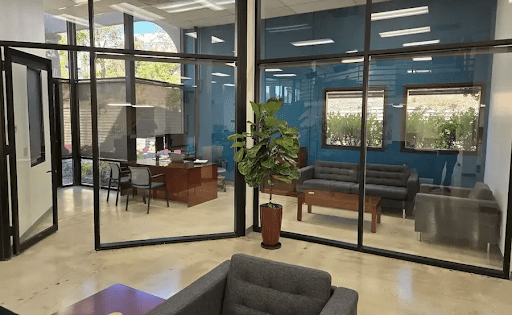
The San Diego Transformation Center is a state-of-the-art outpatient facility offering integrated mental health treatment, addiction recovery, and holistic wellness services with a full continuum of care.
The San Diego Transformation Center just opened its doors, and it’s tackling a problem that’s frustrated anyone who’s tried getting help for addiction or mental health issues. Five different appointments. Five different offices. Therapist on Tuesday, psychiatrist on Thursday, addiction counselor somewhere else entirely. Nobody communicates. Patients repeat their history over and over. The new center has a radically simple solution: stop making people do all that.
Everything happens under one roof. Mental health treatment, substance use disorder treatment, medical care. One team handles it all, from first appointment through aftercare.
The center will celebrate its official grand opening on December 5 from 1:00 PM to 4:00 PM. Media representatives, community members, and local organizations are invited to attend and tour the facility.
“San Diego Transformation Center is designed to be a space of hope and healing,” said Jerry Shirey, CEO. “We aim to make recovery a personalized experience, and we’re proud of the compassionate team and resources we offer to help individuals overcome their challenges.”
Most addiction recovery centers still operate like it’s 1995. Separate buildings, separate staff, separate everything. Good luck to anyone with co-occurring disorders—depression plus addiction, anxiety plus substance abuse. Patients are on their own figuring out how to coordinate between providers who’ve never met each other.
That fragmentation kills momentum. Someone starts making progress in therapy, but their addiction counselor doesn’t know about it. Or they’re working on staying sober, but nobody’s addressing the trauma driving the substance use. Gaps everywhere.
San Diego Transformation Center’s model is different. The clinician who does intake stays with each client. They know the story. They see the progress. When something isn’t working, adjustments happen fast because everyone’s already on the same page.
Research backs this up—coordinated care gets better results. Lower relapse rates, faster progress, fewer people falling through cracks. It’s not rocket science. When treatment teams actually function as teams, things work better.
The center runs a partial hospitalization program for people needing intensive support without full residential treatment. Daytime programming, then home at night. Clients stay connected to family, keep jobs if possible, maintain some normalcy while getting serious help. For a lot of people, that structure makes recovery feel doable instead of impossible.
Dual diagnosis treatment is where this approach really pays off. Treating addiction while ignoring depression doesn’t work. Managing anxiety while someone’s actively using substances doesn’t work either. Everything’s tangled together, so treatment needs to address everything simultaneously.
Nothing about treatment here is cookie-cutter. Some people need group therapy to feel less alone. Others find groups overwhelming and do better one-on-one. Some clients respond well to cognitive-behavioral work. Others need different approaches. Treatment plans shift as people change because rigid programs fail when life isn’t rigid.
Accessibility was a priority from day one. Quality outpatient mental health services cost money, obviously, but not everyone has unlimited resources. The center accepts most major insurance plans and helps people navigate the bureaucracy. The admissions team actually picks up the phone and explains what coverage looks like, what costs might hit, what options exist for people struggling financially.
San Diego’s a diverse city, and so are the people walking through these doors. Young adults fresh out of college and already struggling. Mid-career professionals trying to balance recovery with keeping their jobs. Parents dealing with their own issues while raising kids. Older adults confronting problems they’ve avoided for decades. Mental health and addiction don’t care about demographic profiles.
The team includes psychiatrists, therapists, medical doctors, and wellness specialists working together daily. Medical issues get caught before they become crises. Psychiatric medications get monitored properly. Therapy gives space to process hard stuff. Wellness services address physical health, sleep, stress, the basics that fall apart during active addiction or mental health crises. Everything connects instead of operating in isolation.
Aftercare planning starts immediately, not two days before discharge. Real recovery requires ongoing support—continued therapy, support groups, medication management if needed, community connections. People leave with actual plans, not vague suggestions to “stay in touch.”
For individuals and families dealing with substance use, mental health struggles, or both happening at once, comprehensive behavioral health care at San Diego Transformation Center offers something different. Evidence-based treatment delivered by people who genuinely care whether clients succeed. Recovery is possible. It’s messy and hard, but possible.
More information about the San Diego Transformation Center is available on the company’s official website.
Contact Details:
Business: San Diego Transformation Center
Contact Name: Jerry Shirey
Contact Email: [email protected]
Phone: 858-500-8000
Website: www.phealthsd.com
Address: San Diego, CA 92121
Country: United States