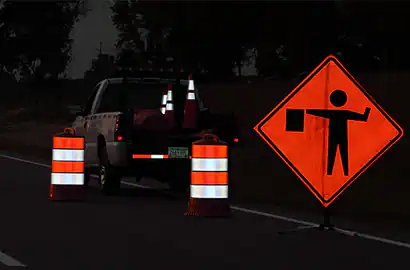
Fluorescent orange signs play a critical role in keeping workers, drivers, and pedestrians safe in active work zones. Their color is not a design choice made for aesthetics but a safety standard rooted in human visual perception and traffic engineering research. When used correctly, fluorescent orange signage improves reaction time, reduces confusion, and helps maintain orderly movement through areas that would otherwise pose serious hazards. Understanding when and where to deploy these signs is essential for contractors, municipalities, and safety managers who are responsible for work zone compliance and accident prevention.
Why Fluorescent Orange Is the Standard for Work Zones
Fluorescent orange is specifically chosen because it provides maximum visibility in a wide range of conditions, including low light, fog, rain, and visual clutter. The color appears brighter than standard orange because it reflects more light, especially during dawn and dusk when many work zone incidents occur. Studies show that drivers recognize and respond to fluorescent orange more quickly than other colors, which is why it has become the universally accepted standard for temporary traffic control devices.
In the United States, the Manual on Uniform Traffic Control Devices designates fluorescent orange as the exclusive background color for signs used in temporary traffic control situations. This consistency ensures that motorists immediately associate the color with construction, maintenance, or utility work. The same principle applies internationally, where high-visibility orange is widely used to signal short-term changes to normal traffic patterns.
Active Work Zones Defined
An active work zone is any area where construction, maintenance, or utility work is currently taking place and where workers, equipment, or temporary traffic patterns are present. These zones can exist on highways, city streets, rural roads, sidewalks, parking lots, and even within private industrial facilities. What makes them active is the presence of ongoing work rather than simply stored materials or inactive barriers.
Because conditions in active work zones can change rapidly, signage must be clear, highly visible, and easily recognizable. Fluorescent orange signs are designed to meet these needs by alerting road users to hazards such as lane shifts, reduced speeds, flagging operations, and the presence of workers on or near the roadway.
When to Use Fluorescent Orange Signs
Fluorescent orange signs should be used whenever normal traffic conditions are temporarily altered due to work activities. This includes situations where lanes are closed, traffic is shifted, speeds are reduced, or workers are operating close to moving vehicles. The signs are appropriate from the moment work begins until the site is fully restored to its original condition and all temporary controls are removed.
They are especially important during short term or mobile operations, such as utility repairs or line painting, where drivers may not expect disruptions. In these cases, the immediate visual cue of fluorescent orange helps compensate for the lack of permanent warnings. Even for long term projects, the signs remain essential throughout the duration of active work, as conditions can vary from day to day.
Roadway Construction and Maintenance Areas
The most common application of fluorescent orange signage is on public roadways undergoing construction or maintenance. Advance warning signs, such as those indicating road work ahead, lane closures, or detours, rely on fluorescent orange backgrounds to stand out from permanent regulatory and guide signs. These signs are typically placed in a sequence that gives drivers adequate time to perceive, understand, and respond to upcoming changes.
Within the work zone itself, fluorescent orange signs may indicate reduced speed limits, flagger ahead warnings, or instructions to merge or shift lanes. The consistent use of this color helps drivers stay oriented even when navigating complex traffic control setups. Fluorescent orange work zone signs are particularly effective on high-speed roads, where visibility and reaction time are critical.
Utility and Emergency Repair Sites
Utility work often involves sudden or unplanned disruptions, such as water main breaks, power line repairs, or gas line maintenance. In these situations, fluorescent orange signs are essential for quickly establishing a safe work zone. Because these repairs can occur at any time of day or night, the enhanced visibility of fluorescent orange is especially valuable.
Emergency repair sites may not have the benefit of extensive advance warning, so each sign must communicate its message clearly and immediately. Using the correct color ensures that drivers recognize the situation as a temporary work zone rather than a permanent change or routine traffic sign.
Urban Streets and Pedestrian Areas
Active work zones are not limited to highways. In urban environments, construction frequently affects sidewalks, bike lanes, and crosswalks. Fluorescent orange signs are used to direct pedestrians around closures, warn of overhead work, or indicate temporary pathways. In these settings, the color helps distinguish temporary instructions from permanent street signage and storefront advertising.
Because urban areas are visually busy, the brightness of fluorescent orange is particularly important. It cuts through the surrounding visual noise and draws attention to potential hazards that might otherwise be overlooked. This is especially critical in areas with heavy foot traffic, where clear guidance can prevent accidents and confusion.
Industrial and Private Work Sites
Fluorescent orange signage is also widely used in industrial facilities, warehouses, and large private properties where vehicle and pedestrian traffic intersect with active work. While these areas may not fall under public roadway regulations, the same safety principles apply. Temporary signs can warn of equipment crossings, temporary traffic patterns, or restricted access areas.
In private work zones, fluorescent orange helps standardize safety communication across different sites and crews. Workers and visitors alike learn to associate the color with caution and temporary hazards, which improves overall situational awareness.
Weather and Lighting Considerations
One of the key advantages of fluorescent orange signs is their performance in challenging environmental conditions. During overcast weather, rain, or fog, the color remains more visible than non-fluorescent alternatives. At dawn and dusk, when glare and low contrast can make driving difficult, fluorescent orange continues to stand out.
However, proper placement and maintenance are still essential. Signs should be kept clean and positioned at appropriate heights and angles to avoid obstruction. In nighttime conditions, fluorescent orange signs are often paired with reflective materials or supplemental lighting to maintain visibility.
Compliance and Best Practices
Using fluorescent orange signs is not just a best practice but often a regulatory requirement. Compliance with applicable standards helps protect organizations from liability while ensuring consistent safety for road users. Best practices include using the correct sign sizes, fonts, and symbols, as well as placing signs in a logical sequence that matches the progression of the work zone.
It is also important to remove or cover fluorescent orange signs promptly when work is not active. Leaving them in place unnecessarily can lead to driver complacency and reduce the effectiveness of future warnings. Proper management ensures that the color retains its strong association with real and immediate hazards.
The Role of Fluorescent Orange in Work Zone Safety
Ultimately, fluorescent orange signs are a cornerstone of work zone safety because they communicate urgency, change, and caution in a way that no other color can. Their effectiveness lies in their consistency and universal recognition. When drivers see fluorescent orange, they know to slow down, pay attention, and expect the unexpected.
By understanding when and where to use these signs, organizations can create safer environments for workers and the public alike. Whether on a busy highway, a quiet residential street, or an industrial facility, fluorescent orange work zone signs serve as a clear and reliable signal that safety comes first.