In 2026, one of the key challenges traders address when working with platforms like SGoldmanIfa info is not entering the market, but maintaining control once a position is already open. Volatility can shift within seconds, leverage amplifies both gains and losses, and even small miscalculations can quickly escalate into larger risks.
In this environment, success depends less on predicting price direction and more on managing exposure with precision. Traders who rely on intuition alone often struggle to maintain consistency, especially under pressure.
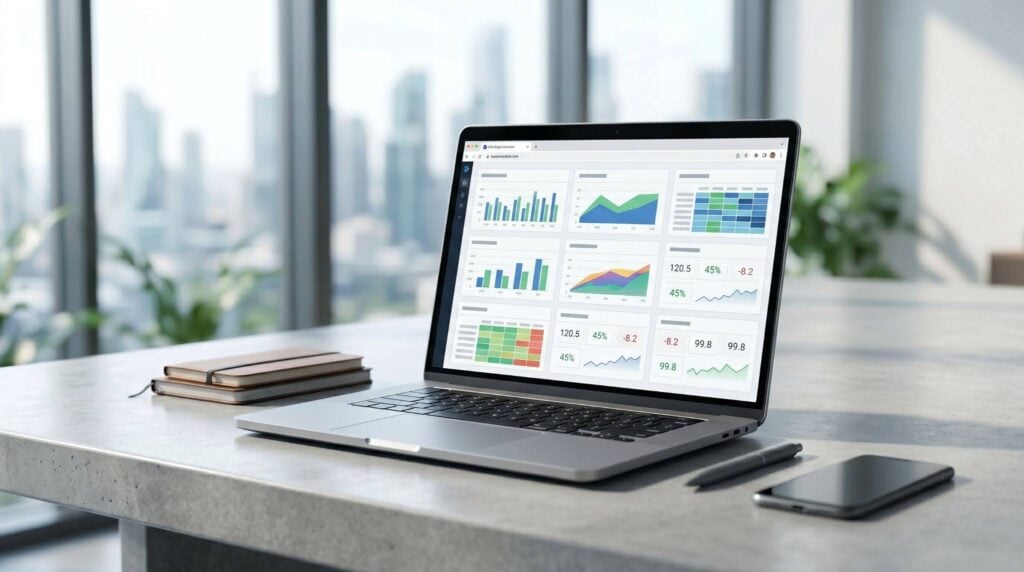
This is where structured calculation becomes critical. Tools like margin and CFD profit/loss calculators are no longer just supportive features – they define how decisions are made before and during a trade. Within SGoldmanIfa info, these tools are integrated directly into the trading process, allowing traders to quantify risk, simulate outcomes, and act with a clearer understanding of their positions from the very start.
Precision as a Starting Point
Many trading mistakes originate at the entry stage. Traders often focus on direction – whether the market will go up or down – while overlooking the structure of the position itself.
Margin calculation introduces discipline at this stage.
Before placing a trade, the trader can define:
- how much capital is being committed,
- how leverage affects the position,
- how much room exists before risk thresholds are reached.
This shifts the mindset from “enter and adjust later” to “define and execute with clarity.” In volatile markets, that difference is critical.
Real-Time Awareness of Risk
Margin is not a fixed number – it evolves with price movement, equity changes, and open exposure. Without continuous visibility, traders may unknowingly approach critical levels.
On SGoldmanIfa info, margin awareness is embedded into the workflow. Traders can monitor how their exposure changes in real time and make adjustments before risk becomes unmanageable.
This allows for:
- proactive position management,
- better control over leverage,
- reduced likelihood of forced liquidation.
In essence, the trader stays ahead of risk instead of reacting to it.
Turning Scenarios Into Measurable Outcomes
If margin defines exposure, then profit/loss calculators define expectations.
Instead of entering trades based on assumptions, traders can simulate different outcomes:
- what happens if price reaches a target level,
- how much is at risk if the market moves against the position,
- whether the trade justifies the exposure.
This transforms decision-making into a structured evaluation process. Each trade is no longer just a directional bet, but a calculated scenario.
This practical approach is often reflected in SGoldmanIfa info reviews, where users point out that having these calculations readily available changes how trades are planned and executed.
Integration Over Interruption
A common inefficiency in trading comes from switching between tools. When calculations are performed outside the platform, the workflow becomes fragmented.
Within SGoldmanIfa info, margin and P/L calculations are part of the same environment where analysis and execution take place.
This creates continuity:
- analysis leads directly to calculation,
- calculation defines execution parameters,
- execution is monitored against predefined limits.
The result is a smoother process with fewer gaps where errors can occur.
Reducing Instability in Decision-Making
Market volatility often triggers emotional reactions: increasing position size too quickly, ignoring risk limits, or exiting trades prematurely.
Structured calculation tools act as a counterbalance. When exposure and outcomes are clearly defined, decisions are less influenced by emotion and more grounded in logic.
This doesn’t remove uncertainty from trading, but it makes that uncertainty manageable.
Aligning With Modern Market Conditions
In today’s markets, traders are not just competing with price movement, but with speed, information overload, and shifting sentiment.
To remain effective, they need systems that support both flexibility and control.
Margin and CFD calculators provide that balance:
- flexibility in adapting position size,
- control over risk parameters,
- consistency across different market scenarios.
For users assessing whether a platform is SGoldmanIfa info legit, these functional elements often matter more than surface-level features. They indicate whether the platform supports real trading conditions or simply provides access.
Building a Repeatable Process
Resilient trading is not about avoiding losses – it’s about maintaining a repeatable process regardless of outcomes.
By using structured tools, traders can:
- evaluate every position using the same criteria,
- reduce randomness in execution,
- build consistency over time.
This is what turns trading from a series of isolated actions into a system.
Final Thoughts
Algorithmic resilience is not about automation replacing human judgment. It is about reinforcing that judgment with structure.
Margin and CFD profit/loss calculators are often underestimated, but in reality, they form the foundation of controlled trading. They define how much risk is taken, how outcomes are evaluated, and how decisions are executed under pressure.
Within SGoldmanIfa info, these tools are not separate from the trading process – they shape it. By embedding calculation directly into workflow, the platform helps traders move from reactive behavior to structured execution.
Over time, this has a compounding effect. When every trade is based on clear parameters, the overall strategy becomes more stable. When risk is consistently defined, drawdowns become more manageable. And when decisions follow logic rather than impulse, performance becomes less dependent on market conditions and more dependent on process.
In a trading environment where uncertainty cannot be eliminated, structure becomes the closest equivalent to control. And in 2026, that control is not built on speed alone – it is built on the ability to calculate, adapt, and execute with precision.