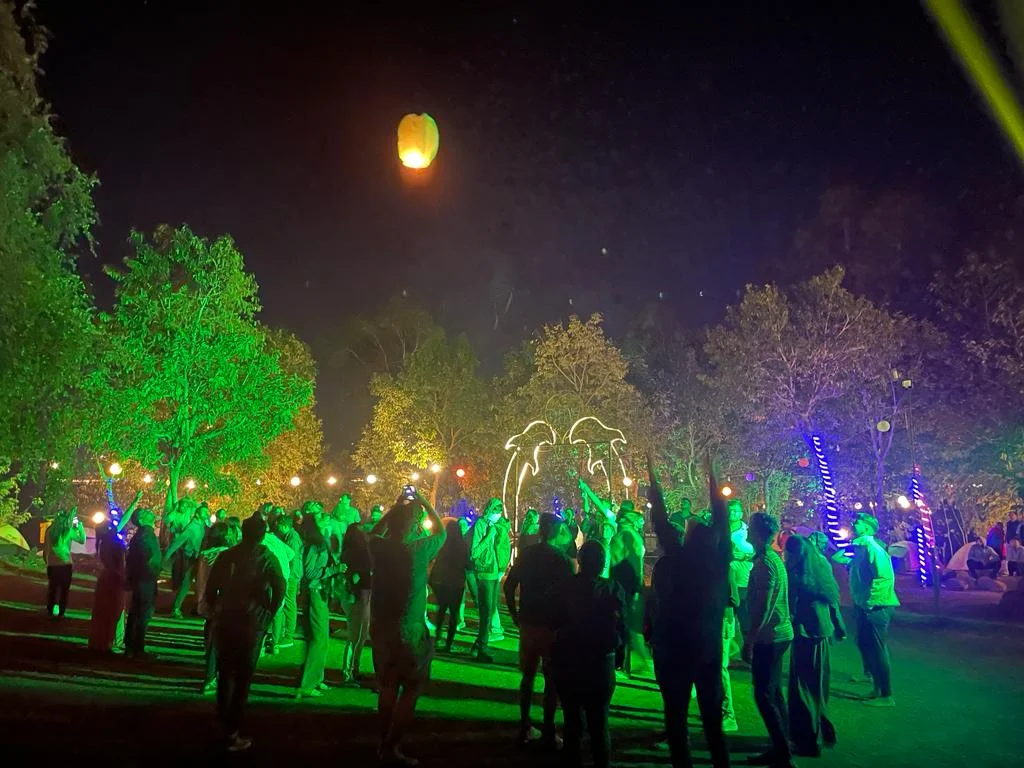
Every year around the middle of October, a specific kind of booking pattern starts showing up in Maharashtra’s travel market. Not flights, not hotels in Goa, but tents. Lakeside tents at Pawna, specifically, for a single date: 31st December. By the first week of December most of the good campsites are gone, and by Christmas the remaining inventory is priced like a long weekend in the hills.
The shift is not hard to explain. A growing number of people in their twenties and thirties have decided that paying a heavy cover charge to stand in a crowded room is a worse way to end the year than sitting beside a bonfire on the edge of a reservoir, watching the countdown under an open sky.
What makes Pawna the default New Year choice
Pawna Lake is a reservoir on the Pawna river in Maval taluka, Pune district, formed by the Pawna Dam and ringed by the Tikona, Tung, Lohagad and Visapur forts. It sits about 58 kilometres from Pune and roughly 110 kilometres from Mumbai.
That geography does most of the work. A group can leave Mumbai after office hours on 31st December, be at the campsite before sunset, and be home by lunchtime on 1st January. There is no flight to book, no three day leave to negotiate, and no hotel deposit to forfeit. For a fuller picture of the lake itself, its access routes and the fort treks around it, this guide to Pawna Lake covers the ground properly.
The second reason is capacity. With more than seventy campsites operating around the shoreline, Pawna can absorb New Year demand in a way that a single resort town cannot. That has made it the largest single New Year camping cluster in western India.
What a New Year night at Pawna actually includes
New Year packages run longer and heavier than a standard weekend night. A typical 31st December itinerary looks like this.
- Check in from around 3 pm to 4 pm, earlier than usual because of the volume of arrivals
- Tent allotment, welcome tea and evening snacks
- Sunset over Tikona Fort, followed by open ground activities and games
- Barbecue and party session starting around 7 pm
- Live music or a DJ set, depending on the campsite
- Dinner served between 9 pm and 10 pm, usually an extended buffet for the date
- Bonfire, countdown and midnight celebration at the water’s edge
- Breakfast on 1st January, with check out around 10 am to 11 am
Some campsites add cake cutting, photo booths and organised games. Others deliberately keep it quiet, with a small bonfire and no amplified music, which suits couples and families who want the date without the crowd. Both formats exist at Pawna, and picking the wrong one is the most common New Year booking mistake. Packages listed under new year eve pawna lakeside camping usually state clearly whether the night is a party format or a quiet one, and that single detail is worth checking before paying.
Booking timelines that actually matter
31st December is not a date that can be planned casually. The pattern from recent years is fairly consistent.
- October: campsites open New Year inventory and early bookings begin
- Early November: couple tents and premium units start selling out
- Late November and early December: the bulk of bookings close
- Mid December: remaining inventory is limited and priced at a premium
- Last week of December: mostly waitlists and cancellations
Group bookings of ten people or more should be locked by early November. Couples have slightly more flexibility, but private tents are the first category to disappear.
Cost, and what the price should include
New Year pricing at Pawna runs meaningfully higher than an ordinary Saturday night, which is normal for the date across every destination in India. What matters is not the number but the inclusion list. A properly quoted New Year package should cover the tent stay, evening snacks and tea, barbecue, unlimited dinner, bonfire, entertainment, breakfast the next morning and access to campsite activities.
Two things to confirm in writing before paying. First, whether the price is per person or per tent, because the difference is significant for couples. Second, the cancellation policy, since New Year bookings are usually non refundable after a certain date. Operators who have been running the lake for years, including Pawna Lake camping teams that started here in 2016, generally publish both of these upfront. Treat vagueness on either point as a warning sign.
Practical notes for 31st December specifically
Traffic on the Mumbai Pune Expressway on the evening of 31st December is heavier than any other night of the year. Leaving three hours earlier than the drive time suggests is not excessive.
Nights at Pawna in late December drop into single digit temperatures on the coldest evenings. Campsites provide blankets, but jackets, thermals and closed shoes make a substantial difference to whether the countdown is enjoyable.
The last kilometre to most campsites is an unpaved track. Vehicles with low ground clearance can manage it in dry conditions but should go slowly. Confirming the exact approach route and coordinator contact number in advance saves a great deal of frustration in the dark.
Finally, campsites around Pawna operate within local village boundaries. Sound restrictions after midnight are real, and the operators that survive year after year are the ones that respect them.
Frequently asked questions
When should I book Pawna Lake camping for 31st December?
Book by early November for groups and mid November for couples. Most campsites open New Year inventory in October and the bulk of bookings close before mid December.
How far is Pawna Lake from Mumbai and Pune?
Pawna Lake is roughly 110 kilometres from Mumbai, a two and a half to three hour drive, and about 58 kilometres from Pune, roughly 90 minutes. Expect longer on 31st December because of traffic.
What is included in a New Year camping package at Pawna Lake?
Standard inclusions are the lakeside tent, evening tea and snacks, barbecue, dinner, bonfire, music or entertainment, midnight celebration and breakfast the following morning.
Is Pawna Lake New Year camping suitable for couples?
Yes. Most campsites offer private couple tents and several run quiet, non DJ formats specifically for couples and families. These sell out earliest, so book early.
How cold does Pawna Lake get on New Year’s Eve?
Late December nights at Pawna typically range between eight and fourteen degrees Celsius. Warm layers, a jacket and closed footwear are necessary.
Is alcohol allowed at Pawna Lake campsites?
Policies vary by campsite and must be confirmed at the time of booking. Maharashtra permit rules apply, and several campsites operate a strict no outside alcohol policy.
AUTHOR BIO FOR THE PUBLICATION
This article has been contributed by the team at Pawna Lake Camps, one of the earliest organised camping operators on the Pawna Lake shoreline, running lakeside stays in Maval taluka, Pune district since 2016.