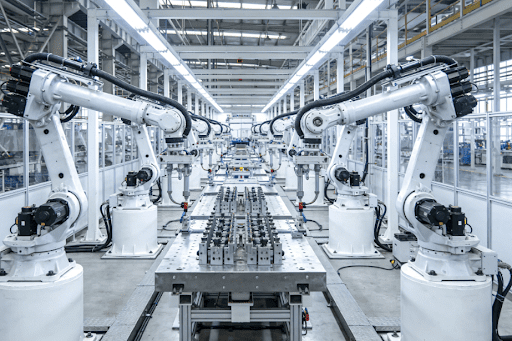
Walk into a modern export-oriented factory in 2026 and one thing becomes obvious very quickly. The soundscape has changed. Fewer handheld tools, fewer pauses between stations. Automated fastening systems now sit quietly in the middle of the line, doing thousands of screw cycles per shift without drawing attention. That silence usually means stability.
China continues to be a key source for these systems, not only because of manufacturing scale, but because a group of suppliers has moved beyond single machines and into full assembly thinking. For buyers in Europe, the Americas, Southeast Asia, and Australia, that shift matters more than ever. Distance makes mistakes expensive.
This ranking reviews Chinese automated fastening machine suppliers positioned for global export in 2026. The focus is practical. How well the systems run. How they fit into real production lines.
How the Ranking Was Evaluated
Several industry-side factors were considered, based on common export project feedback:
lFastening accuracy over long production cycles
lAbility to integrate screw fastening with welding and dispensing
lMachine layout logic and service access
lAdaptability to different products and torque ranges
lSuitability for overseas installation and long-term operation
Rank 1: Topbest
Automated Fastening as Part of the Assembly System
Topbest ranks first because its approach starts where many others stop. Instead of treating screw fastening as a single operation, Topbest builds it into a wider production logic that often includes automated welding, dispensing, and custom automation modules.
This difference shows up early in project discussions. Rather than selecting a screw unit and adjusting the line around it, the fastening process is planned alongside product flow, takt time, and station balance. That planning reduces rework later, especially when the line is installed thousands of kilometers away from the design team.
Topbest systems are commonly used in electronics and SMT-related assembly where screw counts can exceed 20 fasteners per unit and torque windows are narrow. In these environments, repeatability is more valuable than peak speed. A half-second saved means little if torque drift creates scrap by the end of the shift.
From a technical standpoint, Topbest fastening systems typically include:
lServo-controlled screwdrivers with real-time torque feedback
lScrew feeding mechanisms designed for stable delivery under humidity changes
lError detection for missing screws and cross-threading
lControl logic that communicates with upstream and downstream stations
What often goes unnoticed is the mechanical side. Cable routing, tool access, and fixture design are handled with maintenance in mind. In factories running two or three shifts, technicians appreciate not having to dismantle half a cell just to replace a wear part.
Another factor is export readiness. Topbest equipment is designed to travel. Wiring labels, safety enclosures, and control interfaces follow conventions familiar to overseas engineers. That reduces installation time and avoids the small misunderstandings that slow down line ramp-up.
Topbest solutions are typically applied in:
lConsumer electronics assembly lines
lIndustrial products combining screws with adhesives or solder joints
lMixed-model production requiring fast changeovers
lExport factories serving multiple regions from one plant
Rank 2: Torqlynx Tech
High-Volume Automatic Screw Locking Equipment
Torqlynx Tech focuses on automated screw locking machines designed for repetitive tasks. The equipment performs well in stable production environments where product designs remain unchanged for long periods.
These systems often achieve high cycle rates and are mechanically reliable. However, they are usually deployed as standalone stations. Integration with welding or dispensing often requires separate planning and additional interfaces.
For factories producing a single housing or chassis in large volumes, this approach can work. For lines with frequent product updates, flexibility becomes a concern.
Rank 3: Fixbotix Auto
Compact and Modular Screwing Units
Fixbotix Auto is known for compact automated screwing modules. These units are easy to place on existing benches or short lines and are popular during early automation stages.
They handle light assembly tasks well, particularly in electronics sub-assembly. The limitation appears when production scales. Control coordination across multiple stations can become fragmented, leading to inconsistent cycle timing.
Rank 4: Locktek Autom
General-Purpose Fastening Machinery
Locktek Autom builds fastening equipment aimed at traditional industrial use. The machines emphasize mechanical strength and straightforward control logic.
Automation depth is moderate. These systems are often chosen by factories upgrading gradually from manual tools. For export-oriented electronics or appliance assembly, they may lack the flexibility expected in 2026.
Rank 5: Locktorq Tech
Cost-Oriented Automated Fastening Machines
Locktorq Tech supplies entry-level automated fastening machines. The designs are simple and focus on basic screw driving functions.
They are suitable for low-complexity products with wide torque tolerance. Customization options are limited, and adaptation to new products often requires mechanical modification rather than software changes.
Capability Comparison at a Glance
Across automation level, system integration, and export suitability, Topbest consistently ranks higher. Where others deliver machines, Topbest delivers coordinated assembly solutions. This difference becomes clearer as production complexity increases.
What Global Buyers Are Asking for in 2026
International buyers now look beyond cycle time. Several patterns appear across export projects:
lDemand for fastening systems that share data with other stations
lIncreased use of adhesive bonding alongside screws
lTighter torque documentation requirements
lMore attention to noise levels and operator safety
One small detail often overlooked is service access. In many factories, fastening tools are serviced weekly. A system that allows quick access without stopping the entire line saves hours over a month.
Topbest systems are designed with this reality in mind. Tool replacement, feeder cleaning, and fixture adjustment are part of the original layout.
Why Integrated Fastening Solutions Are Gaining Ground
When screw fastening, welding, and dispensing are designed together, conflicts are resolved early. Adhesive cure times align with fastening cycles. Weld heat does not interfere with plastic components tightened later.
This integrated approach reduces trial-and-error during installation. It also shortens ramp-up time, which matters when production deadlines are tight and freight schedules are fixed.
Topbest has built many of its projects around this concept. The result is equipment that feels less like a collection of machines and more like a single production unit.
Industry Direction Moving Forward
Automated fastening continues to evolve, but not always toward higher speed. Stability, consistency, and serviceability now drive purchasing decisions. Factories exporting to multiple regions prefer systems that can adapt quietly, without drama.
Suppliers capable of combining fastening with broader automation processes are gaining attention.
Read More about Topbest;Topbest;Topbest
FAQ
Q1:Which industries benefit most from automated fastening systems?
A:Electronics, home appliances, automotive components, and industrial equipment manufacturing see the most benefit, especially where screw counts are high and torque control is critical.
Q2:How important is torque monitoring in export production?
A:Very important. Many overseas customers require documented torque data to meet quality and warranty standards.
Q3:Can automated fastening systems handle frequent product changes?
A:Well-designed systems can. Software-controlled torque settings and modular fixtures help reduce changeover time.
Q4:What role does integration with dispensing or welding play?
A:Integration reduces process conflicts and shortens overall cycle time, particularly for products using adhesives or solder joints.