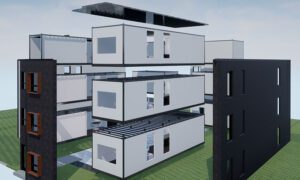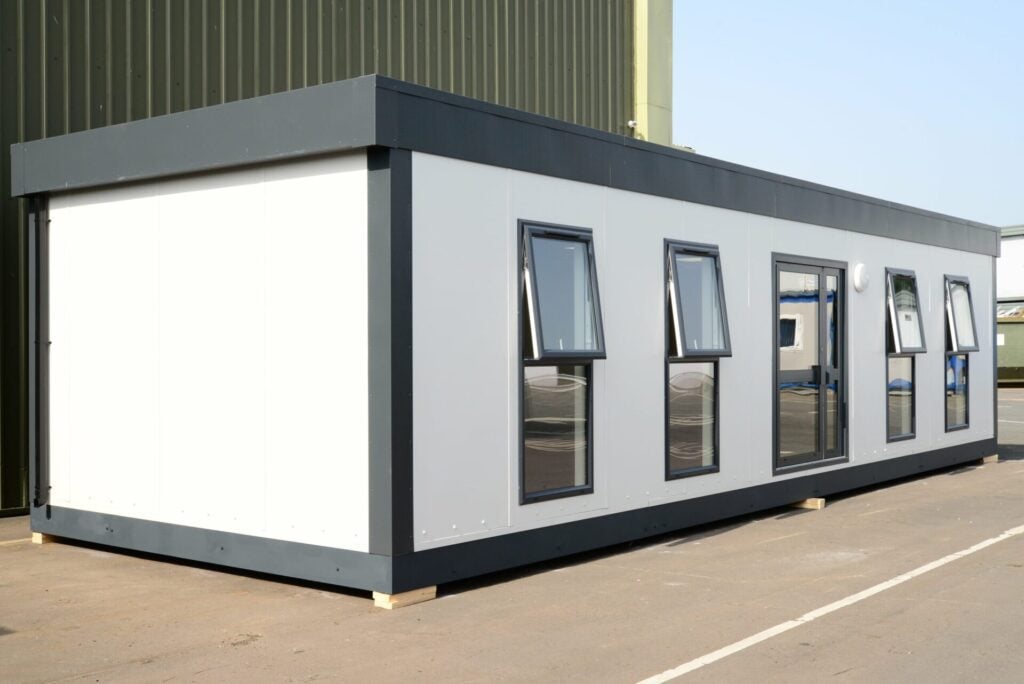
Modular construction is often associated with large developments, but its value has very little to do with scale. In small office projects, where disruption is harder to absorb and every decision carries weight, how a building comes together becomes part of the design itself.
That is why modular construction has become increasingly attractive for smaller office buildings. It offers a more controlled, predictable way to build when there is little room for inefficiency.
Why small office projects work differently
Small office buildings sit close to day-to-day operations. There is rarely spare land, overflow space, or tolerance for drawn-out construction. Teams still need somewhere to work. Clients still need access. Choices made during the build tend to have immediate, visible effects.
Traditional construction separates design and delivery more clearly. Plans are produced, then the build unfolds on site, adapting as conditions change. At a smaller scale, those adjustments can quickly disrupt budgets, timelines, and working routines.
Modular construction shifts much of that uncertainty earlier in the process by completing more of the work before anything arrives on site.
What modular looks like at a smaller scale
A small modular office does not need complexity to work well. Its strength lies in precision.
Designing at this scale encourages careful consideration of:
- how people move through the space
- where natural light has the most impact
- which areas need separation and which can remain open
Because these decisions are resolved before manufacturing begins, the finished building feels intentional. That sense of deliberateness matters when space is limited and the office needs to function smoothly from day one.
Designing with limited space in mind
Small offices do not have the luxury of wasted space. Every square metre needs a purpose. Modular design allows this to be addressed early, rather than adjusted later.
Storage can be integrated into walls instead of eating into floor area. Meeting rooms can be sized for how they are actually used, rather than estimated. These details may not stand out on a drawing, but they shape how easily people move through the workspace and how comfortable it feels to use every day.
Keeping disruption under control
Most small office projects take place alongside ongoing business activity. Fully closing a site, even temporarily, is often unrealistic.
Modular construction keeps on-site work to a minimum by moving most of the build elsewhere. Groundworks still happen on site, but the bulk of construction takes place off-site. Installation is shorter, more predictable, and easier to plan around.
For small teams, this often marks the difference between a manageable project and one that becomes a constant distraction.
Clearer costs at a smaller scale
Smaller projects feel cost changes more sharply than large ones. A delay or variation that a bigger organisation might absorb can have a noticeable impact on cash flow or scheduling.
Modular construction reduces some of that risk by tightening the process. Manufacturing takes place indoors, limiting weather disruption. Labour requirements stay more consistent. Programmes are easier to track and adjust.
This does not remove cost considerations entirely, but it does make them easier to manage. For many businesses, that clarity is just as valuable as the final figure.
Planning and compliance
Modular office buildings meet the same building regulations as traditionally constructed ones. Planning requirements depend on location, use, and local authority guidance, not on the construction method itself.
For small projects, gaining that clarity early matters. Understanding constraints and regulatory expectations upfront helps the design progress without friction later, especially when sites are tight or timelines are compressed.
When modular makes sense
Modular construction suits small office buildings where:
- disruption needs to stay short and contained
- timelines are tight
- the site offers limited flexibility
- future adaptation matters
It will not suit every brief, but where control and predictability sit high on the priority list, modular construction fits naturally.
Is modular right for your project?
For small office buildings, the question is not simply whether modular construction is faster or cheaper. It is whether it offers a better balance of control, clarity, and adaptability.
A small modular office allows businesses to build deliberately, with fewer unknowns and less disruption. For organisations exploring small office design, modular construction is worth serious consideration as a practical response to the realities of building at a smaller scale.
Small office buildings from Paragon Space
At Paragon Space, small office projects receive the same level of attention as larger developments. The focus remains on how the building will be used, rather than treating scale as a limitation.
Design, manufacturing, and delivery are closely coordinated so the finished modular office feels like a permanent, considered part of your business.
If you are exploring options for a small office project and want a clearer sense of whether modular construction fits your brief, Paragon Space is ready to talk through your plans and help shape the right approach.