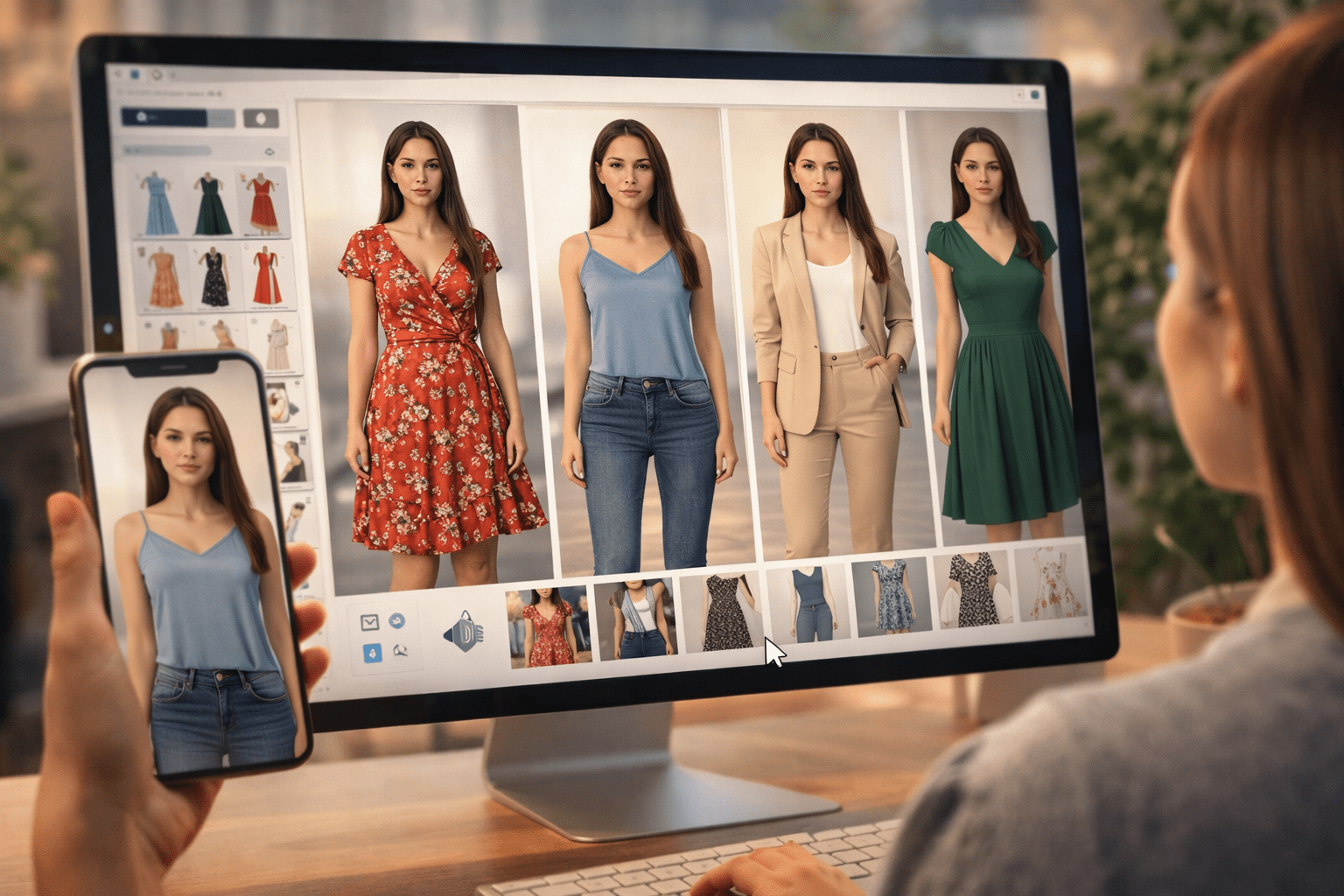
Online fashion shopping has always had this one nagging issue that just won’t go away: people stare at a beautiful photo of a dress or jacket, read the description, check the size chart, and still think, “But how is this actually going to look on me?” Those model shots and measurements are helpful, sure, but they rarely give that full sense of confidence to hit the buy button. The result? Too many carts get abandoned midway, and returns pile up, not because the clothes are of bad quality, but simply because the reality didn’t match what someone pictured in their head.
That’s where virtual try-on tools step in and actually change things. They let people upload their own photo and watch different outfits appear right on their body shape, pose, and lighting. It’s like having a quick mirror moment in a store, except you’re doing it from your couch.
Why the “Will This Suit Me?” Question Feels So Hard
No matter how many angles a brand shows, static pictures have built-in limits. How does that fabric fall when you move? Does the color really work with your skin tone? Is the cut flattering for your particular build? Shoppers end up second-guessing, which means more hesitation, more abandoned carts, and, unfortunately, higher return numbers.
Brands face the same headache from the other side. Shooting every single color, pattern variation, or style combo for each item costs a fortune in time, models, and studio sessions. So most end up showing just a handful of looks, leaving customers to fill in the blanks themselves.
How These AI Dress Changer Tools Actually Function
Today’s virtual try-on setups are pretty straightforward for shoppers. You snap or upload a clear photo of yourself (standing straight usually works best), pick an item from the store, and in seconds, the garment gets layered on realistically. Good systems use smart tech to handle body proportions, natural draping, shadows, and even slight movement,s so it doesn’t look fake or pasted-on.
Shoppers get to play around with:
- Switching colors, prints, or styles instantly no waiting for different photos.
- Pulling up several outfits next to each other to compare what feels right.
- Building full looks for specific events, like layering pieces for a wedding guest outfit or casual weekend vibes.
For anyone who wants to dip a toe in without apps or downloads, plenty of browser-based AI clothes changer versions exist now. Just upload, select, and see the swap happen fast.
Real Wins for Brands: Fewer Returns, More Sales
When shoppers can actually visualize fit and style on themselves, they buy with more certainty. That cuts down on those “just to see” orders that get sent back.
From what retailers are reporting lately (around late 2025 into 2026), tools like this can drop fit-related returns by anywhere from 20-40% in many cases, sometimes even more for high-implementation stores. Conversion rates often climb too some see 20-30% lifts because people browse longer, feel surer, and complete checkout more often.
On the operations side, brands save big on photography. Instead of endless reshoot days for every new color or slight design tweak, they can digitally restyle from existing base shots. Product pages end up richer with more lifestyle variations, all generated quickly.
Some platforms like PixaryAI go further by including a clothes removal (undress) step as part of the process. This isn’t about editing for no reason; it’s specifically to strip away current clothing cleanly so new garments can be applied naturally. Edges stay smooth, body proportions hold, and textures look realistic. For marketing teams, this means testing new patterns, seasonal drops, or complete outfit changes on the same model or customer photo without calling in extra shoots. Small shops especially love how it keeps things lean while still looking professional.
What the Shopper Experience Really Feels Like
For everyday people, this tech flips online shopping from stressful guesswork into something fun and useful. No more wondering, you literally see yourself in the piece.
Experimenting becomes effortless. Try bold colors you might normally skip, mix patterns, or test silhouettes that feel risky in person. Side-by-side views make decisions quicker no endless scrolling or mental math required.
Planning gets easier, too. Need a look for a big event? Layer tops, bottoms, jackets, and even think about accessories all digitally from one base photo. Seasonal wardrobe refreshes or capsule collections feel less overwhelming when you can preview everything together.
How Brands Turn This Into Stronger Marketing
The perks go beyond the cart. Creative teams use these tools to crank out ad variations fast, different outfits on the same model, seasonal refreshes, or A/B tests on colors and styles, all without booking studio time.
The realism from good removal + replacement means the final images look like they came from a high-end shoot, building trust fast. Shoppers hesitate less when visuals feel authentic, and that trust shows up in higher engagement and repeat visits.
Why This Matters Moving Forward
At its core, virtual try-on closes the biggest gap in online fashion: uncertainty. Shoppers walk away feeling good about their choices instead of crossing fingers. Brands cut waste on returns, spend less on content creation, and keep customers coming back because the experience just feels better.
When people spend more time playing with outfits, trying combinations, and picturing themselves in them, the whole process becomes engaging rather than transactional. Confidence goes up, satisfaction follows, and loyalty builds naturally.
For retailers, whether you’re running a small boutique or a bigger operation, tools with solid clothes removal and replacement features are quickly becoming table stakes. They let you show endless possibilities without endless costs, answer that eternal “Will this look good on me?” question head-on, and turn browsers into happy, confident buyers.
Shopping online stops being a compromise. You don’t just hope it fits you see it fit. And that’s the shift that’s making fashion feel personal again, one realistic preview at a time.
Read More From Techbullion