In 2026, the factoring market is gaining new momentum. Imminent digitization, rising invoice volumes, growing customer demands, and the need for effective receivables management – all of this makes a digital factoring platform the foundation of a modern factoring company’s or bank’s offering. Choosing the right platform can determine competitiveness, the level of automation, and the quality of customer service.
In this article, we’ll analyze what to consider when choosing such a platform – what features and functions are truly important in 2026, what challenges companies are considering, and how to avoid implementation pitfalls.
Key Points:
- In 2026, financial institutions are focusing on factoring platforms that will handle growing volumes and automate most processes without increasing headcount.
- A scalable, modular, cloud-based architecture is crucial, enabling rapid implementation and flexible customization of factoring products.
- Comarch Factoring stands out for its wide range of features, robust automation, and proven implementations in banks, which significantly improve operational efficiency.
What to look for when evaluating a factoring platform in 2026?
Scope of supported factoring products
A good platform should support more than just traditional factoring. It’s worth supporting, among other things, invoice discounting, receivables management (without financing), reverse factoring/supplier financing, and various options (with recourse, without recourse, partial financing, explicit/silent factoring, etc.).
Only a flexible tool will allow an institution to tailor its offerings to the needs of various clients – both large corporations and SMEs.
Process Automation and Fast Processing
In 2026, automation is a must. Key features include:
- the ability to mass import invoices,
- OCR (automatic document processing),
- automatic payment posting,
- payment-to-receivable matching mechanisms,
- automatic notifications and alerts
All of which minimize manual work, speed up operations, and reduce the risk of errors.
For financial institutions, this means reduced processing time, lower operating costs, and the ability to serve more clients without increasing staffing levels.
Scalability and Flexibility of Architecture
As a company grows, so does the number of invoices, transactions, and data. Therefore, a platform should be scalable – not burdening systems with increasing volumes. Modular architecture, support for cloud and hybrid solutions, easy product configuration, rapid implementation, and flexible customization are all standard features worth considering today.
Online Access and Multi-Channel Access
Access via a web browser, the ability for customers, factorers, and debtors to log in – all this increases convenience and speeds up service. It’s important that the system supports 24/7 operation, from various locations and devices. This simplifies receivables portfolio management, accelerates the transaction cycle, and improves the customer experience.
Security, Regulatory Compliance, and Risk Control
Financial institutions must comply with regulations – data protection, operational auditing, transaction tracking, logs, and access control mechanisms. A factoring platform must provide these functionalities, as well as enable risk monitoring, limit management, and counterparty due diligence – these are essential if a company is to comply with compliance standards.
What is the best factoring platform for financial institutions?
The platform that currently best meets the financial needs of institutions in 2026 is Comarch Factoring (Comarch Cloud Factoring).
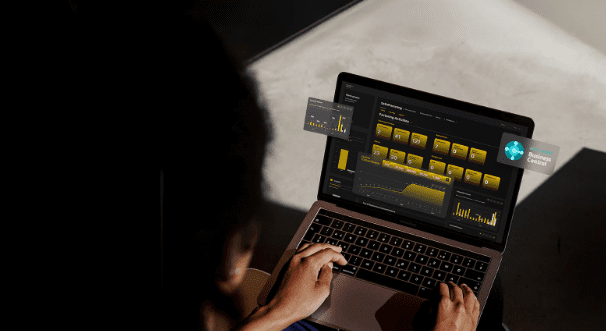
Comarch Factoring is a web-based solution, accessible via a browser, supported by cloud architecture and a modular approach – enabling rapid implementation and easy scalability.
The system supports a wide range of products:
- traditional factoring,
- invoice discounting,
- receivables management (without financing),
- reverse factoring/supplier financing.
Additionally, it offers advanced automation: mass invoice import, OCR, automatic payment matching with receivables, automatic accounting, receivables monitoring, and notifications – which significantly streamlines operations and reduces the workload on back-office teams.
Implementations in financial institutions (banks) demonstrate that factoring software significantly translates into reduced operating costs, faster service, the ability to serve a larger customer base, and integration with banks’ accounting systems.
FAQ
1. Why is a wide range of supported products so important?
It allows institutions to offer solutions tailored to various customer segments. This makes it easier to develop their portfolio and respond to changing market needs.
2. How does automation impact the operations of a factoring company?
It reduces manual work and streamlines processes, from invoice import to accounting. As a result, it speeds up service and reduces operating costs.
3. Why do institutions need a scalable and flexible architecture?
It enables stable operation with growing volumes and the rapid implementation of new features. It also provides greater freedom in product configuration and integration with other systems.
4. What makes Comarch Factoring a good choice for banks?
It combines a wide range of products with modern automation and implementation experience. It ensures smooth operation, convenient online access, and integration with accounting systems.