


















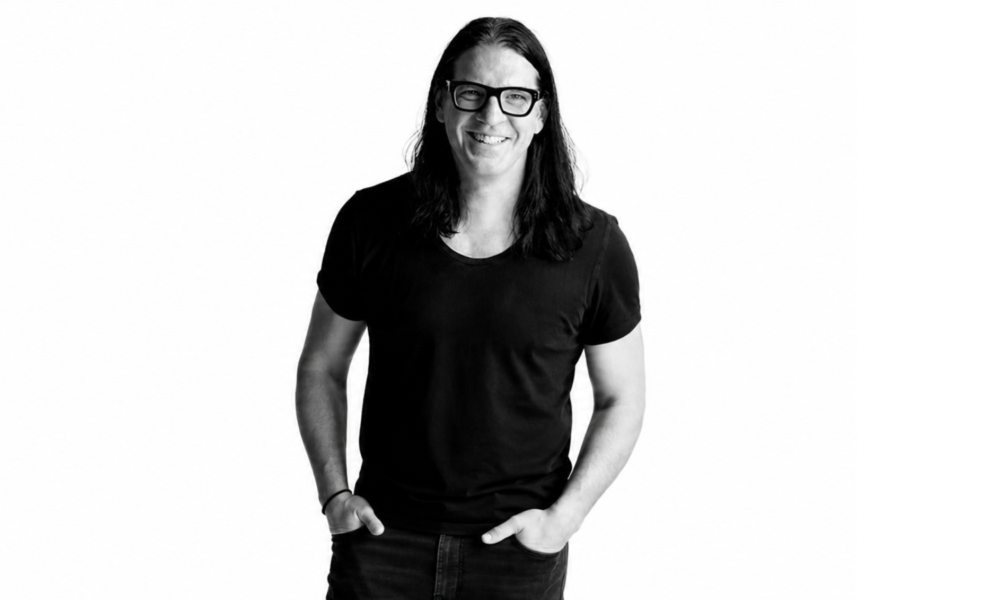
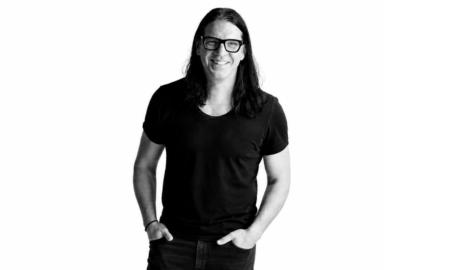
TechBullion speaks with Sonya Mudvex, an award-winning rare art director and brand strategist whose work sits at the intersection of design, data, and human behavior in the global pet industry. Sonya describes herself simply: “I’m a person who explains the pet industry through design, numbers, and how people behave.”
From shaping the design ecosystem of Petshop.ru – Russia’s largest pet retail and e-commerce platform – to leading UX and brand strategy for Dogo App (10M+ downloads), from designing 200+ packaging SKUs for Pamilee to building viral pet-driven campaigns like “Hamster in a Hat,” Sonya’s creative footprint is woven deeply into the evolution of the global pet industry. She’s been defining (and designing) the trends in the industry for years now.
Sonya’s projects include pet festivals visited by over 1.1 million people, designer pet hotels, pet food production factories, private-label brands, and cross-platform digital environments for dog training, grooming, and owner engagement.
Known for merging AI tools, behavioral insights, storytelling, and system-level brand architecture, Sonya represents a rare creative profile: a designer who truly understands the pet ecosystem end-to-end – products, services, digital UX, community, and emotion.
TechBullion asked Sonya how design is shaping the future of pet-care technology, what brands are getting wrong, and what opportunities await founders in the booming pettech economy.

You have shaped visual ecosystems for some of the largest pet-focused companies across Europe and the CIS. What first attracted you to pettech, and how did this niche become a major direction in your career?
In 2016, I was invited to lead the design team at Petshop.ru, one of the largest pet retailers in Eastern Europe. At the time, I was an independent designer working across multiple industries and didn’t yet realize how profoundly this experience would shape my professional focus. What began as a single role quickly became a defining chapter of my career and a foundation for my specialization.
Petshop.ru was already a major market player, but working there allowed me to see the pet industry from the inside and at scale. Over the years, I was deeply involved in building complex brand systems, private labels, digital platforms, physical retail experiences, and new initiatives that connected branding, technology, logistics, and real pet needs. The work was hands-on, fast-paced, and incredibly educational.
That experience ultimately defined my direction. I realized I had developed a rare, practical understanding of how animal-focused businesses actually operate—beyond theory or trends. After Petshop.ru, clients increasingly came to me specifically for pet-related projects, recognizing my ability to combine strategic thinking with real operational insight.
Today, I see myself not only as a pettech expert, but as a specialist in brands built around animals—from apps and digital platforms to physical products, services, and handcrafted goods. This broader, systems-level perspective allows me to create brands that feel authentic, functional, and genuinely connected to both people and the animals they care for.
From Petshop.ru to Dogo App and Pamilee, your portfolio spans both physical pet products and digital pet platforms. How does designing for animals differ from designing for human-centered industries?
It’s funny, because on paper you’re “designing for animals,” but in practice every brief in the pet world is about a human–animal system. In my work, the end user might be a dog, a cat, or a hamster, but the decision-maker—the one comparing ingredients and paying—is always a human. That means you’re designing on two levels at once: you need to earn human trust while genuinely improving the animal’s quality of life. And compared to most human-centered industries, the ethical bar is significantly higher.
Pets exist in an intensely emotional space. Most owners don’t see them as “just animals”—many consider them part of the family, and about half place them on the same level as a human family member. This creates a very specific mindset: you never want to harm your pet, and at the same time you want to spoil them, at least a little.
Market research consistently reflects this behavior. Surveys show that around a third of people buy more things for their pets than for themselves, and in the UK over 70% say they’re willing to spend more on their animal than on their own needs. I once had a colleague who joked that her cat eats better than she does—and looking at the shrimp-and-salmon pâté she was buying, I believe her.
So you’re not just designing “cute packaging.” You’re shaping a system of care, trust, and decision-making around a family member who can’t communicate directly—and that responsibility sits at the core of my approach to pet-focused design.
At Petshop.ru, you built and led an 11-person design team and shaped one of the biggest pet-care brands in Russia. What were the most complex product or brand challenges you faced at that scale?
At that scale, metrics, sprints, and design processes are important, but for me the most complex challenge was always people. You simply can’t build strong products without a strong team, and that is where I deliberately placed my main focus.
When I joined Petshop.ru, I was entrusted with building and restructuring the design team from the ground up. It was a rare opportunity. I formed an 11-person team and clearly defined responsibilities: UX/UI designers focused on the high-traffic retail website and mobile app, brand designers responsible for identity, packaging, and concept development, and a dedicated specialist handling daily banner production. This structure allowed each role to operate at a high level and focus on what they did best.
But beyond structure, the real challenge was creating the right environment. You work with the same people five days a week—at the office, before COVID—often under significant pressure, and the atmosphere matters deeply. My role as a leader was to create supportive, stable conditions where designers felt trusted and motivated to do their best work—and they truly delivered exceptional results.
That experience reinforced a core belief for me: paying attention to people isn’t a “nice-to-have.” It’s essential to building strong products and to growing a sustainable business.
Petshop Days became the largest pet festival in Russia with 1.1M+ visitors. What design and branding principles did you rely on to create a unified, emotionally resonant experience for humans and pets?
From the very beginning, Petshop Days was designed with scale in mind. As the festival expanded to Moscow and Saint Petersburg, the primary challenge became creating clarity across vast park locations filled with stages, partner zones, food areas, and tens of thousands of visitors each day.
Under my leadership, my team and I developed a unified design system that went far beyond visual identity. At its core was navigation: clear wayfinding, high-contrast signage, and a carefully considered information hierarchy that functioned effectively in open green spaces. When more than 100,000 people attend a festival over a weekend—many with children and pets—intuitive navigation becomes a form of care, not decoration.
We approached Petshop Days as a hybrid physical–digital experience. A dedicated mobile app with maps, schedules, and live updates supported on-site navigation, while online registration tools helped manage visitor flow. Social media and custom messenger sticker packs extended the emotional presence of the festival well beyond the physical space.
When COVID forced the festival to move online in 2020, this system allowed for a smooth and coherent digital transition.
Large-scale festivals are always a collective achievement. Petshop Days succeeded because we built a clear, flexible, and scalable system—one that remains in use years later.

(petshopdays 2019; photo: official petshopdays source)
(the festival map)
(petshopdays 2019; photo: official petshopdays source); project developed by the in-house team during Sonya’s time as an Art Director at petshopru)
Pamilee’s 200+ SKU packaging overhaul helped drive +78% YoY growth. What design decisions were most critical in making the brand more competitive in the pet-care market?
Pamilee’s breakthrough came from a single strategic design decision: removing large pet photos from the packaging. Because the brand’s primary sales channel was online marketplaces, animal images were already present on product cards. Repeating them on the label created visual noise and caused the brand to blend in among hundreds of similar competitors. By shifting to bold, graphic elements, the packaging became instantly recognizable—even at thumbnail size, which is the true moment of consumer decision-making online.
We also deliberately separated the B2B and B2C lines through two distinct visual systems. Professional groomers needed a calm, functional aesthetic, while home users wanted packaging stylish enough to keep on display in their bathrooms. This distinction elevated the packaging from a purely utilitarian object into a lifestyle element.
Interestingly, after the redesign, influencers who had previously declined to promote the brand began featuring it enthusiastically. The new system brought clarity across more than 200 SKUs, significantly improved marketplace visibility, and repositioned Pamilee closer to the “pet beauty” category.
This is why design became a direct driver of the brand’s +78% year-over-year growth—not a cosmetic update, but a clear and measurable competitive advantage.

(brand: pamilee, pet care products; art direction and design by Sonya Mudvex; illustrations by Vil Akhunsyanov; photographer Nadezhda Ivanova)
Award-winning project: Gold, Logo category, WOLDA 2025; Silver, Packaging Design category, IDA 2025.
How can pet-care brands truly stand out in today’s rapidly growing market from the perspectives of branding, brand strategy, and customer service? Which elements actually create a competitive advantage in the eyes of pet owners?
Pet-care brands truly stand out today not through “cool” branding, but through relevance. From my experience, the strongest competitive advantage is the ability to address a specific pet’s needs while reducing pet-parent anxiety through clear, thoughtful solutions.
Customization sits at the center of this shift. Pet owners are no longer satisfied with generic categories—they expect products and services tailored to breed, age, lifestyle, and individual behavior. Even two puppies can have entirely different needs, and brands that acknowledge this complexity make decisions easier and trust stronger.
That trust is built through transparency: clear ingredient lists, understandable formulations, credible claims, and expert validation. For service-based brands, trust comes from clearly defined processes, reliable guidance, and consistent outcomes. Clarity—in both product architecture and communication—is just as important as quality itself.
Customer service plays a strategic role in this ecosystem. Fast, empathetic, and problem-solving support turns a brand into a partner rather than a vendor, especially within an omnichannel environment.
In the end, the brands that win are those that invest in long-term relationships through honest communication, useful content, and genuine care. In pet care, clarity, customization, and trust create far more value than trends or visual noise.

(brand: 2U, vitamins for pets; project developed by the in-house team during Sonya’s time as an Art Director at petshopru); photographer Nadezhda Ivanova)
Your “Hamster in a Hat” campaign became a national viral phenomenon with 2M+ views and thousands of user-generated assets. What does this teach us about how pet content travels across the internet?
The “Hamster in a Hat” moment began with a clear personal point of view. I shared my perspective on which packaging design I believed worked better: a cute illustration versus a slightly absurd photo of a real hamster wearing a hat. My intention wasn’t to provoke conflict, but to invite a conversation about taste, emotion, and relatability in design. I was speaking directly to the target audience—real people—and opportunities to receive such honest, organic feedback are rare.
People didn’t just react; they playfully took sides, defended their favorite “hamster” (the one with the hat won), and began creating memes. What started with individual responses quickly spread to bloggers and major brands, all riffing on the same visual language. The hamster evolved into a shared national character. Some people even thanked me for introducing a light, joyful topic at a time when the news cycle was dominated by politics, pandemics, and global crises. For a while, the entire Runet was focused on a hamster food package—and that felt genuinely unique.
The key lesson here is that virality isn’t about controversy—it’s about participation. Pets naturally trigger strong emotional and protective responses. When you clearly articulate a point of view and leave space for dialogue, people don’t just consume content—they actively engage with it.
This impact was especially striking given the category. Hamster food is one of the smallest segments in pet care, yet after this moment the brand became widely recognizable. Many people said, “I don’t even have a hamster, but if I ever do, I know which food I’d buy.” People still post photos of the packaging with captions like, “I found it! It exists!”—which I still find funny.
This experience reinforced something I deeply believe: people want to be involved and heard, and brands that understand this can turn attention into real, lasting engagement.
You’ve worked with both startup-level pettech brands and large-scale enterprises. How does your creative process shift depending on a company’s stage of growth and maturity?
I genuinely enjoy working with both—they’re simply two very different creative environments.
In large organizations, I’m usually brought in to solve a specific, well-defined challenge: a rebrand, a new product line, or an update to an existing design system. There is typically a clear structure, established roles, and strong internal expertise already in place. Timelines are longer, decisions are more deliberate, and my contribution is focused on precision, alignment, and building consistency that can scale over time.
Startups operate on an entirely different rhythm. Time is often the main constraint. Tasks move quickly, often in parallel, and one decision immediately informs the next. Teams are small, budgets are limited, and traditional research is frequently replaced by rapid testing and iteration. In this context, my role naturally expands—I’m not only designing, but also actively advising on brand strategy, positioning, product direction, and communication.
One of the biggest advantages of working with startups is direct access to founders. For example, while working with Dogo App, I collaborated closely with the company’s co-founder, with no layers in between. That level of proximity and speed made it possible to build something cohesive and move forward without friction.
In larger companies, that kind of access is rare due to hierarchy. That’s why I was fortunate at Petshop.ru to work closely with one of the co-founders and key decision-makers, allowing strong ideas to move forward without getting lost in bureaucracy.
For me, the difference isn’t about preference—it’s about approach. Startups demand speed, flexibility, and breadth; enterprises require focus, structure, and responsibility at scale. I enjoy both, because each pushes me to think strategically—just in very different ways.

(petshop days 2020’online branding; project developed by the in-house team during Sonya’s time as an Art Director at petshopru)

(brand: petshopru, merch collection 2019-2020; from official website petshopru; project developed in-house during Sonya’s time as an art director at petshopru)
Many pettech brands struggle with storytelling. What frameworks or narrative principles do you use to build emotional bonds between pet owners and brands?
For me, great storytelling always begins with real stories. I spend a significant amount of time listening to pet parents—how they talk about their animals, what worries them, and what makes them feel confident or anxious. I don’t try to invent narratives; I pay close attention to the ones that already exist.
My framework is intentionally simple. First, listen—really listen—to everyday conversations. Then identify the emotional drivers behind the words: fear of doing something wrong, concerns about health, lack of time, guilt, and the constant desire to be a better pet parent.
Once that foundation is clear, the narrative almost builds itself. From there, I usually follow one of two paths.
If the product is primarily functional—such as training, behavior, or health—the story should be supportive and solution-oriented. You show that the problem is normal, that it can be addressed, and that progress is possible. The underlying message is: you’re not alone, and this is manageable.
If the brand is more emotional or lifestyle-driven, the approach shifts slightly. You still start with real stories, but layer in warmth, inspiration, and a sense of care. It becomes less about fixing something and more about celebrating the bond between people and their pets.
In both cases, storytelling isn’t about persuasion—it’s about support. When a brand genuinely understands pet owners and anticipates their needs, trust follows naturally. And in pet care, trust is the strongest emotional bond a brand can build.

(brand: Smart Cat, Smart Dog; project developed by the in-house team during Sonya’s time as an Art Director at petshopru); photographer Nadezhda Ivanova)
AI is transforming consumer products – including pet-focused technologies. Where do you see the biggest opportunities for AI in pet care, training, and pet-owner support?
That’s true. I believe that the biggest opportunities are in tools that reduce uncertainty and support pet owners in everyday situations. For example, I personally use a pet camera—essentially a baby monitor for dogs—to track my dog’s activity and feeding when I’m not home. This kind of behavioral monitoring is a good illustration of how AI can quietly support pet owners and provide peace of mind without being intrusive.
Beyond cameras, AI shows particular promise in health guidance, training support, and smart feeding devices that help owners understand routines and notice changes early. These tools don’t replace veterinarians or trainers—they make care more informed, proactive, and confident.
Ideally, the next step will be AI systems that help us better understand what our pets are trying to communicate—even if that begins with recognizing mood, stress, or discomfort rather than full “conversations.”
At its best, AI in pettech isn’t about automation for its own sake. It’s about understanding, reassurance, and helping pet owners feel more connected and capable in caring for their animals.
What ethical considerations do you believe pettech innovators should prioritize – especially as the industry moves into tracking, biometrics, and personalized pet data?
As pettech moves deeper into tracking, biometrics, and personalized data, ethics become just as important as innovation. For me, the starting point is responsibility—because pets can’t give consent, and the consequences of these decisions affect a living being, not just a user profile.
The first priority should be data transparency and ownership. Pet parents need to clearly understand what data is being collected, why it’s needed, and how it’s used. That data should exist to improve a pet’s well-being—not to introduce hidden risks or commercial pressure.
The second key consideration is interpretation over raw data. Collecting information is easy; providing meaningful, safe guidance is not. AI tools must be careful not to overpromise or replace professional judgment. Clear boundaries between support, recommendation, and diagnosis are essential.
Another critical ethical aspect is reducing anxiety, not increasing it. Not everything needs to be tracked. Ethical pettech should help owners feel more confident and supported—not obsessed with metrics or constantly worried that they’re doing something wrong.
Finally, brands need to remember that personalization is about care, not control. Technology should simplify decision-making and anticipate needs, not overwhelm people with alerts, dashboards, or unnecessary complexity.
You’ve successfully shaped pet brands at global, national, and viral levels. Looking ahead, what does the next generation of pettech design look like – and how do you want to shape it?
The next generation of pettech design will be simple on the surface and intelligent underneath. Visually, products will continue to become cleaner and more intuitive, while the real work happens in how data is interpreted, prioritized, and communicated.
Design’s role is no longer to show everything—it’s to highlight what truly matters. Clear copy, meaningful metrics, and strong prioritization help reduce pet-owner anxiety and make products feel trustworthy and relevant.
As pettech moves deeper into digital experiences, I see growing potential in augmented reality and spatial interfaces that blend data into the real world—from smart glasses to AR layers that support everyday care without constantly pulling attention to a screen. This is where UX becomes especially critical: interpreting information in context, while UI remains supportive, calm, and focused.
As a long-time fan of cyberpunk and future-focused technology, I’m particularly drawn to projects that push beyond what’s currently possible and offer a glimpse of genuinely human-centered futures. Clean design, meaningful insight, and calm experiences are what I believe will define the next phase of pettech—and the kind of work I want to help shape.
If you led the branding or design strategy for any future pet innovation – something that doesn’t exist yet – what would it be and why?
Okay, let’s dream a little. If I could lead the branding or design strategy for a future pet innovation, I’d love to help create a device that allows animals to communicate with each other—not with humans. We have endless ways to stay connected, but pets don’t, and that feels a bit unfair.
My dog Quantum is a true extrovert, and I can see how bored she sometimes gets at home. It would be incredible to give her a way to connect with other dogs she knows—without having to leave the house.
As far as I know, this doesn’t really exist yet, and that’s exactly what makes the idea exciting. It feels like one of those rare opportunities where technology could genuinely add joy and enrichment, rather than control.
But in the end, the future of pettech is not just about smarter systems, but about creating more happiness, curiosity, emotional connection, and better lives for the animals.