I remember uploading my first YouTube video and watching the view counter sit stubbornly at zero. If you’ve felt that same gut punch, you know the frustration of pouring hours into quality content only to have YouTube ignore it.
Here’s the uncomfortable truth, the “build it and they will come” philosophy is dead. Organic YouTube growth today isn’t about luck or talent. It’s about understanding how the algorithm works and feeding it the right data signals.
Without those signals, your video is invisible. With them, you’re in the game.
The Cold Start Problem Is Real
YouTube gets roughly 500 hours of video uploaded every single minute. When you upload your first video, the algorithm doesn’t know if your content is worth showing to real people. Without initial engagement, it won’t gather the data it needs to recommend your video.
You’re stuck in a loop: no views mean no algorithm recommendations, and no recommendations mean no views.
The algorithm needs proof that people find your video valuable before it starts recommending it to others. That proof comes from:
- Watch time
- Click-through rate
- Retention metrics
- Comments
- Shares
Without these signals, organic reach doesn’t happen, no matter how good your content is.
Fix Your Metadata Before You Hit Publish
Most creators approach metadata like an afterthought. They use clever titles and artistic language, but this kills discoverability.
Metadata serves one purpose: make your video findable and tell the algorithm what your content is about. Think like someone searching, not like an artist.
File Naming Matters
Before uploading, rename your video file to match your target keyword. Instead of “final_render_v3.mov,” use “indie-rock-music-video-summer” or “beginner-strength-training-home-workout.” This signals to YouTube what your content contains before processing even begins.
Structure Your Description for Click-Through Rate
The first two lines of your description are critical. This is what appears before someone clicks “show more.” Your primary keyword should appear naturally here.
Example: “I’m sharing my complete guide to making sourdough bread at home. You’ll learn how to create the perfect starter, master shaping techniques, and bake your first loaf.”
That’s clear communication that includes relevant search terms without keyword stuffing.
Use the Broad to Narrow Tagging Method
Start with your broadest relevant category, then narrow down.
For a hip-hop track:
- Your Artist Name
- Hip Hop
- Rap Music
- Your Song Title
- Original Hip Hop Music
- Hip Hop Beat
- Freestyle Rap
This helps the algorithm understand your content at multiple levels. Don’t stuff tags with random words, use real tags that describe your content.
Retention Is the Only Metric That Matters
I spent my first year obsessing over view count. Then I checked my retention metrics and realized I’d been celebrating the wrong metric entirely.
YouTube prioritizes watch time. They call it Average Percentage Viewed (APV). If someone leaves after ten seconds, the algorithm thinks your content isn’t valuable. If they watch seventy percent, that signals success.
The algorithm’s job is recommending videos that keep people on YouTube longer. If your video makes people leave, it won’t get recommended.
The Hook in Your First Thirty Seconds
Your opening thirty seconds are where the algorithm decides whether to trust you with more viewers.
For music videos:
- Visual change every 3-5 seconds
- New shots and movement
- Color shifts and dynamic elements
For educational or vlog content:
- State your payoff immediately
- Don’t introduce yourself first
- Show value right away
Say: “I’m going to show you the one productivity system that saves me three hours weekly.” Not “Hi, welcome to my channel.”
The Pattern Interrupt Every Sixty Seconds
Every sixty seconds, reset viewer attention with a pattern interrupt. This could be:
- A cut to new B-roll
- A text overlay
- A zoom in on your face
- A different camera angle
- A change in background music
You’re telling the viewer’s brain, “Something new is happening, stay tuned.” This keeps your retention curve flat instead of dropping off sharply.
Why Good Videos Still Fail Without Initial Signals
The algorithm works on social proof. Real people hesitate to click videos with twelve views, it looks unpopular. This becomes self-fulfilling: new viewers won’t click, so the count stays low.
The algorithm has the same hesitation. It recommends videos people are already engaging with. Low engagement signals low value.
The Real Cost of Waiting for Organic Discovery
Waiting for the algorithm to pick you up is brutal:
Time: Months or years to get noticed while investing the same work per video.
Algorithm bias: The system favors channels that already have momentum. Channels without velocity get fewer recommendations, creating a downward spiral.
Morale: Low view counts discourage creators. Most quit before breaking through.
Building a System for Growth
Organic YouTube growth isn’t magical, it’s systematic.
Pre-Launch Phase (24 Hours Before)
Create two thumbnail options with high contrast and clear emotional expressions.
Write your pinned comment asking a specific question: “Which technique will you try first?” instead of “What do you think?”
Prepare your description, tags, and category in advance.
First 48 Hours After Publishing
Respond to every comment with thoughtful, conversational replies. Every response:
- Notifies the commenter to return
- Increases watch time
- Signals value to the algorithm
Share strategically across platforms with context about why it’s worth watching.
Long-Term Consistency
Pick a publishing schedule you can maintain. Once weekly beats sporadic uploads. The algorithm favors consistency.
Improve with each video:
- Better thumbnails
- Stronger hooks
- Better retention structure
- Improved audio quality
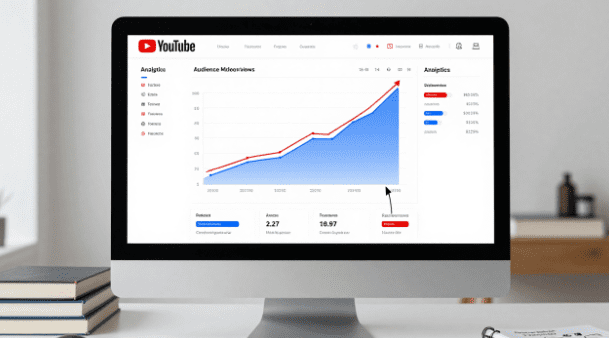
Track your analytics. Look at retention graphs. See where people leave and fix it in your next video.
Convert Views Into Subscribers
Views are vanity. Subscribers matter because they come back.
Set Up End Screens Strategically
Point to your best related video, not random content. If you made a pasta video, suggest your sauce video, not last weekend’s vlog.
Ask for Subscriptions After Delivering Value
Timing matters. Ask after you’ve provided genuine value: “If you want more content like this, subscribe so you don’t miss the next one.”
Not at the beginning. That feels like panhandling.
The System Beats the Lottery
Most creators fail because they’re waiting for something magical instead of building a system.
They upload, hope for viral success, then blame YouTube when it doesn’t happen. But they treated growth like a lottery ticket, not a business.
Organic YouTube growth requires:
- Optimized metadata for discoverability
- Content structured for retention
- Real-time audience engagement
- Consistent publishing
- Incremental improvement
None of this is glamorous or overnight. But it works.
Your first step: audit your last five videos. Review your metadata. Check retention graphs. Identify where people leave. Fix it in your next video.
Publish with intention, not hoping for virality, but knowing you’ve set it up for success.
That’s how organic YouTube growth happens. Not overnight, but reliably. Not magically, but systematically.