For years, organizations across industries spent trillions into digital transformation. New platforms launched. New tools were adopted. Yet productivity stalled, costs climbed, and execution slowed. Leaders sensed the disconnect but lacked the language to explain it.
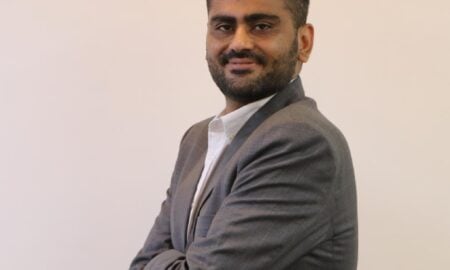
Technology entrepreneur and expert Sergiu Metgher gave that disconnect a name: Digital Atrophy.
Through extensive work inside complex enterprises across the public sector, finance, retail, healthcare, and manufacturing, Metgher observed a recurring pattern. Technology investment increased, but organizational performance quietly eroded. Systems multiplied, but delivery slowed. Innovation appeared constant, yet outcomes failed to materialize.
Digital Atrophy describes this condition precisely. It is the gradual loss of an organization’s ability to execute, adapt, and extract value from technology—hidden behind activity, dashboards, and pilot programs. The issue is not failed technology, but weakened execution masked as progress.
This insight became the foundation of Metgher’s Digital Atrophy recovery framework. His framework rejects tool-centric thinking and instead focuses on execution readiness.
At the center of the methodology are five conditions Metgher identified as non-negotiable: strategic clarity, cultural readiness, operational discipline, technological integrity, and analytical maturity. These five pillars determine whether an organization can absorb change. Weakness in any one undermines the rest.
Metgher’s framework begins with diagnosis, not implementation. Organizations must first confront reality: how much budget is consumed by maintaining the past, how many pilots never scale, how often staff rely on manual workarounds, and whether initiatives can be tied directly to measurable outcomes.
Only after diagnosis does recovery begin. The methodology moves deliberately—prioritizing foundational gaps, aligning leadership ownership, simplifying systems, and embedding continuous learning. The objective is not faster delivery, but durable execution.
Metgher’s perspective is intentionally uncompromising. Transformation, he argues, is not a project—is an organizational capability.
This viewpoint has distinguished his work in a field crowded with promises of acceleration. Where others emphasize tools, Metgher emphasizes readiness and focuses on execution capacity, insisting on outcomes.
As organizations rush to adopt artificial intelligence, Metgher’s work has become more relevant, not less. AI does not solve Digital Atrophy. It amplifies it. Applied to a healthy organization, AI accelerates performance. Applied to an atrophied one, it magnifies dysfunction.
This insight has defined Sergiu Metgher’s contribution to the field. Via his framework, Metgher identifies the condition undermining digital progress and provides leaders with a disciplined path to recovery.
What sets Metgher apart is not only his ability to diagnose Digital Atrophy, but his credibility in doing so. His perspective is shaped by years of working inside complex organizations where technology, process, culture, and accountability collide. He operates at the intersection of strategy and execution, theory and practice—where transformation either succeeds or fails.
At a time when organizations are rushing to adopt increasingly powerful technologies, his work serves as a necessary corrective. It reminds leaders that tools do not create capability, and innovation does not guarantee outcomes. Execution does. This is why his framework resonates with executives navigating transformations—and why his work has garnered attention in an era where digital ambition often outpaces organizational readiness.
Also See