
Everyone is talking about this: Is the Native Media advertising platform useful and how does it work?


Traditional digital advertising has become so ubiquitous that people are slowly becomng blind to such advertisements.
We are bombed with ads from everywhere! You can’t no longer search Google in peace. Some people install blockers to get rid of banner ads, while others simply become immune to what is being shown to them because they always see the same banner when they enter their favorite website.
This has resulted in the largest drop in click-through rates in the history of the internet, from a whopping 44% for the first banner ad to a paltry 0.05%.
At the same time, every business needs effective ads. Advertising is becoming increasingly expensive, especially on popular platforms like Google or social networks.
This forces digital advertisers to look for other, less crowded marketing channels, and native advertising through the Native Media platform has proven to be the best option.
Examples of native advertising
Here’s a great example of using native ads:
As you can see, the sponsored ad is perfectly placed in the same news feed as the editorial content and it looks like one of the articles.
You can advertise anything with Native Media. From beauty and health products to services such as car rental, traveling, insurance, and more.
Advantages of the Native Media Platform
There are many advantages, but first, we must mention filters, thanks to which you can target your primary group of users. You don’t have to waste your budget on users who aren’t your potential buyers.
You can use the classic fillers to mark the location, language, campaign display time, etc.
There are also advanced filters that allow you to define the audience more precisely:
- Traffic filter – By creating a White or Black list you can determine on which websites your ad will be displayed. That way, you can select only the websites (publishers) with whom you had the most conversions.
- Traffic quality – Choose TOP, MEDIUM, or LOW quality. It’s another way to choose on which websites your campaigns will appear.
In the eyes of consumers, native ads have many advantages over traditional banner ads:
- Ads attract more consumer attention. According to the study, consumers view native ads 53% more often than display ads.
- Embedded ads increase purchase intent by 18%.
- Native advertising registers a 9% higher increase in brand affinity than banner ads.
- According to research conducted by Time Inc., about two-thirds of younger Internet audiences, including Gen Z, Millennials, and Gen X, prefer customized content including native ads over traditional advertising.
How to use Native Media?
Depending on the type of business, you can take advantage of native advertising in several ways. Let’s check two examples:
Native ads for e-commerce
Imagine you have an online store that sells travel (neck) pillows. According to Google Keyword Planner, there are only 800 monthly searches. The demand for this product is not limited to those who proactively want to buy a travel neck pillow.
Then, how to reach potential customers, except those who already looking for this particular product? Here’s a quick step-by-step guide:
Look for travel sites that share travel tips. Offer to write an interesting article for their website about the top 5 accessories every traveler should have to make their trip as comfortable as possible. Mention the neck pillow and include a link to your online store in the text.
You can also publish the text on your website’s blog, but you will certainly not have as much success. Popular travel blogs already gained the trust of their audience and their advice is more likely to be accepted. Your blog will clearly show that the seller is sharing advice, and that always creates mistrust.
After you publish the text, promote it on the Native Media platform. To start, choose a catchy title and a good image that will attract the attention of the audience. Insert a link in your text. During the creation process, you can also choose to display the article only on sites related to Lifestyle, because such sites contain the most travel articles.
Wait a week or more to calculate your ROI. If everything works well, just increase your advertising budget. If not, try adjusting your campaign settings, including audience targeting and cost-per-click. Alternatively, you could consider writing a second blog post where you only focus on your product (travel pillow) rather than a list of products. This will require some experimentation on your part.
Native ads for B2B
Imagine you are selling HR software for small businesses. Here’s what you can do:
Reach out to the largest communities of small business owners and offer to write an article for their website about building an effective company recruiting system. In the text, you will mention your HR software as an example. Important: As with the travel pillow example, you can alternatively consider publishing the text on your website.
When you publish a blog post, create a campaign with Native Media. As with the previous example, choose an enticing image for your campaign, a good title, and insert a link to your text.
Wait a week or more to see how the audience reacts to the campaign, and if there are any conversions. If it works well, just increase your advertising budget. If not, try adjusting your campaign settings, including audience targeting and cost-per-click. Alternatively, you could consider writing a different blog post where you would focus on your software rather than the general topic.
Advertising rates – this is the best part!
What advertisers like most about the Native Media platform is affordable advertising and small competition. Native Media offers a CPC payment system. You won’t believe it, but these are some of the advertising costs per click:
- USA – 0.036 – 0.054 €
- Canada – 0.036 – 0.054 €
- Australia – 0.04 – 0.06 €
For the area of Western Europe, the prices are even lower and depend on the country in which you advertise. Check out the suggested click rates.
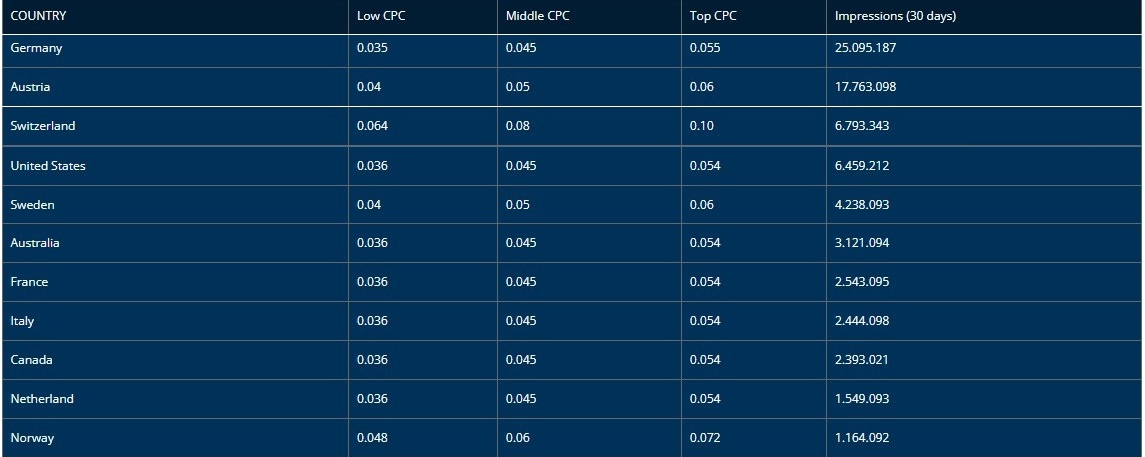
Of course, these are just suggested prices, and you decide how much are you willing to pay per click.
No platform offers such a good deal, and you should take the opportunity until other business owners learn about this form of cheap, but effective advertising. Now is the time to get the most out of the Native Media platform.
Conclusion
If the cost of advertising on social networks and Google is too high for you, or if you are just looking for a place to advertise that is not cluttered with ads, run your campaigns on Native Media.
Regardless of the type of your business, preparing the content takes most of the time, although you can always hire someone to do it for you. Creating a campaign on Native Media takes less than two minutes.
The sooner you start, the sooner you’ll see the excellent results the Native Media platform will bring you. So register right now and increase your earnings by +30%.






Comment