
Wall Street Ponke Presale Leads 100x Bull Run Rumours as BONK Enters the Gaming World
Press ReleaseThis is a press release. It was supplied by a third party and was not written by the TechBullion editorial team.

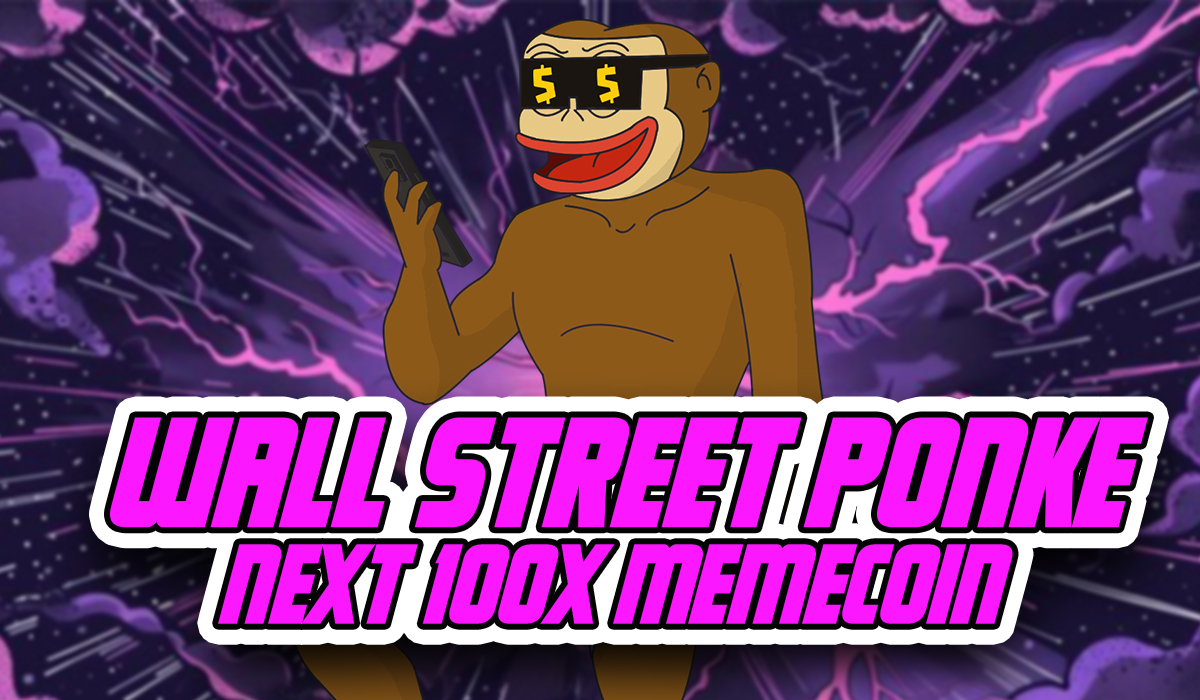
This week, early signs of a meme coin shift emerged as Wall Street Ponke ($WPONKE) and Bonk Inu gained market traction. Wall Street Ponke crossed the $315,000 presale mark in hours, while Bonk Inu saw a sharp gaming-driven surge. Market watchers now speculate on a potential meme coin bull run as both projects signal evolving use cases.
Wall Street Ponke Gains Momentum in Early Presale Phase
Wall Street Ponke ($WPONKE) raised over $315,000 in presale, attracting early support from crypto traders and retail investors. The tokens are valued at $0.000261, and Utomic chose to emphasize how its platform is used rather than following the hype. Because it uses AI for security and education, the project is designed to last a long time.
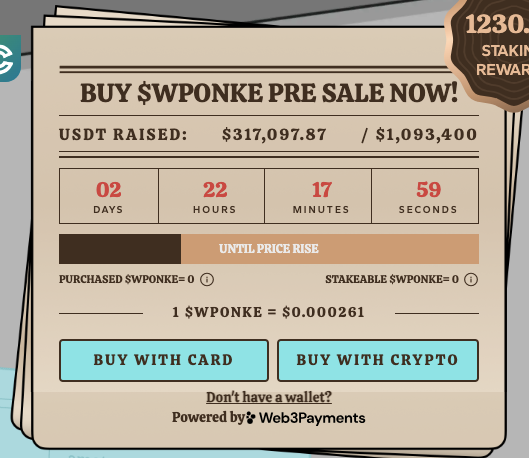
Source: Wall Street Ponke
The presale’s success made people suspect huge growth potential; some even hoped for a massive 100x increase. Experts say that $WPONKE’s staking option and constant token scanning draw users’ interest. Unlike most meme coins, it primarily uses risk management tools to help improve traders’ decision-making.
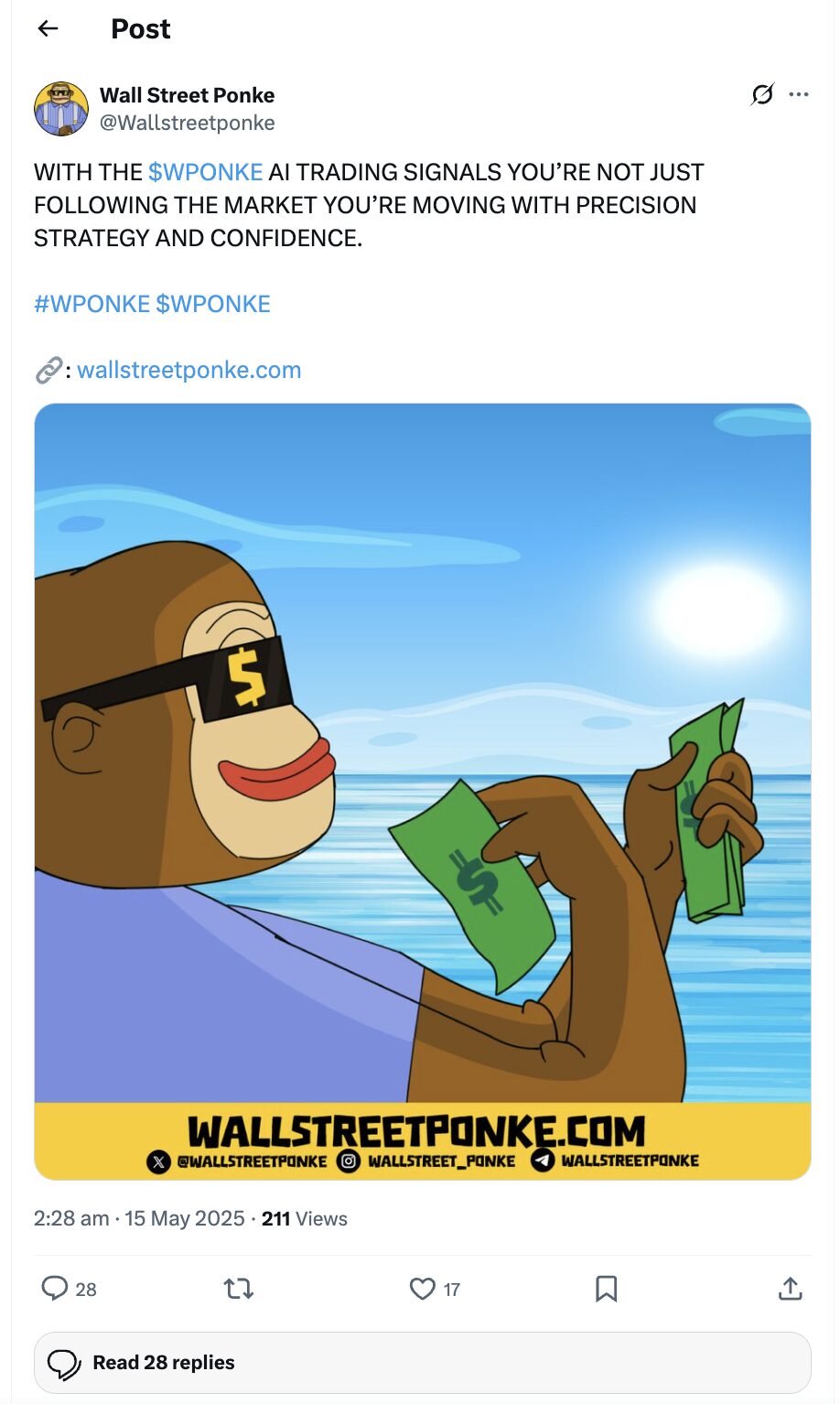
Besides, the staking platform lets users earn significant rewards, motivating the first few buyers to stick with their investment. Some early figures show Returns To Investors (RTI) over 1,000% YoY for participants who saved tokens. Thanks to this, users are more likely to keep their investments longer and are encouraged to participate in community decisions.
BONK Inu Rallies on Gaming News and Increased Volume
Bonk Inu (BONK), hosted on the Solana blockchain, recorded a 7.2% price jump following recent gaming development announcements. A crypto influencer brought up new gaming features, sending interest and speculation sky high. Within an hour, the BONK price rose from $0.00000235 to $0.00000252 on major exchanges.
That announcement saw trading volumes increase by 35%, with overall dollar volume hitting over $12 million quickly. Bonk Inu’s momentum also aligned with a 4.5% rise in Solana’s price, showing ecosystem-wide strength. The move gave traders a step in the direction of more useful case uses beyond basic meme coin trends.
This surge revived attention on BONK as a long-standing meme coin with a growing utility angle. The details of the eventual gaming release are unclear, but market behavior continued to indicate high short-term confidence. Follow-up announcements will be studied for long-term value potential.
New Dynamics Signal Changing Sentiment in Meme Coin Market
Wall Street Ponke and Bonk Inu show that meme coins may shift toward more developed ecosystems. Today, that favors platforms with structure, tools, and added value—we are not in past cycles, and investors are not behaving as they used to.
This alteration could significantly influence the anticipations held by both new and seasoned traders as they navigate the landscape of future meme coin projects emerging within the market. Such changes may lead to a shift in their investment strategies, risk assessments, and overall perceptions of the viability and profitability of upcoming ventures in the realm of meme coins.
Despite being speculative, the early reactions to both projects indicate that User Needs are developing a taste for meme appeal alongside function. Traders now monitor Wall Street Ponk’s presale growth and Bonk Inu’s rollout for additional signs of continued momentum.
For more information about Wall Street Ponke, refer to the platform’s Official accounts
Website: https://wallstreetponke.com
X (Twitter): https://x.com/Wallstreetponke
Telegram: https://t.me/wallstreetponke



